Indian Space Research Organisation ISRO: Leading the Indian Cosmic Expedition
 Rasedul
 The Indian Space Research Organisation is an epitome of India’s genius for space explorations. Formed in 1969, it has grown from its humble beginnings into an international giant, achieving what other space giants attain on shoestring budgets.
ISRO Origin and Vision
The organization has its roots in the formation of the Indian National Committee for Space Research, or INCOSPAR, in 1962 under physicist Vikram Sarabhai. The organization was officially formed on August 15, 1969, to utilize space technology for the development of the nation.ISRO, which is headquartered in Bengaluru, operates through various centers for launch vehicles and applications and for satellites and applications. The main mission of the ISRO includes designing indigenous launch vehicles, earth observation systems, and planetary exploration missions, as well as facilitating telecom applications, weather predictions, and disaster management.Since its founding in 1969, ISRO has delivered world-class space missions on remarkably low budgets, proving that innovation matters more than money.
Initially, the focus was on self-reliance. ISRO launched India’s first satellite from the Soviet Union in 1975. This was a milestone and sparked domestic capabilities.And at this point,history of Indian technology innovation changed.
Key Launch Vehicles
ISRO is powered by the rocket family, and the Polar Satellite Launch Vehicle, termed the ‘Work Horse,’ has flown over 50 missions, including the record-breaking mission PSLV-C37 in 2017, wherein 104 satellites were placed in space in one go.
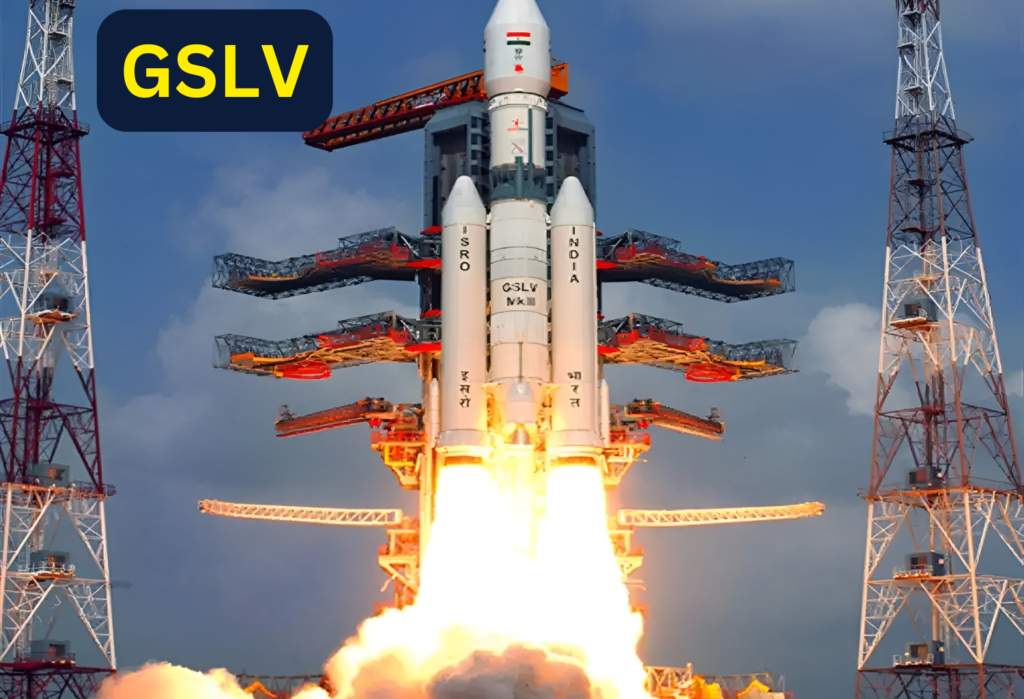
The Geosynchronous Satellite Launch Vehicle (GSLV) facilitates heavier payloads through cryogenic technology, which minimizes dependence on foreign resources. The Small Satellite Launch Vehicle (SSLV) is a new-generation vehicle which enables rapid and inexpensive launchings of nano satellites.
These spacecraft are also capable of delivering highly accurate orbits, ranging from polar sun synchronous to geostationary orbits.
Landmark Missions
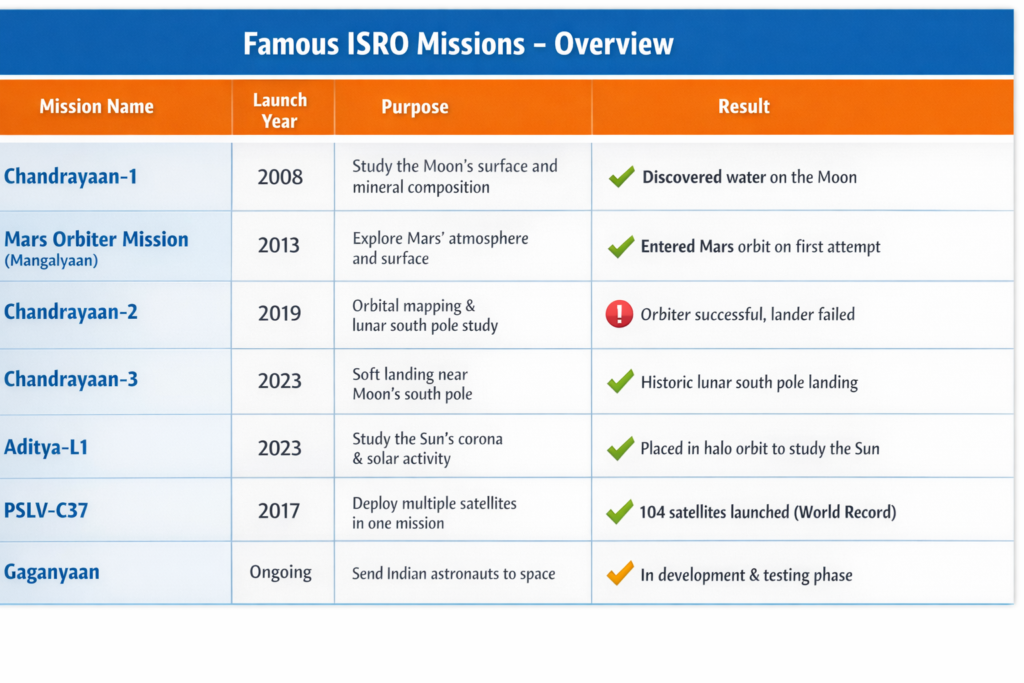
ISRO’s endeavors in exploring various planets simply capture the imagination of the world. The Mars Orbiter Mission (Mangalyaan) was launched in 2014, and this mission was accomplished with a budget of merely $74 million and placed the Indian satellite in Martian orbit, thereby making it the first Asian nation to do so.
Chandrayaan-1 (2008) detected water molecules, Chandrayaan-3 (2023) successfully executed a historic ‘south pole soft landing,’ discovering new craters and minerals. Chandrayaan-2, notwithstanding its lander failure, conducted an exhaustive mapping of the moon.
Aditya-L1, placed in space in 2023, is focused on studying the sun with the help of a halo orbit, thus enhancing research related to the sun. Gaganyaan, which is India’s initiative in sending humans into space, is aspiring.
Satellite Constellations
ISRO maintains huge fleets. The INSAT series comprises over 30 satellites in service, bolstering telecom, TV broadcasting, and telemedicine across India.
The IRS constellation is the world’s largest civilian remote sensing network, enabling activities such as agriculture, forestry, and urban planning. Navigation systems like NavIC have provided precise positioning, comparable with GPS.
These include satellites used for tracking cyclones, monitoring crops, and distant educations in remote areas.
Societal Impact
Apart from stars, ISRO stimulates development. For example, IRS satellites provided live images for evacuation during cyclones like Amphan. Telemedicine connects rural clinics to urban hospitals through INSAT systems.In the field of agriculture, data from IRS optimizes irrigation and predicts yields, thus increasing farmer incomes. In disaster management, Doppler weather radars connected with ISRO satellites are also useful.Spin-offs include water purification techniques from rocket fuels and composites for prosthetics.
Global Collaborations and Records
ISRO works alongside NASA, ESA, and JAXA space organizations. It launched satellites for countries totaling over 30, earning them much-needed forex and goodwill. PSLV’s launch of 104 satellites broke all records held by Russia till date.
Being one of six space organizations that excel in mastery of cryogenic technology and soft landing, ISRO can proudly call itself cost-efficient, given its Mangalyaan spacecraft was 15 times less expensive than NASA’s MAVEN.
Future Horizons
ISRO plans big. Bharatiya Antariksh Station, it promises, will be commissioned in 2035, with humans orbiting the earth. NISAR, a mission in collaboration with NASA, uses radar to image ecosystems. RLV-TD Gaganyaan program is meant for training astronauts for low-earth orbits. Rovers to the moon’s south pole, and the Venus missions.
Challenges Overcome
Budget constraints also made frugality a virtue, as ISRO operates on a mere under $1.5 billion a year compared to the much-higher budget of NASA, which is around $25 billion.The progress is driven by talent from IITs as well as global talent acquisition, which is being augmented by private sector entries through IN-SPACe.
ISRO is the embodiment of the concept of “Make in India.” ISRO’s story, from initial “beachhead” rocket tests in Thumba to sending robots to Mars, evokes feelings of national.

 Shubham Thakur

Thank you for this information. Very nice information about ISRO. everyone should know about this
ISRO jindabad!! ❤️👍👍🙏🙏
The initial stage of ISRO is really challenging.It required dedication
We are proud of ISRO❤️👍👍
I love you ISRO 🤩😍