How Artificial Intelligence Is Transforming Medical Diagnosis across the world
 Rasedul
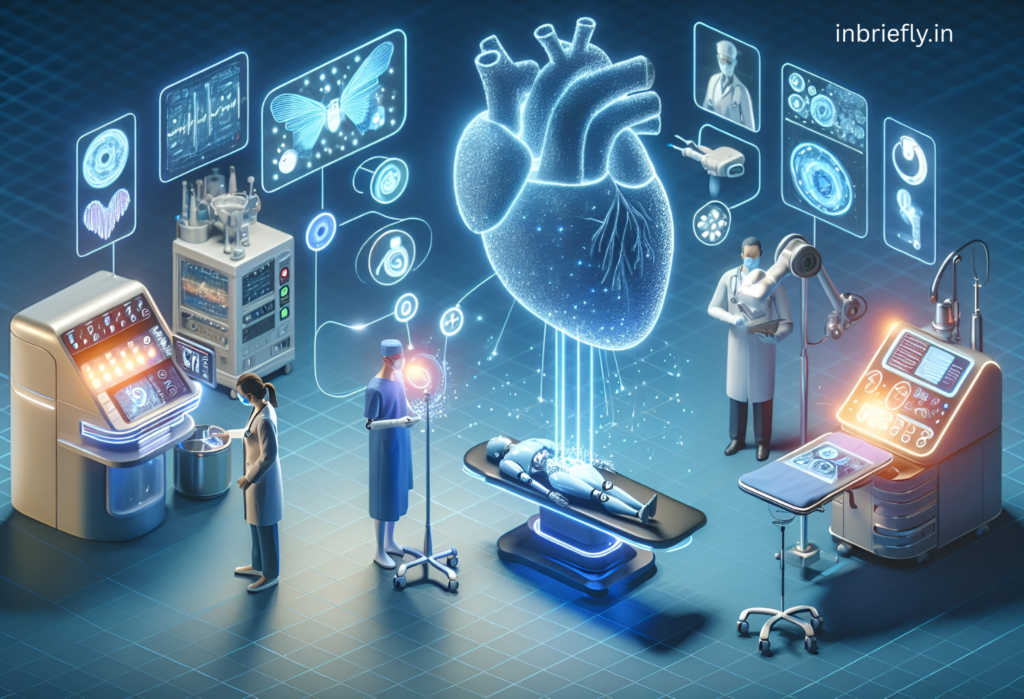
 Artificial Intelligence, or simply AI, is not restricted to smartphones, social media, or chatbots anymore. Today, AI is playing a powerful role in one of the most important fields of human life-healthcare. From the detection of diseases at an early stage to helping doctors make better decisions, Artificial Intelligence is really transforming how medical diagnosis is done across the globe.
Let us understand, how AI is used in diagnoses of ailments, its benefits, real-life applications, and challenges, and what the future may look and feel like.
1. What Is Artificial Intelligence in Healthcare?
Artificial Intelligence refers to computer systems that can do tasks typically needing human intelligence. These tasks include learning from data, recognizing patterns, understanding images, and making predictions.
In healthcare, AI systems are trained using large amounts of medical data such as
- X-ray and MRI images
- Clinical research data
- Blood test reports
- Patient medical history
2. Why Medical Diagnosis Needs AI Support
Medical diagnosis is a multifaceted process. In diagnosis, doctors need to assess all the information obtained from patients. They should also look at test and history records. However, several challenges make it hard for doctors to give precise diagnosis. It is important to note that AI does not replace doctors. Instead, it works as a support system to improve diagnosis quality.
AI helps solve these problems by:
- Analyzing large data sets quickly.
- Detecting small patterns that humans may miss.
- Supporting doctors with data-based insights.
3. Key Ways AI Is Transforming Medical Diagnosis
I. AI in Medical Imaging
AI systems can detect signs of diseases like cancer, pneumonia, brain tumors, and fractures at an early stage. In many cases, AI can spot abnormalities faster than the human eye.AI can assist in early detection, but it cannot replace a doctor’s expertise. In case of any medical concern, always consult a qualified healthcare professional for accurate diagnosis and treatment.
For example, AI is widely used in:
- Breast cancer detection
- Lung disease analysis
- Brain scan interpretation
Most successful use of AI in medical science
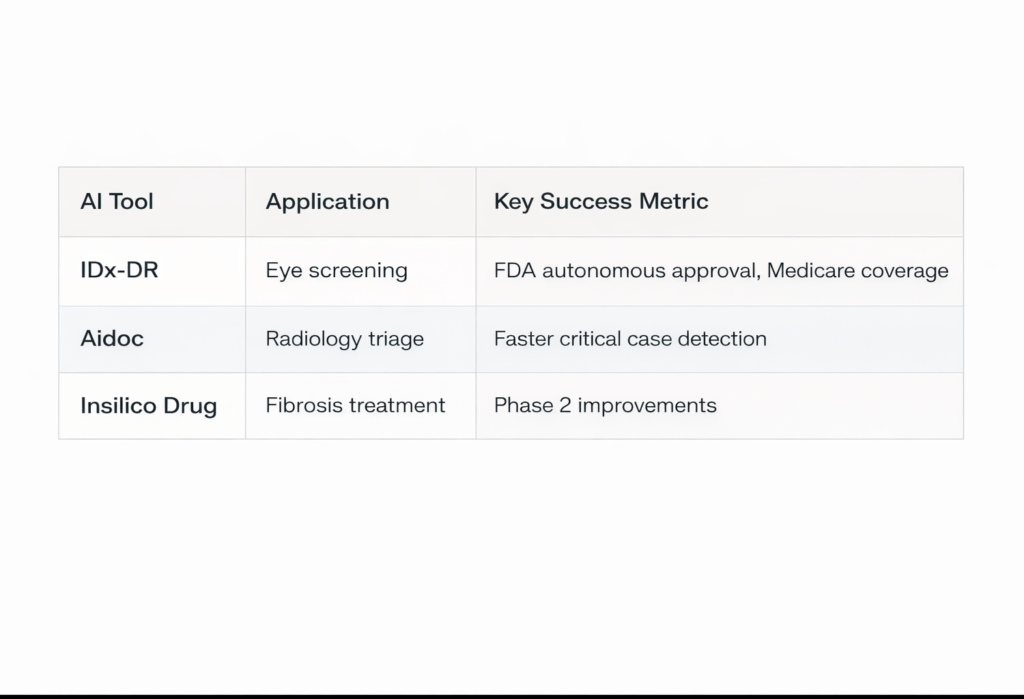
IDx-DR, the machine learning technology used for screening diabetic retinopathy, is a paradigm-case of the successful deployment of AI technology in the real world to tackle medical problems. The technology was approved by the FDA in 2018 to autonomously detect serious vision-threatening complications of diabetes in primary care.“Patients get a quick retinal photo, AI assessment of disease with yes/no answer and confidence score – trials showed it matches physicians’ accuracy (87-91% sensitivity), making it usable on its own without physician evaluation.”
Other Top Examples
Aidoc Radiology: Prioritizes urgent CT scans (e.g., brain bleeds), slashing response times 30-50% in ERs.
Insilico Medicine’s INS018_055: First fully AI-designed drug in Phase 2 for lung fibrosis, showing lung function gains.
II. Early Disease Detection
AI is being used for early detection of:
- Cancer
- Heart diseases
- Diabetes
- Neurological disorders
By analyzing patient data over time, AI systems can predict health risks and alert doctors early, allowing timely treatment.
III. AI in Pathology and Lab Tests
Pathology involves studying blood samples, tissues, and cells. AI tools can examine lab reports and microscope images with high precision.
Benefits include:
- Faster report analysis.
- Reduced manual errors.
- Better accuracy in test interpretation.
AI-powered pathology is especially useful in detecting infections, cancers, and blood-related disorders.
Symptom Analysis and Virtual Health Assistants.
“AI symptom checkers have become popular features in health apps and websites.” This type of application provides information on the possible health conditions based on the symptoms experienced by the user.
Although they are no replacement for doctors, they do assist with:
- Initial health assessment.
- Advising the patients on the appropriate time to seek medical attention.
- Reducing Unnecessary Hospital Visits.
IV. Personalized Diagnosis
- Genetics
- Lifestyle
- Medical history
This approach improves treatment outcomes and reduces trial-and-error methods in healthcare.
4. Real-Life Examples of AI in Medical Diagnosis
Google Health (Know more about google health) has developed artificial intelligence-based tools to detect eye diseases and breast cancers. IBM Watson Health is an artificial intelligence-based system that helps doctors analyze patient information and medical literature. There are a number of hospitals, especially in India, that are incorporating artificial intelligence-based equipment into their facilities.
5. Benefits of AI in Medical Diagnosis
First and foremost, it should be noted that AI is changing the face of the health care sector in the country, allowing for quicker and more precise diagnoses in the process. This allows the attending individual to detect health issues at very early stages, ensuring that they can improve the health conditions and recovery rates for the patients under their care. There is also the fundamental issue of the workload facing medical professionals in the country, where the chances for quicker resolution are provided, thanks to the involvement of AI in the process. The issue of accessing health care in the country is also being addressed, particularly for the rural population where medical professionals and health care facilities are hard to come by in the country, such as India with its large population.
6. Challenges and Limitations of AI in Healthcare
Despite the numerous benefits of the use of AI in medical diagnosis, there are a number of challenges that arise. First of all, there is the concern for data privacy and security; medical information is very sensitive and requires appropriate security to prevent abuse. Secondly, AI technologies need a great deal of medical information to be effective, but medical information is not readily available. Moreover, the high cost of developing and using AI technology can also be a challenge, especially to medium-sized medical facilities. There is also the ethical and legal issue of accountability and decision-making. However, there is also a chance of overdependence on technology, since the main purpose of technology is to aid the doctor and not replace him. Doctors uses AI to get better analysis of medical treatments but not 100% rely on AI.
7. Future of AI in Medical Diagnosis
The prospects of the use of AI in the healthcare sector appear promising in the future. Continuous technological development will likely aid in the improvement of the accuracy of various medical diagnoses, as well as the involvement of AI in remote healthcare services, which will extend the availability of quality healthcare to distant locations. It might also aid in the efficient management of healthcare crises in the country by analyzing extensive data at very fast rates. With the evolution of time, the healthcare sector will not only be affordable and accessible to the masses, but AI will also continue to strengthen the partnership between medical professionals and machines, thus providing better healthcare to the population.
 Shubham Thakur

Good information. Complete 💯 information about why AI is used in medical science. If you want to know real usage of AI than Medical science is one. Great contents
To be honest this is the real use of AI