
Which herbs actually survive Indian humidity, AC rooms, and monsoon overwatering? Not the ones most blogs recommend. After years of trial and error on my own balcony, here are 7 fragrant herbs that genuinely thrive indoors in India — plus the real fixes for yellowing leaves, root rot, and pests.
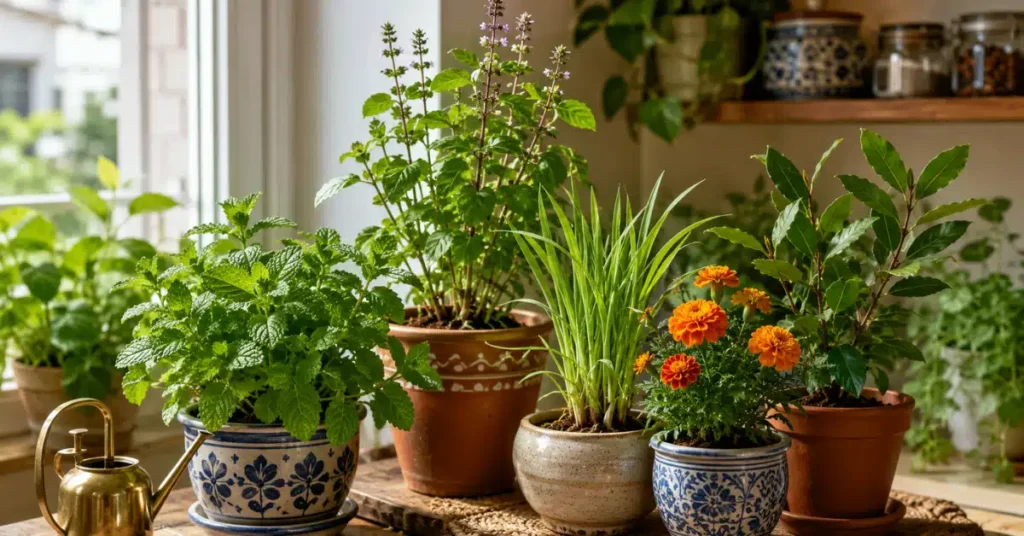
Learning to grow herbs indoors sounds simple until your tulsi starts dropping leaves for no reason. My grandmother kept a tulsi pot on the kitchen windowsill for as long as I can remember, and every August, without fail, it would start dropping leaves and looking half-dead.
Nobody in the family could explain why — until I actually got my hands into the soil myself, years later, running a small terrace herb setup. Turns out it wasn’t the plant’s fault at all. It was our watering can.
Once I fixed that one habit, four other pots recovered along with it. That’s the thing about growing fragrant herbs indoors in India — the plants aren’t fussy, our assumptions about them are wrong.
This guide covers seven herbs that genuinely thrive inside Indian homes, with the exact fixes I’ve used when things went sideways.
Why Indoor Herbs Behave Differently in Indian Homes Than in Western Gardening Blogs
Most advice on how to grow herbs indoors floating around online is written for temperate climates — think grey British winters or dry American suburbs with central heating.
None of that translates directly to a flat in Mumbai with 80% humidity in July, or a north-facing balcony in Delhi that gets scorching afternoon sun for four months and then nothing but haze for two.
If you’ve ever followed a foreign blog’s watering schedule and watched your mint turn to mush, this is why.
Three Indian-specific factors decide whether your indoor herbs will thrive or sulk:
- Monsoon humidity — from June to September, ambient moisture alone can keep soil wet for days, so herbs need far less watering than “once every two days” advice suggests.
- Ceiling fans and air conditioning — constant airflow dries out topsoil fast in AC rooms, while fans can physically stress soft-stemmed herbs like basil.
- Sunlight intensity, not just duration — Indian sun is stronger than European sun even in winter, so a “south-facing window” recommendation from a UK blog can scorch leaves here in an hour.
Keep these three in mind through the rest of this guide — they explain almost every “why is my herb dying” situation.
If you’re growing specifically in North India, heat stress adds another layer on top of these three factors. I put several of these same herbs through a full Delhi summer to see which ones actually held up — you can read my honest experience growing herbs through Delhi’s 45°C heat if that’s your climate.
1. Tulsi (Holy Basil) — The One Herb Every Indian Home Should Have
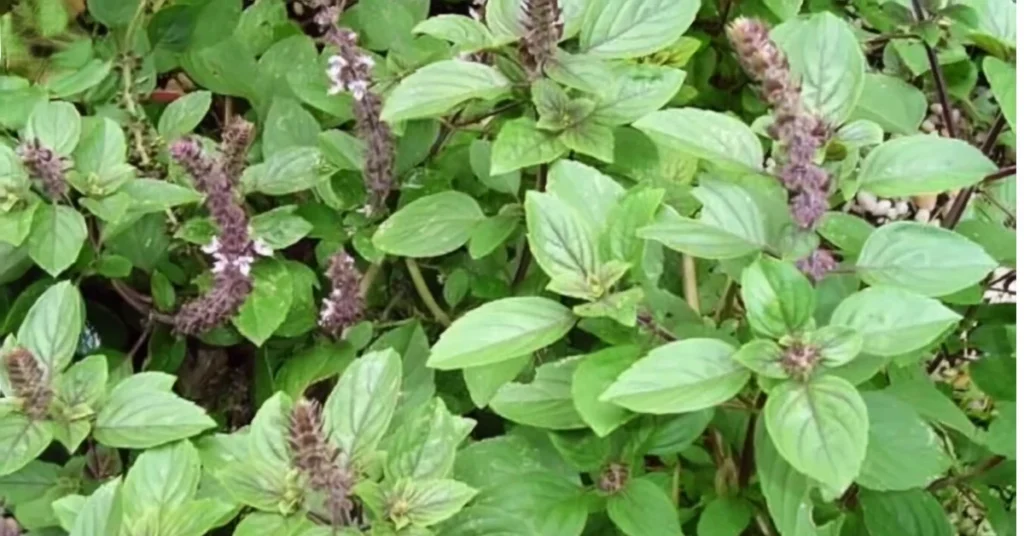
Tulsi isn’t just fragrant, it’s practically load-bearing in Indian households — religious significance aside, it’s genuinely one of the easiest herbs to keep alive indoors, provided you stop treating it like a decorative plant and start treating it like the tropical shrub it actually is.
Where to place it: Tulsi wants direct morning sun, at least 4–5 hours. An east-facing window is ideal. If you only have a west-facing balcony, the harsh 3–5 PM sun in summer will scorch the leaf edges — use a thin curtain or move the pot slightly indoors during peak months.
Soil and pot: Use a terracotta pot, not plastic — tulsi’s roots need to breathe, and terracotta wicks away excess moisture, which matters enormously during monsoon. Mix garden soil, cocopeat, and compost in a 2:1:1 ratio. Avoid pure garden mitti straight from outside; it compacts and suffocates roots in a container.
Watering rule that actually works: Stick a finger two knuckles deep into the soil. Water only when it’s dry at that depth. In Delhi’s dry summer this might mean daily watering; in coastal Kerala during monsoon, once every 4-5 days is often enough.
Common Tulsi Problems and Real Fixes
- Leaves turning yellow and dropping in August–September: This is almost always overwatering compounded by monsoon humidity. Stop watering for a week, check that the pot has real drainage holes (not just token ones), and repot into terracotta if you’re using plastic.
- Black spots on leaves: Usually fungal, triggered by water sitting on leaves overnight. Water at the base only, early morning, never in the evening.
- Leggy, stretched-out growth with few leaves: Classic low-light symptom. Pinch the top two sets of leaves every 10–12 days — this single habit does more for bushy tulsi than any fertilizer.
- White woolly patches near stem joints: Mealybugs. Dab with a cotton bud soaked in diluted neem oil (10ml neem oil + 2ml liquid soap + 1 litre water), twice a week for two weeks.
Feeding: A handful of vermicompost once a month is plenty. Skip chemical fertilizers on tulsi if you’re using the leaves for tea or prasad.
2. Pudina (Mint) — Fast Growing, Fussier Than People Assume
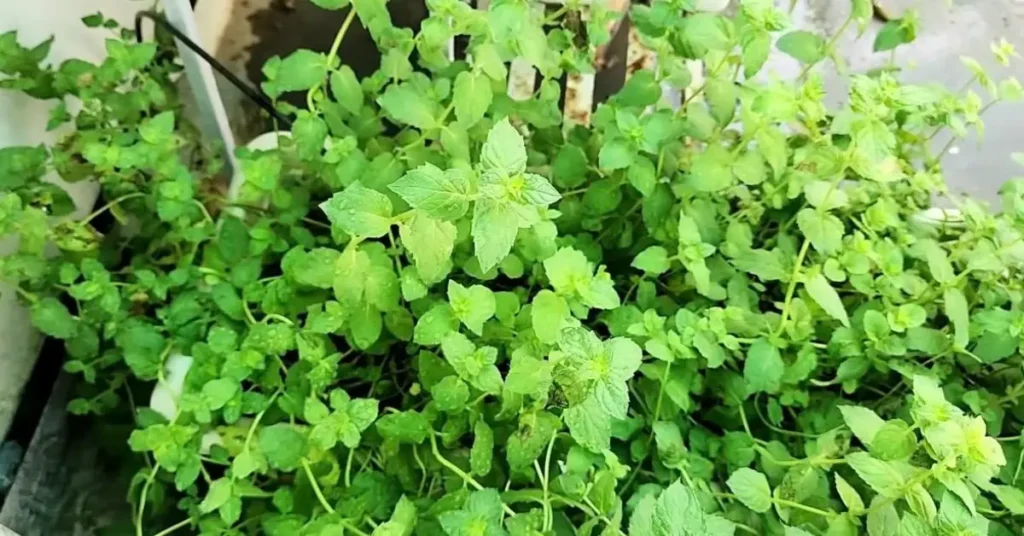
Mint has a reputation for growing “like a weed,” which is true outdoors in the ground — but in a pot indoors, it’s actually one of the more demanding herbs on this list because it wants consistent moisture without ever sitting waterlogged. That balance trips up a lot of first-time growers.
Where to place it: Bright indirect light works better than harsh direct sun for pudina indoors. A spot near an east window, or 2-3 feet back from a south window with a sheer curtain, is close to perfect. Direct midday sun in North Indian summers will crisp the leaf tips within days.
Soil and pot: Mint likes a slightly wider, shallower pot rather than a deep one, since its roots spread horizontally through runners. A loose mix of cocopeat, compost, and a little sand for drainage suits it well.
Watering: Keep the top inch of soil consistently moist — mint doesn’t tolerate the “let it dry out completely” approach that works for tulsi. In AC rooms, check the soil daily; the constant dry airflow pulls moisture out fast.
Common Pudina Problems and Real Fixes
- Stems going soft and blackish at the base: Root rot from overwatering in a pot without adequate drainage. Trim off the healthy top growth, root it in a glass of water for a week, and start fresh in a well-draining pot rather than trying to save the rotted plant.
- Leaves turning pale and small over time: Nutrient exhaustion — mint is a heavy feeder because it grows so fast. Feed with diluted liquid fertilizer (like a seaweed or fish amino acid solution) every 15 days during active growth.
- Powdery white coating on leaves during humid months: Powdery mildew, extremely common in Indian monsoon. Improve air circulation around the pot, avoid overcrowding, and spray a mix of 1 tsp baking soda + few drops of dish soap in 1 litre water once a week until it clears.
- Growth suddenly stalling despite good care: Mint gets rootbound fast in small pots. If it’s been in the same container for over 4 months, it likely needs repotting into something 2 inches wider.
Pro tip most people miss: Harvest mint regularly, even if you’re not using it immediately. Cutting stems just above a leaf node forces bushier growth — an unharvested mint plant gets leggy and stops producing new leaves.
3. Curry Patta (Curry Leaf Plant) — Patience Pays, Rushing Kills It
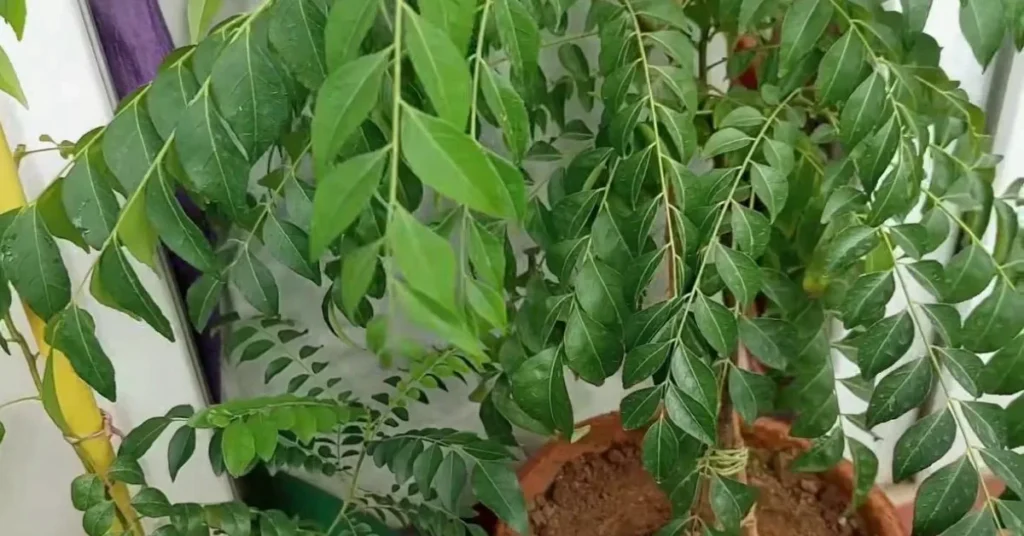
If there’s one herb that tests a grower’s patience, it’s curry patta. It’s slow to establish, genuinely sensitive to cold, and yet once it settles in, it becomes one of the most rewarding plants to have in an Indian kitchen garden — fresh curry leaves make a noticeable difference in tadka compared to store-bought.
Where to place it: Curry leaf plants are sun-lovers — they want a minimum of 5-6 hours of direct sunlight. This is one herb where a south or west-facing balcony is actually ideal, unlike tulsi or mint.
Soil and pot: Use a deep pot, since curry leaf develops a substantial taproot even as a young plant. A mix of garden soil, sand, and compost in equal parts, with a layer of broken bricks or pebbles at the bottom for drainage, works well.
Winter care — the part everyone gets wrong: In North India, curry leaf plants often shed most of their leaves in December-January and look practically dead.
This is dormancy, not death. Reduce watering significantly, don’t panic-fertilize, and keep the plant somewhere it gets whatever sun is available. New growth reliably returns by March.
Common Curry Patta Problems and Real Fixes
- All leaves dropping suddenly: Check first whether it’s winter (see above — likely dormancy) or a sudden change in location. Curry leaf plants dislike being moved and often shed leaves in protest before adjusting; this usually resolves in 2-3 weeks if conditions are otherwise fine.
- Yellow leaves with green veins: Classic iron deficiency, common in curry leaf grown in pots for a long time without soil replenishment. Use a chelated iron supplement or simply add a spoon of used tea leaves (cooled) to the soil monthly.
- Tiny plant not growing for months: Curry leaf is genuinely slow in the first year — this is normal, not a care failure. Growth accelerates dramatically once the root system establishes, usually in the second year.
- Sticky leaves with ants around the plant: Aphids or scale insects, which excrete honeydew that attracts ants. Wipe leaves with a neem-soap solution and check the underside of leaves specifically, as that’s where they hide.
Feeding: Curry leaf responds very well to organic feeding — a mix of vermicompost and neem cake once every 6 weeks encourages both leaf density and dark green colour.
4. Lemongrass — The Lowest-Maintenance Fragrant Herb on This List
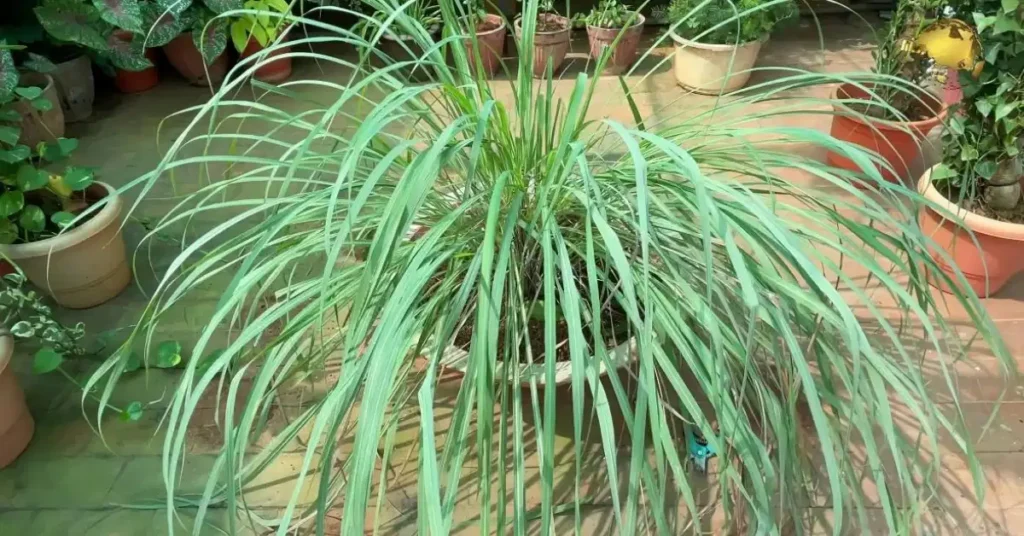
If you want fragrance without fuss, lemongrass is genuinely the easiest of the seven. It tolerates neglect, bounces back from underwatering, and multiplies on its own — a single healthy clump can be divided into three or four pots within a year.
Where to place it: Full sun, minimum 5 hours. Balconies that are “too harsh” for tulsi or mint are often perfect for lemongrass.
Soil and pot: A wide, medium-depth pot with regular garden soil mixed with compost is sufficient — lemongrass isn’t particular about soil quality the way curry leaf is.
Watering: Water deeply, then let the topsoil dry before watering again. Lemongrass tolerates missed watering days far better than it tolerates constantly soggy soil.
Common Lemongrass Problems and Real Fixes
- Blades turning brown at the tips: Usually low humidity combined with inconsistent watering, especially in AC-heavy homes. Mist occasionally and maintain a more regular watering rhythm rather than solving it with more water at once.
- Clump looking overcrowded and weak in the centre: Time to divide. Every 12-18 months, remove the plant, split the clump into 2-3 sections with a clean knife ensuring each has roots attached, and repot separately.
- No fragrance when leaves are crushed: Usually means the plant is stressed or underfed, not a variety issue. A monthly dose of compost tea typically restores the strong citrus aroma within a few weeks.
- Rust-coloured spots on leaves: Rust fungus, more common in humid coastal regions. Remove affected blades at the base and improve spacing/airflow between pots.
Bonus use: The lower white stalks are edible and work beautifully in Thai-style curries or as a tea — most Indian home growers only use the leaves and miss this entirely.
5. Ajwain Patta (Indian Borage / Karpooravalli) — Underrated and Medicinal
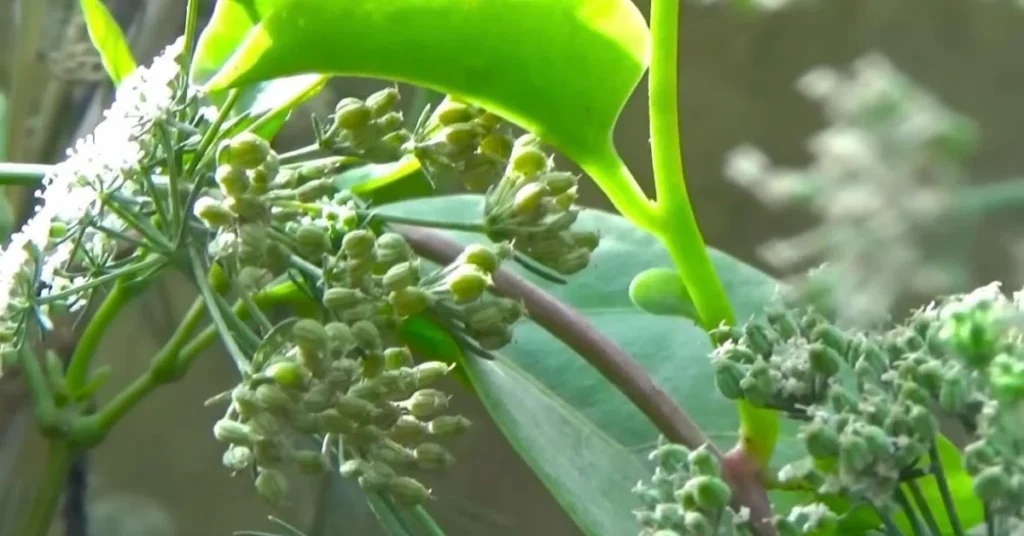
This one goes by different names across India — ajwain patta, karpooravalli, patharchur, doddapatre — and it’s a thick, fuzzy-leaved plant with an intense oregano-thyme fragrance, traditionally used for coughs and colds. It’s criminally underused in modern Indian kitchen gardens despite being nearly indestructible.
Where to place it: Bright indirect light to partial sun. It handles lower light better than most herbs on this list, making it a good choice for balconies that get only 2-3 hours of direct sun.
Soil and pot: A well-draining mix is essential — this plant’s succulent-like leaves store water, and it’s genuinely prone to rot in heavy, water-retentive soil. Add extra sand or perlite to your usual potting mix.
Watering: Let the soil dry out almost completely between waterings. This is a plant that suffers far more from overwatering than underwatering — treat it more like a succulent than a leafy herb.
Common Problems and Real Fixes
- Stems turning mushy and translucent: Root rot, almost always from watering too frequently. Trim rotted portions immediately, let the cut ends callous (air-dry) for a day, and replant in fresh, drier soil.
- Leaves losing their fuzzy texture and going smooth/pale: Insufficient light. Move to a brighter spot gradually over a week to avoid shock.
- Plant flopping over despite healthy leaves: The stems are naturally soft and sprawling; this isn’t disease, it’s a growth habit. Stake lightly or let it trail over the pot edge — many growers actually prefer it this way in hanging pots.
Traditional use tip: A single leaf steeped in hot water with honey is a well-known home remedy for cough in many Indian households — worth growing for this alone.
6. Rosemary — Doable Indoors in India, But Only With Adjustments
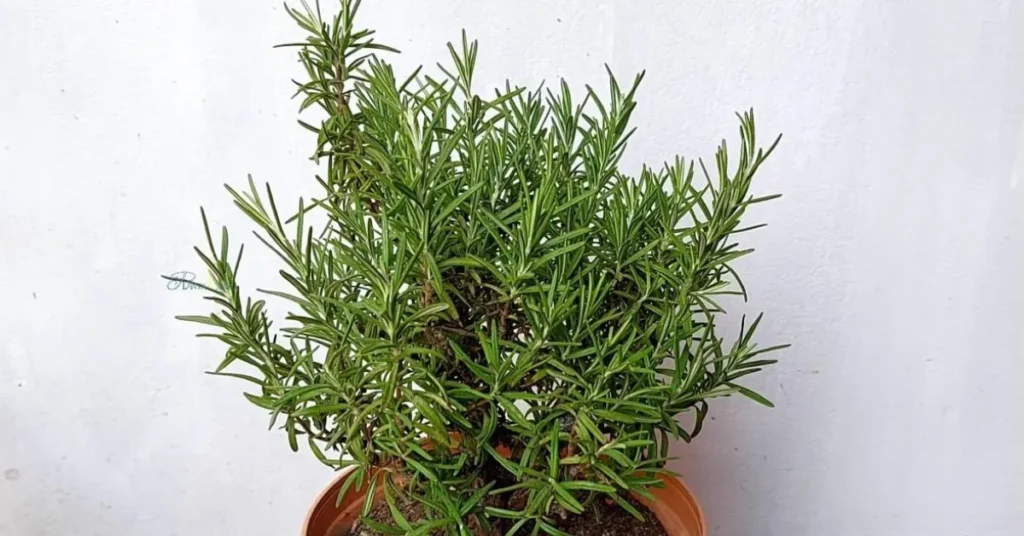
Rosemary has a reputation for being difficult in Indian conditions, and that reputation is partly deserved — it’s a Mediterranean herb that dislikes humidity, which makes our monsoon its biggest enemy. But it’s absolutely growable indoors if you adjust for that one factor.
Where to place it: Maximum sunlight you can offer — a south-facing window or balcony with at least 5-6 hours of direct sun. Rosemary grown in low light will look stretched, pale, and eventually stop producing new growth.
Soil and pot: This is non-negotiable for rosemary in India — use a very fast-draining mix (potting soil, coarse sand, and perlite in roughly equal parts) in a terracotta pot with generous drainage holes. Regular garden soil retains too much moisture for rosemary’s roots.
Watering: Let the soil dry out fully between waterings — rosemary’s biggest killer in Indian homes isn’t underwatering, it’s well-meaning overwatering during monsoon.
Common Rosemary Problems and Real Fixes
- Branches turning brown and crumbly during monsoon: This is the single most common rosemary failure in India. Move the pot to a covered, well-ventilated spot during heavy monsoon months, and reduce watering to almost nothing if humidity is already high.
- White powdery fungus on stems: Poor air circulation combined with humidity. Space pots apart, avoid misting rosemary (unlike tropical herbs, it doesn’t want humidity), and trim inner branches to open up airflow.
- Plant looks fine but has no fragrance: Usually insufficient direct sun — rosemary’s essential oils, which give it fragrance, develop most strongly under strong light.
- New cuttings not rooting: Rosemary cuttings root slowly and need patience — 3-4 weeks in slightly moist (not wet) sandy soil, kept in bright indirect light, usually works better than water-rooting for this particular herb.
Realistic expectation: In humid coastal cities, treat rosemary as a bright-balcony, dry-season plant rather than a permanent year-round fixture — many experienced growers in Mumbai or Chennai simply take cuttings before monsoon and restart after, rather than fighting to keep the same plant alive through the rains.
7. Dhania (Coriander) — Fast, Fragrant, and Frequently Misunderstood
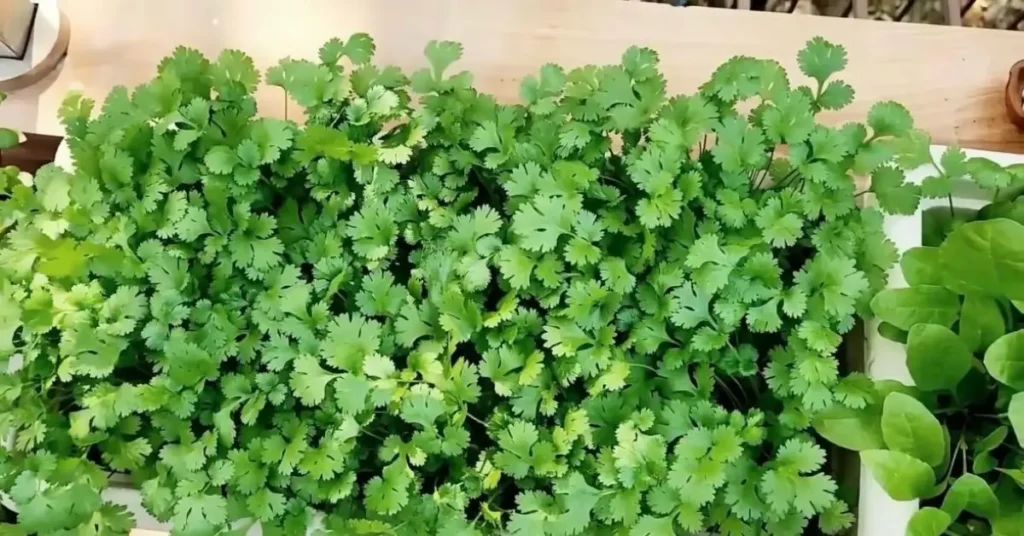
Coriander is grown in nearly every Indian kitchen garden, yet most people never get more than one or two harvests before it bolts (flowers and turns bitter). Understanding why it bolts is the entire key to growing it successfully indoors.
Where to place it: Coriander prefers cooler temperatures and moderate sun — 3-4 hours of morning sun with some afternoon shade is ideal. Intense heat is exactly what triggers early bolting.
Soil and pot: A shallow, wide pot works well since coriander has a fine, shallow root system. Use loose, compost-rich soil with good drainage.
Watering: Keep soil consistently and lightly moist — coriander doesn’t like to dry out completely, but it also doesn’t want waterlogging. Small, frequent watering suits it better than deep infrequent watering.
Common Dhania Problems and Real Fixes
- Plant flowering and turning bitter within 3-4 weeks: This is bolting, triggered by heat stress. Sow coriander during the cooler months (October to February in most of North India) for the best leafy yield, and keep it out of intense afternoon sun even then.
- Seeds not germinating at all: Coriander seeds germinate faster and more reliably when lightly crushed (split into two halves) before sowing, and soaked overnight in water beforehand. Whole, unsoaked seeds often take 2-3 weeks or fail entirely.
- Seedlings collapsing at soil level (damping off): Overwatering combined with poor airflow at the seedling stage. Water from the base (place the pot in a tray of water for 10 minutes rather than pouring from top) until seedlings are established.
- Leaves turning yellow despite regular watering: Often nitrogen deficiency, since coriander is a fast, leafy grower that depletes soil nutrients quickly. Feed with diluted compost tea every 10 days once true leaves appear.
Continuous harvest trick: Sow a fresh batch of coriander every 15-20 days in a small separate pot. Since each planting only gives a good harvest window of 3-4 weeks before bolting, staggered sowing is how experienced growers keep a steady supply rather than relying on one pot.
Quick Comparison: Light, Water & Difficulty at a Glance
| Herb | Sunlight Needed | Watering Style | Difficulty Indoors |
| Tulsi | 4-5 hrs direct | Dry between waterings | Easy |
| Pudina (Mint) | Bright indirect | Consistently moist | Moderate |
| Curry Patta | 5-6 hrs direct | Moderate, less in winter | Moderate (slow to start) |
| Lemongrass | 5+ hrs direct | Deep, then dry out | Easy |
| Ajwain Patta | Indirect to partial sun | Dry out fully between | Easy |
| Rosemary | 5-6 hrs direct | Very dry between waterings | Hard in humid regions |
| Dhania (Coriander) | 3-4 hrs morning sun | Lightly moist always | Moderate (short-lived) |
Your Monthly Indoor Herb Care Checklist
Use this as a running checklist rather than a one-time read — pin it near your herb corner if that helps.
- Check soil moisture with the finger test before watering any pot, don’t water on a fixed schedule
- Rotate pots quarter-turn weekly so all sides get even light
- Inspect the undersides of leaves for pests every time you water
- Harvest regularly, even herbs you’re not cooking with immediately, to encourage bushier growth
- Feed with diluted organic fertilizer or compost tea every 15-20 days during active growing months
- Reduce watering frequency across all pots once monsoon humidity sets in
- Repot any herb that’s been in the same container for over 4-6 months
- Move sun-loving herbs (rosemary, curry patta, lemongrass) to the brightest available spot seasonally as sun angle changes
- Keep a small neem-soap spray ready and use it preventively, not just after spotting pests
Region-Wise Notes: What Changes If You’re Growing in Delhi, Mumbai, Bengaluru or Kolkata
Indian gardening advice often gets written as if the whole country shares one climate, which is a big reason so many first-time growers get frustrated. A watering routine that keeps tulsi happy in Bengaluru will drown it in Chennai. Here’s how to adjust based on where you actually live.
North India (Delhi, Lucknow, Jaipur, Chandigarh): Summers are brutally hot and dry, winters are genuinely cold with occasional frost on exposed balconies. Rosemary and lemongrass handle the dry summer well but need protection or relocation indoors during December-January frost warnings.
Curry patta typically goes fully dormant here in winter — don’t mistake this for the plant dying. Watering frequency should roughly double between April and June compared to the rest of the year.
West India (Mumbai, Pune, Ahmedabad): Coastal humidity in Mumbai makes rosemary genuinely difficult to keep alive year-round; treat it as seasonal rather than permanent. Pune’s drier climate, being slightly inland and higher altitude, is noticeably more forgiving for rosemary and ajwain patta. Across this region, monsoon (June-September) is when overwatering-related root rot spikes across almost every herb on this list — this is the single biggest seasonal adjustment to make.
South India (Bengaluru, Chennai, Hyderabad, Kochi): Bengaluru’s moderate year-round climate is arguably the easiest in the country for this entire herb list — most growers here can keep tulsi, mint, and curry patta thriving with minimal seasonal adjustment.
Chennai and coastal Kerala’s high humidity mirrors Mumbai’s monsoon challenges for rosemary almost all year, not just during monsoon. Curry patta, being a South Indian native plant, tends to grow noticeably faster and more vigorously here than anywhere else in the country.
East India (Kolkata, Bhubaneswar, Guwahati): High humidity for extended periods makes fungal issues (powdery mildew on mint, black spots on tulsi) more frequent here than in drier regions — proactive neem-soap spraying every 10-12 days during humid months prevents more problems than reactive treatment does. Coriander tends to bolt faster here even in the designated cooler months, so keep it in the shadiest bright spot available.
Building the Right Potting Mix — A Simple Formula That Works Across These Herbs
A recurring theme across every herb above is that most problems trace back to soil that holds too much water for too long. Rather than buying a different bag of mix for each herb, one adaptable base recipe covers nearly everything on this list:
Base mix (works for tulsi, curry patta, lemongrass, coriander): 2 parts garden soil or cocopeat, 1 part compost or vermicompost, 1 part coarse sand for drainage.
Fast-draining variant (for rosemary and ajwain patta): Same base mix, but add an extra half-part of perlite or extra coarse sand, and go easy on the compost — these two herbs specifically dislike rich, moisture-retentive soil.
Moisture-retentive variant (for mint only): Same base mix, but add an extra half-part of cocopeat, which holds moisture longer without waterlogging — mint is the one herb on this list that actually benefits from slightly richer, damper soil.
Whichever mix you use, the drainage hole matters as much as the soil itself. A pot without adequate drainage will eventually cause root rot regardless of how carefully you’ve balanced the mix — this is worth checking before you even fill the pot with soil, not after the plant starts struggling.
Root rot shows up often enough across this list — in mint, ajwain patta, and rosemary especially — that it’s worth understanding properly rather than fixing it plant by plant. I’ve written a full breakdown of how to spot it early and treat it before you lose the plant in my guide to root rot in monsoon.
Pests You’ll Actually Encounter Indoors (And What Genuinely Works)
Most pest-control articles list every possible insect under the sun, which isn’t useful. In real Indian indoor herb setups, these three show up repeatedly:
Aphids — small, soft-bodied, usually clustered on new growth and the undersides of leaves. A strong jet of water followed by a neem-soap spray (10ml neem oil, 2ml liquid dish soap, 1 litre water, shaken well before each use) applied every 4-5 days for two weeks resolves most infestations without needing anything harsher.
Mealybugs — the cottony white clusters usually seen at stem joints, most common on tulsi and rosemary. Direct spot treatment with a cotton bud dipped in isopropyl alcohol kills them on contact, followed by the same neem-soap spray as a preventive measure across the whole plant.
Fungus gnats — tiny black flies hovering around the soil surface, a near-universal sign of soil staying wet too long. These don’t usually damage the plant directly, but they signal a watering habit that will eventually cause root rot. Letting the top inch of soil dry out fully between waterings breaks their breeding cycle within 2-3 weeks.
A general rule that holds across all three: healthy, appropriately watered plants growing in good light rarely develop serious pest problems in the first place. Most pest issues in indoor Indian herb gardens are downstream of a watering or light problem, not bad luck.
A Closing Thought From the Balcony
None of these seven herbs need an elaborate setup or expensive equipment — what they actually need is someone willing to notice small changes early: a slightly droopy leaf, soil that stays wet a day longer than usual, a plant that hasn’t grown in three weeks.
That kind of attention, more than any product or fertilizer, is what separates a thriving indoor herb corner from one that limps along. Start with two or three herbs from this list based on how much direct sun your space realistically gets, get comfortable with their rhythm, and expand from there.
The fragrance that fills a kitchen from a handful of fresh curry leaves or torn mint is, frankly, worth the small effort it takes to get there.
