
Snake plant, peace lily, money plant — all rated for cleaner air, all dead within months in most Indian homes. The problem was never the species. It’s the decorative pot, the AC vent, and the tap water nobody thinks twice about. Here’s what actually keeps them alive, plant by plant.
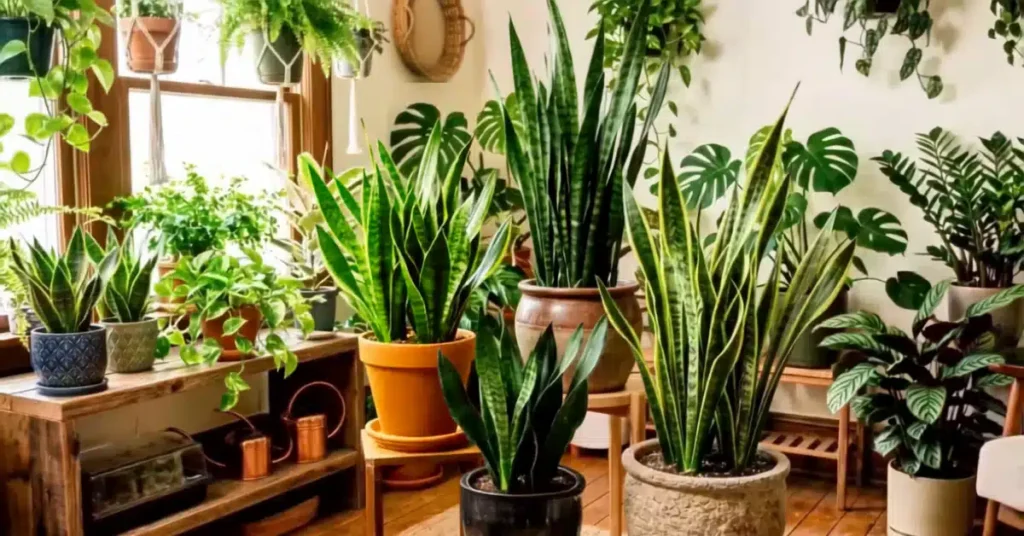
Nearly every list of air-purifying Indoor plants tells you to buy a snake plant or peace lily and stop worrying.
Nobody tells you that the same plant, bought from the exact same nursery, survives in one Bangalore apartment and rots away in another two floors up.
The difference is never the species. It’s almost always three things nobody mentions: the decorative pot it’s sitting in, the AC vent it’s parked under, and the tap water you’ve been using without a second thought.
Fix those three, and the “hard to kill” reputation these plants actually have starts showing up in your home too, not just in the article you read.
Why Air-Purifying Indoor Plants Actually Die in Indian Homes
Before getting into which species to buy, it’s worth being honest about why so many of them fail within a season, because the standard care instructions printed on nursery tags assume conditions most Indian homes simply don’t have.
The double-pot trap. Nurseries sell plants in a plastic grow bag or thin nursery pot, and most buyers slip that straight into a ceramic or brass decorative pot without drainage holes, because it looks nicer on the shelf.
Every time you water, excess water has nowhere to go — it collects invisibly at the bottom of the decorative pot, and the nursery pot inside sits in that puddle for days. Roots quietly drown while the leaves still look fine on top.
This single habit is responsible for more houseplant deaths in Indian homes than pests, light, and temperature combined.
Air conditioning does the opposite of what people assume. Most people worry about a plant getting too cold near an AC vent. The real damage is humidity, not temperature.
Split ACs strip moisture out of the air aggressively, and species like peace lily and spider plant, which evolved in humid tropical undergrowth, start browning at the leaf tips within weeks in a constantly air-conditioned bedroom, regardless of how well you’re watering.
Hard water builds up as invisible salt damage. Much of urban India, Delhi-NCR, parts of Chennai, and large stretches of Rajasthan and Gujarat in particular, runs on hard, mineral-heavy tap water.
Watering exclusively with this over months leaves a white mineral crust on the soil surface and steadily raises salt concentration around the roots, which shows up as scorched, brown leaf edges that many people misdiagnose as underwatering, then make worse by watering even more.
If you’re seeing that white crust on the soil surface or persistent brown leaf edges despite regular watering, it’s worth ruling this out properly rather than guessing — I’ve broken down exactly how hard water damages roots over time and how to fix it in How Hard Water Damages Indoor Plants.
“Low light” doesn’t mean “no light.” Nursery tags say low-light tolerant, and people place these plants in genuinely dark interior corners, sometimes several metres from any window, expecting them to survive on ambient room light alone.
Low-light tolerant means the plant can survive on indirect daylight, not artificial bulb light or a windowless passage.
Nobody feeds an indoor plant, ever. Outdoor garden soil gets replenished by organic matter and monsoon nutrient cycles.
A pot has a fixed, finite amount of nutrition, and once a plant uses it up, usually within four to six months, growth stalls and the plant becomes far more vulnerable to pests and disease, even though watering has stayed exactly the same.
Once you understand these five causes, the plant-by-plant guide below makes a lot more sense, because the fix for each species below is really a variation on solving these same root problems.
How to Actually Diagnose What’s Going Wrong
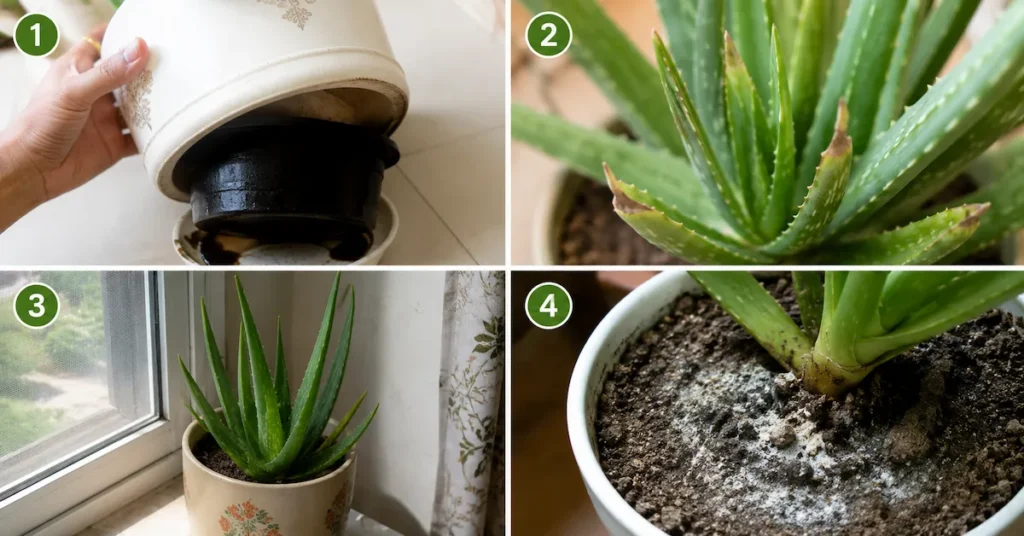
Before changing anything, check these four things on the struggling plant in front of you.
Lift the decorative pot and check underneath the inner nursery pot. If there’s standing water at the base, this is very likely your primary problem, regardless of what the leaves are telling you.
Check leaf tip and edge colour specifically. Brown, crispy tips with otherwise healthy green leaf bodies usually point to either low humidity or hard water salt buildup, not underwatering. Yellowing that starts from the base of the plant and works upward usually points to overwatering or nutrient exhaustion instead.
Check the actual light the plant receives at midday, not what the corner looks like in the evening when you’re home to notice it. Many “low light” spots people choose are genuinely too dark even for shade-tolerant species, because they’re judged after sunset with the room lights on.
Check the soil surface for a white, crusty film. This is mineral salt buildup from hard water and fertiliser residue, and it’s a strong sign your watering source, not your watering frequency, needs attention.
Snake Plant (Sansevieria) — The Most Forgiving, But Not Indestructible
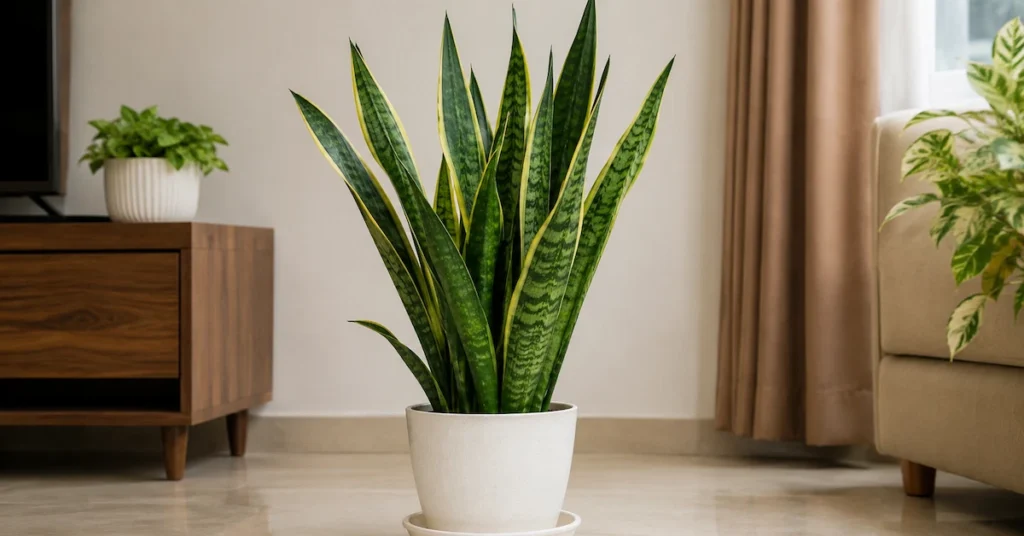
Snake plant has earned its reputation as nearly impossible to kill, and for the most part that holds up, but the one mistake that reliably takes it down in Indian homes is overwatering combined with poor drainage, exactly the opposite of what people assume when a “tough” plant starts declining.
Real care that works: Water only when the top two inches of soil are completely dry, which in most Indian homes outside peak summer works out to roughly once every 10-14 days, not the daily or alternate-day watering habit many people default to for all their houseplants. Snake plant roots rot far faster from consistently moist soil than they suffer from being under-watered.
Where to place it: It genuinely tolerates low indirect light better than almost anything on this list, making it one of the few plants suited to a bedroom corner a few feet from a window, but it will grow noticeably faster and fuller with a few hours of bright, indirect light.
The fix if it’s already struggling: Unpot it and check the roots. Firm, white or pale roots mean the plant is fine and just needs a drier routine going forward. Mushy, brown, foul-smelling roots mean root rot has set in — trim away the damaged portion with a clean blade, let the cut ends air-dry for a few hours, and repot into fresh, fast-draining cactus or succulent mix rather than regular potting soil.
Money Plant (Pothos) — Easiest to Grow, Easiest to Get Wrong on Feeding
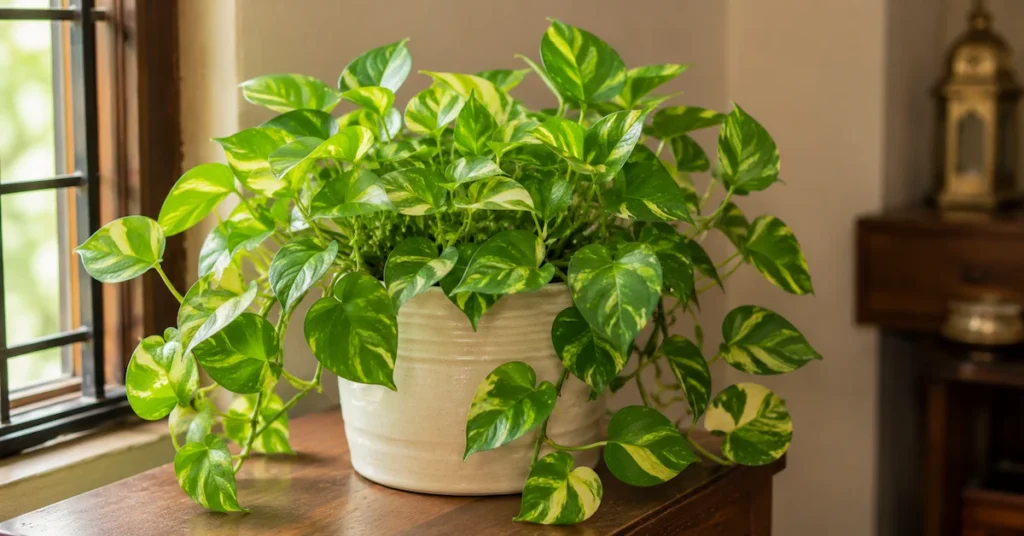
Money plant grows so readily in water that people assume it needs almost no care at all, and that assumption is exactly why so many eventually decline, they’re rarely fed and rarely given fresh growing medium once transitioned to soil.
Real care that works: If growing in water, change the water completely every 7-10 days rather than just topping it up, since stagnant water starves roots of oxygen and encourages algae and root rot at the base.
If growing in soil, feed with a diluted liquid fertiliser once every three to four weeks during the growing months, since soil-grown money plant in a small pot exhausts its nutrients faster than most people expect.
Where to place it: Tolerates low light well, but variegated varieties, the ones with white or yellow patterning, need noticeably brighter indirect light to hold their pattern; in dim corners, they gradually revert to solid green as a survival response.
The fix if it’s already struggling: Leggy, sparse growth with long gaps between leaves almost always means insufficient light, not a watering problem. Move it closer to a window and prune back the leggy vines hard, just above a node, to force denser new growth rather than letting it keep stretching.
Peace Lily (Spathiphyllum) — The One Most Damaged by Air Conditioning
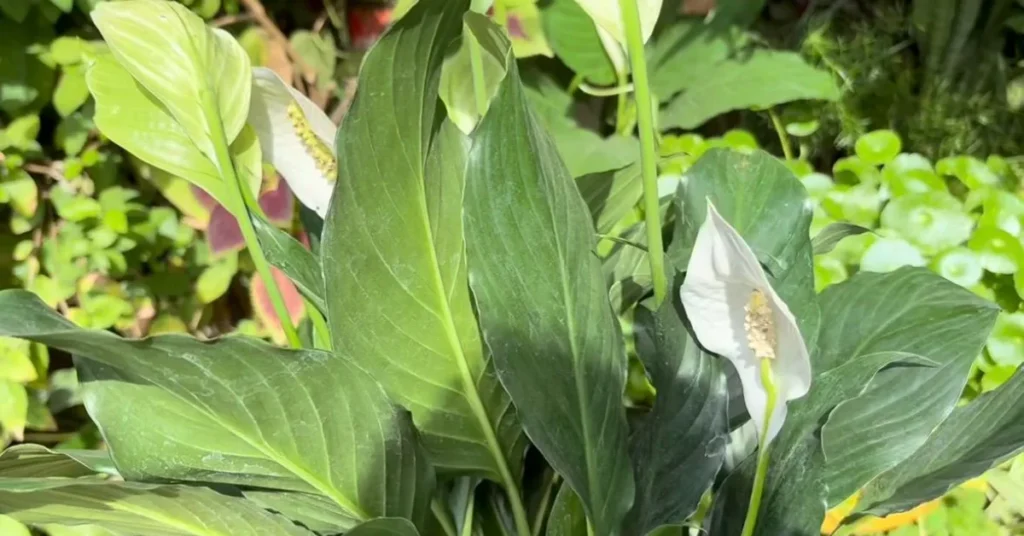
Peace lily is one of the most effective air-purifying species in NASA-style testing, but it’s also the plant most likely to struggle specifically in air-conditioned Indian bedrooms and offices, since it evolved for genuinely humid tropical forest floors.
Real care that works: Keep the soil consistently moist, never bone dry, since this is one of the few common houseplants that will droop dramatically and visibly as an early warning sign before real damage sets in, which is actually useful, it tells you clearly when it needs water rather than leaving you guessing.
Mist the leaves two to three times a week if the plant lives in a continuously air-conditioned room, or place it on a tray of pebbles with water sitting just below the pot base to raise local humidity without waterlogging the roots.
Where to place it: Bright, indirect light suits it best; direct sun scorches the leaves, while genuinely dark corners suppress its flowering almost entirely, so if you’re not seeing the white blooms it’s known for, light is usually the missing factor rather than feeding.
The fix if it’s already struggling: Persistent brown, crispy tips despite regular watering point to low humidity or hard water buildup rather than underwatering; switch to filtered or rainwater if you’re in a hard water area, and increase ambient humidity through misting or a pebble tray before changing anything else.
Areca Palm — Excellent Humidifier, Frequently Overwatered
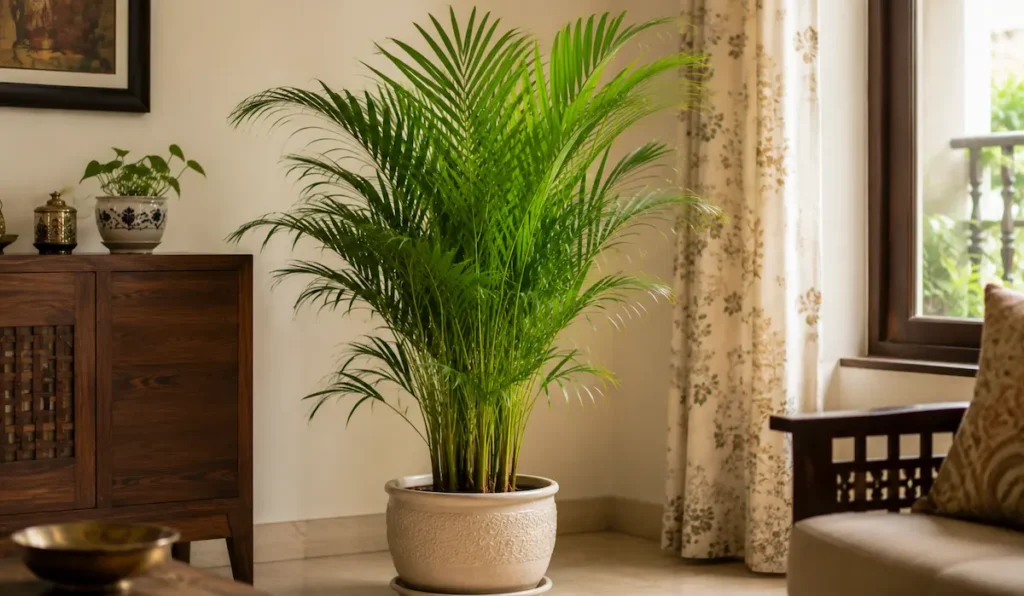
Areca palm doubles as a natural humidifier, which makes it especially useful in dry, air-conditioned Indian living rooms, but its feathery fronds yellow fast under two very different mistakes that people frequently confuse with each other.
Real care that works: Water when the top inch of soil dries out, keeping it evenly moist but never soggy; Areca palm sits in an awkward middle ground where both underwatering and overwatering cause similar yellowing, which is why checking actual soil moisture with a finger matters more here than following a fixed schedule.
Where to place it: Needs considerably brighter indirect light than snake plant or money plant to stay lush; in genuinely low light, it survives but grows sparse and pale rather than full and green, which is a common reason people feel disappointed by it compared to nursery display plants.
The fix if it’s already struggling: Check for spider mites first if fronds are yellowing with fine webbing near the leaf base, since Areca palm in dry, air-conditioned rooms is particularly prone to this pest; wipe fronds down with a damp cloth weekly as prevention, and treat an active infestation with a diluted neem oil spray rather than a chemical miticide, which is unnecessary for a manageable home infestation.
Spider Plant — Great for Monsoon Humidity, Sensitive to Fluoride
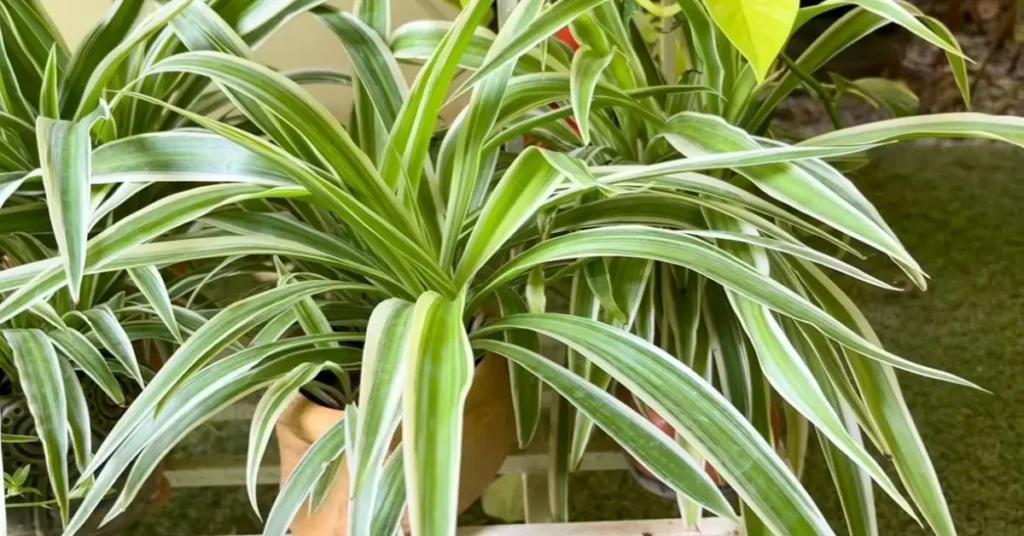
Spider plant is unusually well suited to India’s monsoon humidity swings, but it’s also one of the more fluoride-sensitive common houseplants, which matters given how many Indian municipalities fluoridate or naturally carry fluoride in groundwater.
Real care that works: Allow soil to dry out between waterings, and if using tap water, let it sit uncovered overnight before watering so some chlorine and fluoride can dissipate; better still, use filtered water or accumulated RO reject water, which many Indian households already have running to waste from their purifier.
Where to place it: Adapts well to a range of light conditions, including moderately low light, making it genuinely one of the easier choices for interior rooms without direct window access.
The fix if it’s already struggling: Brown tips on an otherwise healthy-looking plant are the classic fluoride sensitivity symptom in this species specifically; switching your water source alone, without changing anything else about your routine, often resolves this within a few weeks of new growth.
Aloe Vera — Lost More Often to Kindness Than Neglect
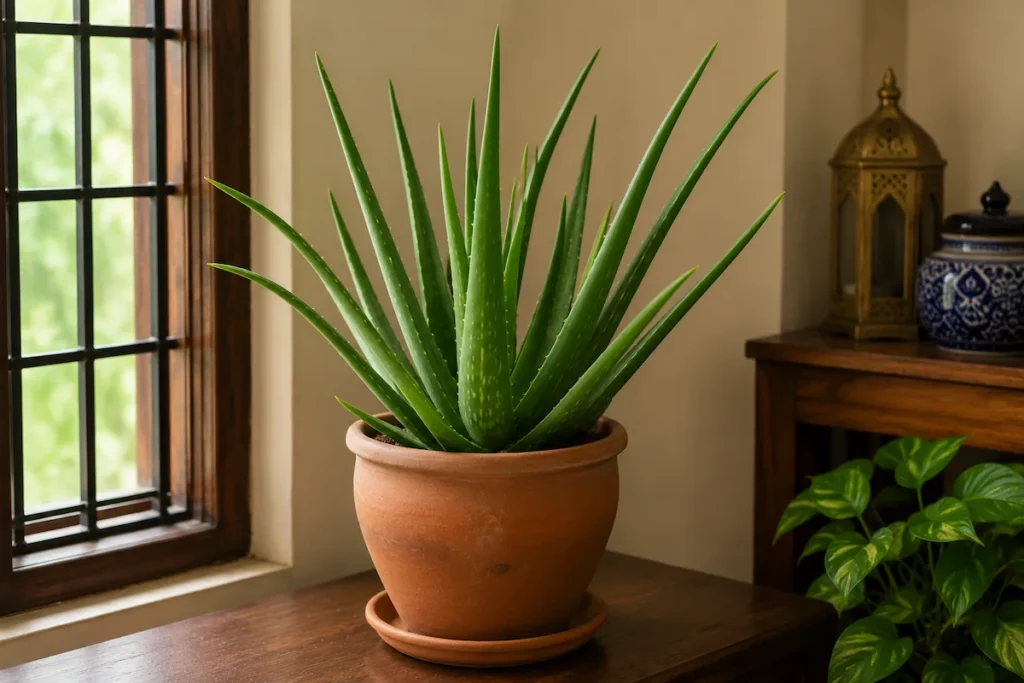
Aloe vera is a succulent, and the single biggest reason it struggles indoors in India is that it gets treated like every other houseplant on a regular watering schedule, when it actually needs to be treated closer to a cactus.
Real care that works: Water deeply but infrequently, allowing the soil to dry out completely between waterings, roughly every two to three weeks depending on your home’s humidity and season; in monsoon months, watering can often be skipped almost entirely if the plant is anywhere near a window with natural humidity.
Where to place it: Needs the brightest light of everything on this list; a dim living room corner that keeps snake plant perfectly happy will leave aloe vera pale, stretched, and weak within a couple of months. A bright windowsill or balcony corner suits it far better than a true interior spot.
The fix if it’s already struggling: Soft, mushy, translucent leaves mean root rot from overwatering, almost always; repot immediately into a gritty, fast-draining cactus mix, cut away any damaged roots, and hold off watering completely for at least a week after repotting to let the roots recover.
The Real Placement Rule Nobody Explains Properly
Most articles tell you which room suits which plant, but the more useful rule is about distance from your actual light source, not room labels.
In a typical Indian apartment, a spot within about three feet of an east or west-facing window gets meaningfully bright indirect light.
Beyond six feet from any window, even “low light tolerant” species slow down substantially, and beyond ten feet in a room with no direct window view at all, very few common houseplants will do more than survive indefinitely without ever really growing.
If you genuinely want a specific dark corner, a hallway, a windowless bathroom, an interior study, to have a thriving plant, rotate two matching plants between that spot and a brighter location every two to three weeks rather than expecting one plant to permanently tolerate insufficient light. This single habit saves more struggling low-light plants than any fertiliser or pest treatment.
Air-Purifying Indoor Plant Care Checklist for Indian Homes
- Drill or punch drainage holes in every decorative outer pot, or always empty standing water from the base within an hour of watering
- Check actual soil moisture with a finger before watering, rather than following a fixed daily or alternate-day schedule
- Increase misting or use a pebble tray for humidity-loving species in air-conditioned rooms
- Switch to filtered water, rainwater, or overnight-rested tap water if you’re in a hard water or high-fluoride area
- Feed soil-grown plants with a diluted liquid fertiliser every three to four weeks during active growing months
- Wipe dust off broad leaves monthly, since dust layers block light absorption and reduce the plant’s actual air-purifying function
- Rotate plants between darker and brighter spots every two to three weeks if you need greenery in a low-light corner
- Inspect leaf undersides and stem joints for pests every week, especially in dry, air-conditioned rooms
- Repot into fresh soil once every 12-18 months, since indoor potting mix exhausts its nutrients faster than most people expect
Common Mistakes Plant Owners Make
Buying based on the “low maintenance” label alone, without checking whether the specific spot at home actually gets the light that label assumes. Low maintenance still means some baseline light and drainage requirement, not zero requirements at all.
Watering on a fixed calendar schedule for every plant identically, when species with very different root structures and native climates are being treated the same way. A snake plant and a peace lily in the same room need genuinely different watering rhythms.
Assuming a decorative pot without drainage is fine as long as you’re careful with watering. Even careful watering eventually leaves excess water pooling at the base over weeks; the safest fix is always a drainage hole, with a saucer underneath to protect flooring.
Never repotting after the nursery purchase. Plants are frequently sold root-bound in small nursery bags, and left in that same bag or pot for years, they eventually run out of room and nutrients regardless of how well you otherwise care for them.
Reaching for a chemical pesticide at the first sign of any pest. Most common indoor pest issues, mealybugs on money plant, spider mites on Areca palm, respond well to a simple neem oil and mild soap spray, and chemical sprays indoors carry their own air quality trade-off that somewhat defeats the purpose of growing an air-purifying plant in the first place.
What a Realistic Recovery Timeline Looks Like
If you’ve corrected drainage, watering rhythm, and light placement on a struggling plant, don’t expect visible recovery within days.
Root systems that have been sitting in poor drainage typically need two to three weeks before new, healthy root growth resumes enough to support visible improvement above soil.
Leaf damage that’s already happened, brown tips, yellowed lower leaves, won’t reverse itself; the fix is about preventing further damage and waiting for new, healthy growth to replace it, not restoring the damaged leaves themselves.
Most of the plants on this list, given corrected conditions, show clear new growth within four to six weeks.
If a plant shows zero new growth after six weeks of corrected care, and especially if the stem base has gone soft, it’s usually more realistic to take a healthy cutting where possible, money plant and spider plant both propagate easily this way, rather than continuing to nurse a root system that’s gone beyond recovery.
Final Thought
None of these plants are actually difficult. What’s difficult is the gap between a nursery tag written for ideal conditions and the specific reality of your home, your water, your AC, your particular corner’s light.
I’ve lost a peace lily to hard water buildup before I ever figured out what was actually happening, and the fix, once I knew what to look for, took one afternoon and a filter jug.
Get the drainage right, match the light to what the plant actually needs rather than what the label promises, and feed it occasionally like you would any other living thing that’s been asked to grow in a fixed amount of soil for years.
Do that, and the “impossible to kill” reputation these plants have earned elsewhere starts showing up in your home too.
