
Throwing puja flowers in the bin every day? Most people do — but is that really the only option? (Hint: not even close.) Here are 7 tested ways I turn wilted marigolds and roses into compost, fertiliser, and pest spray for my indoor and garden plants.
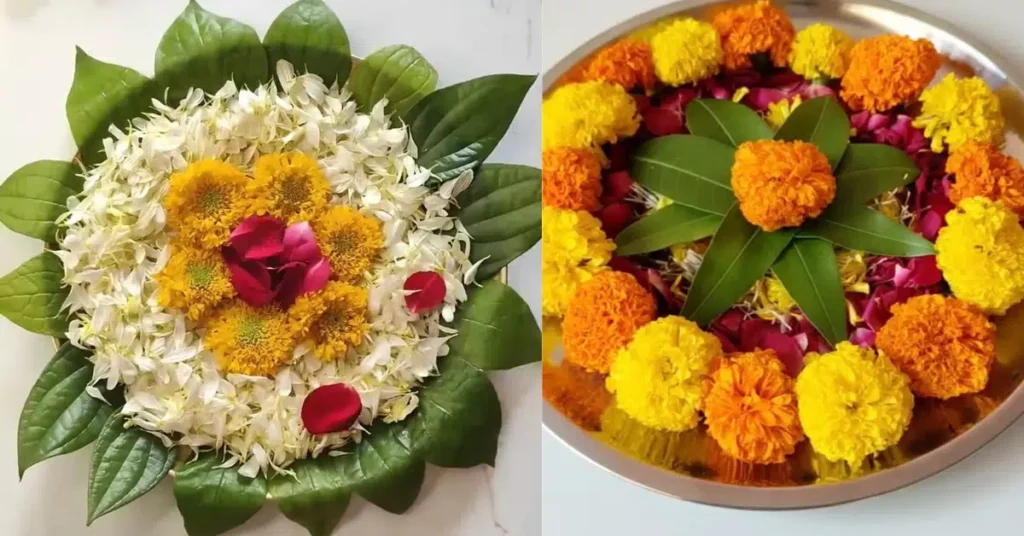
Every morning after aarti, you’re probably left holding a plate of wilted marigolds, rose petals, and tulsi leaves with nowhere respectful to put them.
Most of us end up dropping them in the kitchen bin out of habit, or worse, tossing them into a drain. I used to do the same thing for years, until a Bengaluru terrace gardener showed me her genda-petal compost bin and I realised how much I was wasting.
Puja flowers for plants aren’t just a feel-good idea — they’re genuinely one of the most underused organic resources sitting in Indian homes every single day.
Here are seven practical, tested ways to turn that flower waste into something your indoor pots and garden beds will truly appreciate.
Why Puja Flowers Are a Goldmine for Your Garden (Not Just Waste)
Before jumping into the methods, it helps to understand why puja flowers for plants work so well, because this isn’t just a spiritual nicety — it’s basic plant nutrition.
Marigold (genda), rose (gulab), jasmine (mogra/chameli), hibiscus (jaba), chrysanthemum, and lotus petals are all soft, high-moisture, nitrogen-rich organic material.
In composting terms, they fall into the “green” category, similar to vegetable peels or grass clippings. Marigold in particular is naturally rich in potassium and carries mild, research-backed pest-deterrent compounds in its stems and roots — this is actually why farmers in Maharashtra and Karnataka plant marigold borders around vegetable fields to keep nematodes away.
Rose petals break down quickly and add a gentle boost of micronutrients. Tulsi leaves, when composted, bring in natural antimicrobial properties that help keep compost piles from turning smelly or fungus-prone.
So when people ask me whether puja flowers for plants is just an eco-friendly trend or an actual gardening technique, my answer is simple: it’s real horticulture, dressed in tradition.
The only thing standing between your puja thali and a healthier garden is knowing the right method for your specific flowers and your specific plants — indoor pots need a very different approach than an open kitchen garden bed, and I’ll cover both.
One more practical reason to care: festival season in India — Ganesh Chaturthi, Navratri, Diwali, and daily temple offerings — generates an enormous volume of floral waste. Municipal bodies across cities have repeatedly flagged flower waste clogging drains and rivers when it’s dumped instead of composted.
Using puja flowers for plants at the household level is a small habit that solves a real civic problem, one balcony at a time.
1. Turn Puja Flowers Into Nutrient-Rich Compost (The Foundation Method)
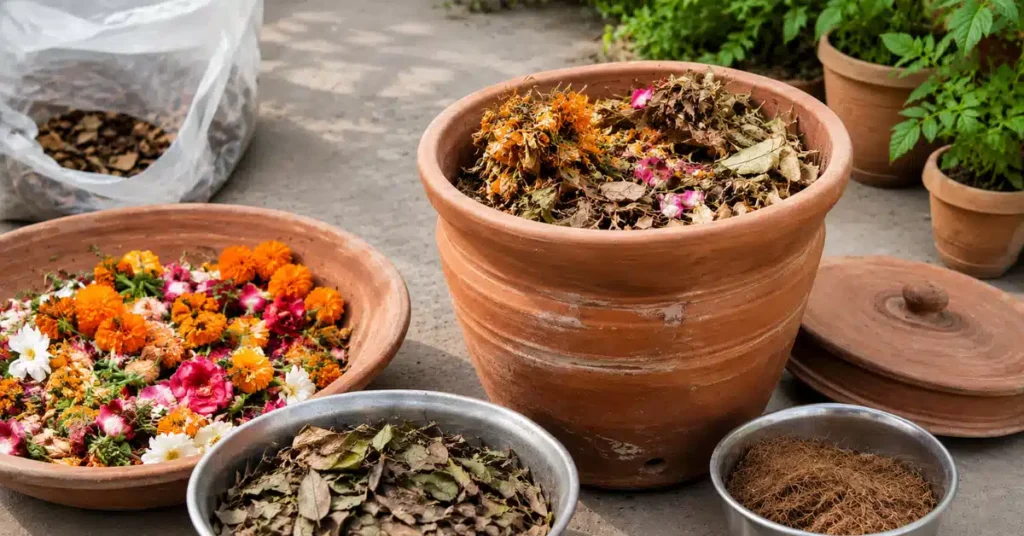
This is the method every other technique on this list builds on, so I’m giving it the most detail.
Composting puja flowers for plants isn’t complicated, but most people get the ratios wrong and end up with a smelly, slimy mess instead of usable khaad. Here’s the method I use on my own balcony, adapted for Indian kitchen and apartment setups.
Step-by-step process:
- Separate immediately after puja. Remove any plastic thread, metallic decoration, staples, or synthetic mala string before the flowers dry out — it’s much easier to strip these off fresh flowers than dried, brittle ones.
- Chop or tear larger material. Whole marigold garlands and rose stems take far longer to break down. Tear garlands apart and roughly chop any thick stems into 1–2 inch pieces.
- Balance greens and browns. Puja flowers are “green” (nitrogen-rich, high moisture). For every one part of fresh flowers, add roughly three parts “brown” material — dried leaves, coco peat, shredded newspaper, or dry coconut husk. This 1:3 ratio prevents the compost from turning wet and foul-smelling, which is the number one complaint people have when they first try composting puja flowers for plants.
- Layer in a bin or clay pot composter (khamba). A simple two-pot clay khamba system, widely used in South Indian apartments, works beautifully for this. Layer flowers, then browns, then a thin sprinkle of soil or old compost as a microbial starter.
- Keep it moist, not wet. The pile should feel like a wrung-out sponge. In Indian summers, mist it lightly every 3–4 days; in monsoon, keep the lid on to avoid waterlogging.
- Turn weekly. Use a small garden fork or even a stick to aerate the pile every 5–7 days. This single step determines whether your compost matures in 6 weeks or sits half-rotten for six months.
- Wait for it to turn dark and earthy. Finished flower compost has no flower shape left, smells like forest soil, and is cool to the touch. This usually takes 6–10 weeks in Indian conditions, faster in warmer coastal cities, slower in Delhi winters.
How to use finished flower compost:
- Mix one handful into the top 2 inches of soil for a 6-inch potted plant, once every 4–6 weeks.
- For garden beds, work in 1 kg of finished compost per square metre before the flowering or fruiting season.
- Never add fresh, undecomposed flowers directly into a pot’s soil — this is the single biggest mistake I see with people trying puja flowers for plants for the first time. Fresh flower matter left in a container attracts fungus gnats and can cause root-zone fungal issues, especially in low-airflow apartment balconies.
One thing that took my own compost from “okay” to genuinely rich was mixing in kitchen scraps alongside the flowers, rather than composting flowers alone.
Watermelon rinds are especially good for this — they break down fast, hold moisture well, and bring a different set of nutrients than flowers do on their own.
If you eat a lot of watermelon through summer, it’s worth setting the peels aside instead of the bin; I’ve written a separate guide on turning watermelon peels into a natural fertiliser that works as a companion routine to this one.
2. Make Flower-Infused Fertiliser Water (A Gentle Liquid Feed)
This is my personal favourite for indoor plants because it avoids any risk of mould in pots — a genuine concern with houseplants that don’t get much airflow or direct sun.
How to make it:
- Take a handful of fresh or slightly wilted puja flowers — rose, marigold, and hibiscus work best for this.
- Soak them in a litre of water in a covered container, kept out of direct sunlight.
- Let it sit for 3–5 days, stirring once a day. You’ll notice the water turning slightly amber and developing an earthy smell — that’s the nutrients leaching out.
- Strain out the flower material (compost the solids using Method 1 above — nothing wasted).
- Dilute the liquid 1:3 with plain water before using.
How to apply: Water your indoor plants with this diluted mix once every two weeks instead of plain water. It works particularly well for money plants, pothos, peace lily, and other common Indian indoor varieties that respond well to gentle, frequent feeding rather than strong fertiliser doses.
This is genuinely one of the most low-effort, high-reward ways to use puja flowers for plants indoors, because it sidesteps the two biggest indoor composting worries — smell and gnats — entirely.
3. Dry and Crush Petals Into a Potassium-Rich Top Dressing
If you have a flowering plant that’s producing lots of leaves but few blooms, this method is worth trying. Marigold, rose, and hibiscus petals are naturally higher in potassium relative to nitrogen once dried, and potassium is the nutrient most directly linked to flower and fruit production.
Method:
- Spread petals on a newspaper or steel plate in a shaded, well-ventilated spot — not direct harsh sun, which destroys some of the beneficial compounds.
- Let them dry for 4–6 days until crisp and crumbly.
- Crush them by hand or with a mortar and pestle into a coarse powder.
- Sprinkle a tablespoon around the base of a flowering potted plant, then lightly work it into the top layer of soil.
- Water lightly afterward to help it settle.
Use this once every three weeks during the active growing and flowering season (roughly February to June, and again post-monsoon in most Indian regions). This is a slow-release, gentle boost — it won’t burn roots the way synthetic fertiliser can if over-applied, which makes it particularly forgiving for beginner gardeners experimenting with puja flowers for plants for the first time.
4. Use Dried Petals as Natural Mulch and Ground Cover
Mulching is one of those techniques that professional gardeners swear by and home gardeners often skip — and dried puja flowers make a surprisingly good, freely available mulch material for terrace gardens and open beds.
Why it works:
- A layer of dried petals on top of soil reduces surface evaporation, which matters enormously in Indian summer heat when terrace pots can dry out within hours.
- It suppresses weed germination by blocking light to the soil surface.
- As it slowly breaks down with watering, it feeds the topsoil continuously — a slower, gentler version of Method 1’s compost.
- Marigold mulch specifically has a mild natural pest-deterrent effect against certain soil-dwelling pests, thanks to compounds in its tissue.
How to apply:
- Dry the flowers as described in Method 3, but you don’t need to crush them — whole dried petals work fine.
- Spread a thin, even layer (about half an inch) around the base of plants, keeping it slightly away from direct stem contact to avoid collar rot in humid weather.
- Top up every 2–3 weeks as the layer breaks down.
This is best suited to garden beds, large terrace pots, and raised beds rather than small indoor containers, where a mulch layer can trap excess moisture against the pot rim.
A note on which flowers mulch best: Marigold and chrysanthemum hold their shape longer once dried, which makes them ideal for mulching because they don’t disintegrate into dust after one watering. Rose and jasmine petals are thinner and break down faster, which is fine if you’re topping up frequently, but not ideal if you want a mulch layer that lasts two to three weeks between refreshes. Knowing this small difference is what separates a casual attempt at using puja flowers for plants from a method that actually holds up through an Indian summer.
5. Feed Them to a Vermicompost Bin
If you already run a vermicompost setup based on the vermicomposting method recommended by ICAR — increasingly common in Indian housing societies and RWAs — puja flowers for plants can go straight in as worm feed, provided you follow a couple of important precautions.
Rules for feeding puja flowers for plants to worms:
- Chop material into small pieces; worms process smaller fragments far faster.
- Introduce flowers gradually, mixed with kitchen vegetable peels, rather than dumping a large quantity at once, which can heat up the bin and stress the worm population.
- Avoid adding flowers that have been near incense ash or camphor residue in large quantities — a small amount is fine, but concentrated ash can alter the bin’s pH.
- Keep the bin moist but never soggy; excess moisture is the most common reason vermicompost bins fail in humid Indian climates.
Vermicompost produced this way is noticeably richer than regular compost and works beautifully as a top dressing for both indoor pots and garden beds — a tablespoon per 6-inch pot monthly is plenty; it’s concentrated, so more isn’t better here.
6. Make a Natural Pest-Repellent Spray From Marigold and Tulsi
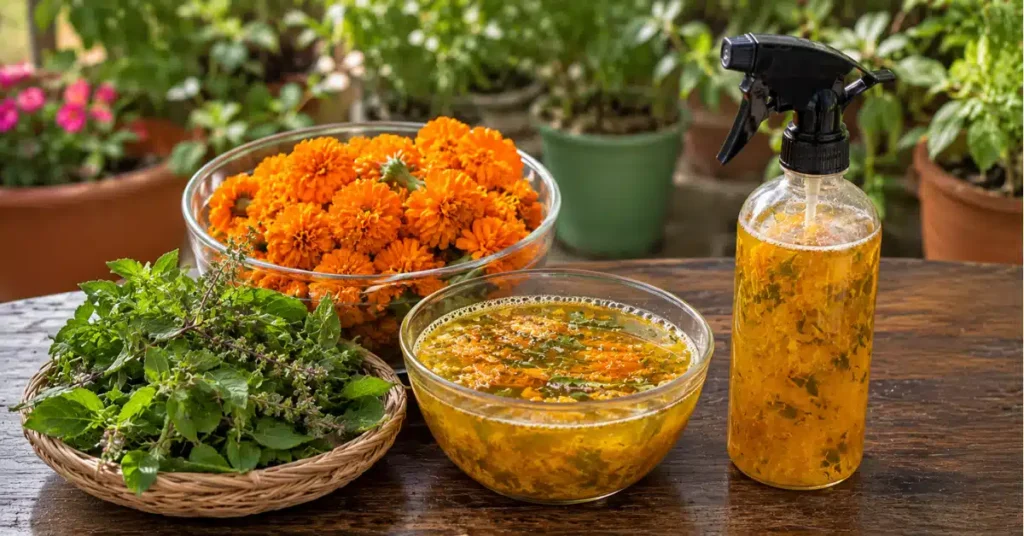
This is a lesser-known use, but it’s backed by real horticultural logic: marigold and tulsi both contain natural compounds that many common garden pests avoid.
Method for turning puja flowers for plants into a pest spray:
- Take a cup of marigold flowers and a handful of tulsi leaves (tulsi offered in puja works fine).
- Crush them lightly to release the oils, then soak in two cups of water overnight.
- Strain the liquid the next morning.
- Add a few drops of mild liquid soap (not detergent) as a natural surfactant so the spray sticks to leaves.
- Spray on the undersides of leaves in the early morning or evening, never in harsh midday sun, which can scorch leaves through the moisture droplets.
This isn’t a substitute for treating a serious pest infestation, but as a preventive spray applied weekly, it genuinely helps keep aphids and small soft-bodied pests off tulsi, curry leaf, and other common Indian balcony plants. It’s a satisfying, closed-loop way to use puja flowers for plants — the same tulsi and marigold offered to the deity end up protecting the very plants you’re growing.
7. Start a Community Flower-Composting Bin at Your Temple or Housing Society
The first six methods of using puja flowers for plants work at home. This one scales up, and it’s where puja flowers for plants can create real neighbourhood-level impact.
Many temples and apartment complexes across India generate kilograms of floral waste daily, and most of it currently goes to municipal dumps or drains. Setting up a shared composting bin changes that equation entirely.
Practical steps to start one:
- Approach your RWA or the temple committee with a simple proposal — a designated composting corner needs very little space, just a few large bins or a pit.
- Use a two- or three-bin rotation system: one bin actively receiving fresh flowers, one maturing, one ready to harvest.
- Assign one person (often the temple’s maintenance staff or a volunteer gardening group) to manage layering and turning — consistency matters more than complexity.
- Distribute the finished compost back to society gardens, temple grounds, or local parks. Several temples in Tamil Nadu and Maharashtra now run similar community composting initiatives across India, turning what was pure floral waste into visible, thriving temple gardens.
- Keep a simple logbook of quantities composted — this data is genuinely useful if you ever want to apply for a municipal Swachh Bharat grant or green-society certification, both of which increasingly reward measurable waste diversion.
This method takes the most coordination, but it’s also the one with the biggest environmental payoff, because it stops floral waste from reaching rivers and drains at the source, rather than relying on individual households to each solve the problem alone.
Best Time of Year to Use Puja Flowers for Plants (A Festival-Season Calendar)
One thing I’ve learned from years of composting on an Indian terrace is that the volume of puja flowers you generate changes drastically through the year — and your method should change with it. Here’s how I plan around the festival calendar:
- Navratri and Durga Puja (September–October): Hibiscus and marigold volumes spike sharply, especially in Bengal, Odisha, and parts of West India. This is the ideal window to start a fresh compost batch (Method 1), since you’ll have enough bulk material to hit a healthy 1:3 ratio with dry leaves that have also started falling as the monsoon eases.
- Diwali (October–November): Marigold garlands dominate. This is peak season for the dried petal top-dressing (Method 3) and mulch (Method 4), since marigold holds its shape well when dried and the weather is cool enough for slow, even drying in shade.
- Ganesh Chaturthi (August–September): Heavy monsoon humidity makes open-air composting trickier. Lean on the covered clay khamba or a lidded bin, and consider the liquid feed method (Method 2) for indoor plants, since it doesn’t depend on airflow the way solid composting does.
- Daily temple and home puja flowers (year-round): Small, steady quantities of rose, jasmine, and tulsi are best handled through the liquid feed method or a small ongoing compost bin, rather than waiting to accumulate a large batch.
Planning your approach around the season is a small adjustment, but it’s the difference between a compost bin that works reliably all year and one that only gets used in bursts around major festivals.
Tools You Actually Need (No Fancy Equipment Required)
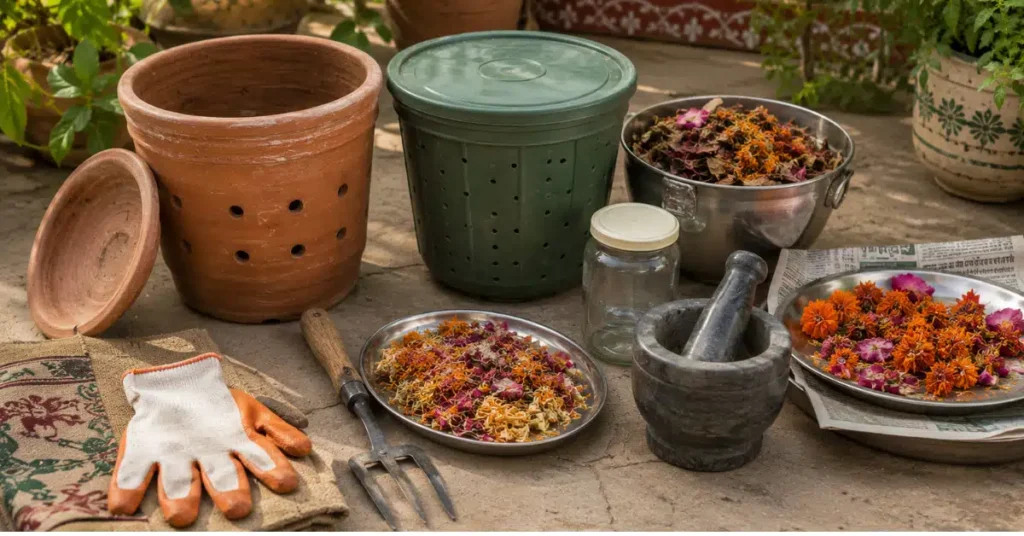
A lot of people assume composting puja flowers for plants requires specialised equipment. In practice, here’s what genuinely helps, and none of it needs to be expensive:
- A two-pot clay khamba or a simple plastic bin with drainage holes for composting
- A pair of garden gloves
- A small hand fork or even a sturdy stick for turning the pile
- A shallow steel plate or old newspaper for sun-drying petals in the shade
- A covered glass or ceramic jar for the liquid feed method
- A mortar and pestle, or simply your hands, for crushing dried petals into powder
That’s the complete list. I’ve tested all seven methods on a standard Indian apartment balcony with nothing more elaborate than this, and it’s more than enough to make consistent, effective use of puja flowers for plants throughout the year.
Quick Reference: Which Method Suits Which Plant?
| Your Situation | Best Method to Use |
| Small indoor pots (money plant, pothos, peace lily) | Method 2 (Flower-infused liquid feed) |
| Balcony flowering plants (hibiscus, rose, marigold) | Method 3 (Dried petal top dressing) |
| Open terrace beds or kitchen garden | Method 1 (Compost) + Method 4 (Mulch) |
| Existing vermicompost bin at home | Method 5 |
| Aphid or soft-pest issues on tulsi/curry leaf | Method 6 (Marigold-tulsi spray) |
| Temple, RWA, or society-level waste | Method 7 (Community composting) |
The Do’s and Don’ts Checklist Every Indian Gardener Should Follow
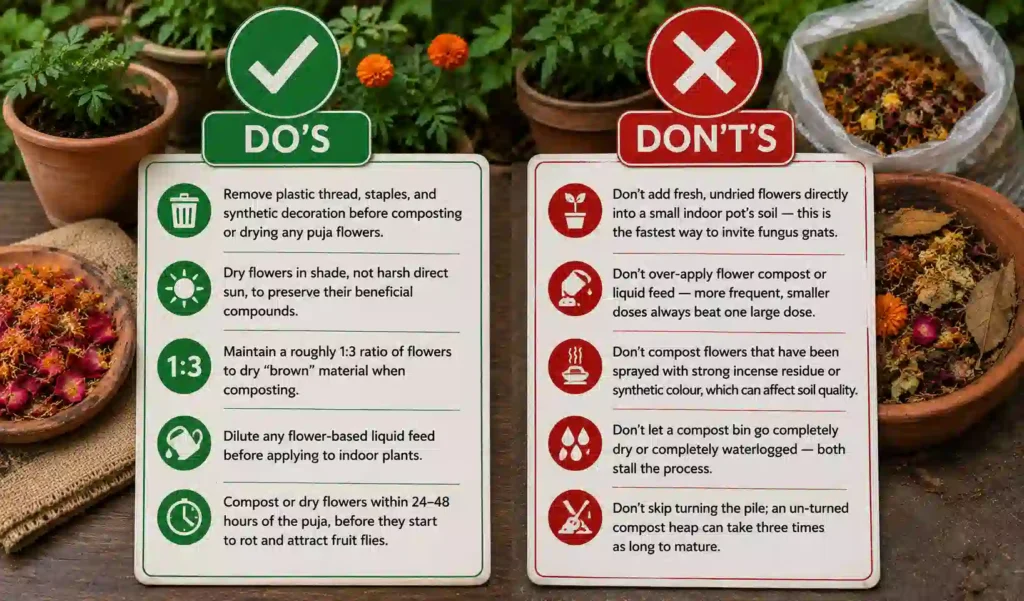
Do:
- Remove plastic thread, staples, and synthetic decoration before composting or drying any puja flowers.
- Dry flowers in shade, not harsh direct sun, to preserve their beneficial compounds.
- Maintain a roughly 1:3 ratio of flowers to dry “brown” material when composting.
- Dilute any flower-based liquid feed before applying to indoor plants.
- Compost or dry flowers within 24–48 hours of the puja, before they start to rot and attract fruit flies.
Don’t:
- Don’t add fresh, undried flowers directly into a small indoor pot’s soil — this is the fastest way to invite fungus gnats.
- Don’t over-apply flower compost or liquid feed — more frequent, smaller doses always beat one large dose.
- Don’t compost flowers that have been sprayed with strong incense residue or synthetic colour, which can affect soil quality.
- Don’t let a compost bin go completely dry or completely waterlogged — both stall the process.
- Don’t skip turning the pile; an un-turned compost heap can take three times as long to mature.
Common Problems (and Real Fixes) When Using Puja Flowers for Plants
Even with the best intentions, first-time attempts at using puja flowers for plants don’t always go smoothly. Here are the issues I see most often, and how to fix them without giving up on the process.
“My flower compost smells bad.” This almost always means too much moisture or too much “green” material relative to “brown.” Add dry leaves or shredded newspaper and turn the pile immediately; the smell should reduce within a couple of days.
“I’m seeing tiny flies around my indoor pot after adding flowers.” This points to fresh, undecomposed flower material sitting in the pot. Remove any visible fresh petals, let the topsoil dry out slightly between waterings, and switch to the fully-matured compost or the liquid feed method instead for indoor use.
“My flowers just turn slimy and black instead of composting properly.” Usually a moisture and airflow problem. Waterlogged, low-oxygen piles rot rather than compost. Add more dry brown material and turn more frequently — every 3–4 days until it recovers.
“I don’t have outdoor space for a compost bin at all.” The liquid feed method (Method 2) and the dried petal top-dressing (Method 3) both work entirely indoors with no odour risk, using just a covered container and a sunny windowsill for drying.
Bringing It All Together
What struck me most when I started using puja flowers for plants in my own composting routine wasn’t the money saved on fertiliser — though that adds up — it was how naturally the whole cycle closed itself. Flowers offered in devotion end up nourishing the tulsi plant they were once picked near, or the rose bush that will bloom again next season. That’s not a coincidence; it’s just good organic gardening practice wearing a familiar, everyday routine.
You don’t need to adopt all seven methods of using puja flowers for plants at once. If you’re short on time, start with the flower-infused liquid feed for your indoor plants — it takes five minutes to set up and needs no outdoor space. Once that becomes a habit, add composting or mulching for your balcony or terrace garden. And if your temple or housing society generates large volumes of floral waste daily, that’s where a community composting bin can genuinely change how much organic waste your neighbourhood sends to landfill.
Next time the puja thali is cleared and those marigolds and roses are looking a little tired, don’t reach for the dustbin — put puja flowers for plants to work instead. Your plants — indoor or outdoor — are quite literally waiting to be fed.

FAQs
Can I directly put temple flowers in my plant pot without composting?
No — fresh, undried flowers placed directly in a pot’s soil tend to rot on the surface, attract fungus gnats, and can encourage fungal growth, particularly in indoor conditions with limited airflow. Dry, compost, or convert them into liquid feed first.
Which puja flowers are best for composting?
Marigold, rose, hibiscus, and chrysanthemum break down quickly and are nutrient-dense. Lotus petals and thicker flowers take slightly longer but compost well once chopped. Tulsi leaves add helpful antimicrobial properties to the mix.
How long does it take for puja flowers to turn into usable compost?
In most Indian climates, with regular turning and correct moisture, 6–10 weeks. Warmer, humid regions compost faster; cooler winter months in North India will take a little longer.
Is it true that marigold repels garden pests?
Yes, to a meaningful extent. Compounds in marigold roots and tissue are known to deter certain nematodes and soft-bodied pests, which is why marigold is commonly planted as a border crop around vegetable beds across India.
Can I use puja flowers for plants in an apartment with no balcony composting space?
Absolutely — the flower-infused liquid feed and the dried petal top-dressing methods need only a small covered container and a sunny spot, making them ideal for compact apartment living.
Is flower compost safe for edible plants like tomatoes or herbs?
Yes, once fully matured (dark, crumbly, no flower shape or smell remaining), flower compost is safe and beneficial for edible plants, functioning much like any other organic compost.
Do I need to remove the stems before composting puja flowers?
Thick, woody stems from lotus or larger garlands take considerably longer to break down than petals. You don’t have to remove them, but chopping them into smaller pieces speeds up the process significantly when using puja flowers for plants at home.
Can I mix puja flowers with regular kitchen waste in the same compost bin?
Yes, and it’s often a good idea. Vegetable peels, fruit scraps, and puja flowers together create a more balanced compost than flowers alone, since kitchen waste adds variety to the nutrient profile.
How often should I feed my plants with flower-based compost or liquid feed?
For most home plants, once every three to four weeks is sufficient. Over-feeding, even with a gentle organic input like puja flowers for plants, can stress root systems, so consistency in small doses beats occasional large applications.
Will using temple flowers attract insects into my home?
Only if fresh, undried flowers are left sitting out in the open for several days. Composting, drying, or converting them into liquid feed promptly — ideally within a day or two — prevents this entirely, which is why timing matters as much as the method itself.
This guide is based on hands-on composting and container-gardening experience across Indian apartment and terrace conditions. If you try any of these methods, I’d genuinely like to know which one worked best for your plants — drop your results in the comments.