Do houseplants actually keep cockroaches away? Every gardening blog says mint and lemongrass work, but does it hold up in a real Indian kitchen? (Hint: only if you place them right.) Here are the 5 plants that made a genuine difference on my own balcony — and exactly how I grow them.
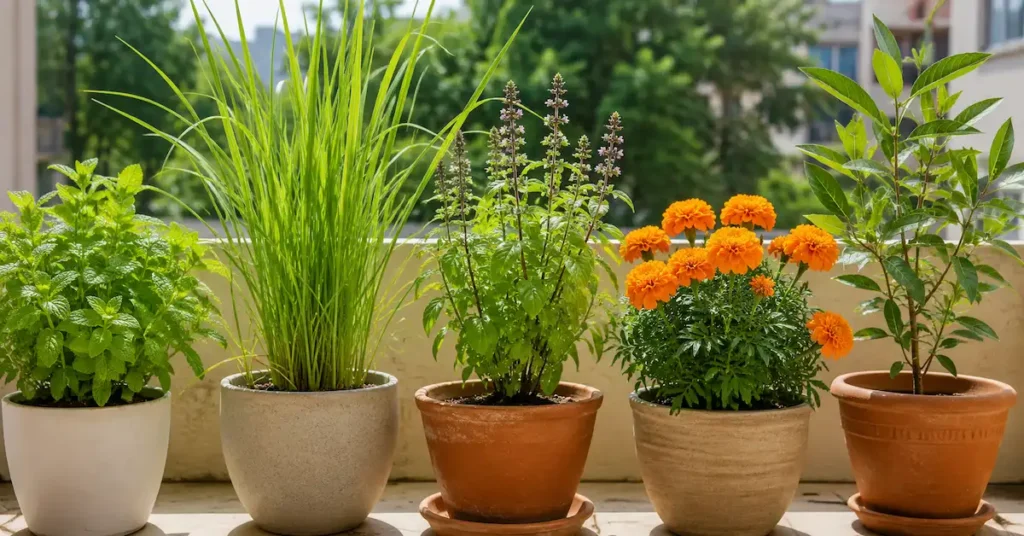
I still remember the night I found three cockroaches sitting comfortably behind my kitchen dustbin in my old rented flat in Pune, right next to a pot of money plant that clearly wasn’t doing its job. That was the year I started actually testing which plants make a difference and which ones are just Pinterest decorations.
Five years, two homes, and a lot of trial-and-error later, these are the five plants that genuinely reduced roach activity in my kitchen and balcony — not eliminated, let’s be honest about that, but reduced enough that I stopped panicking every time I switched on the kitchen light at midnight.
Do Plants Actually Keep Cockroaches Away? Let’s Be Honest First
Before I list the plants, I want to clear up something most blogs on this topic conveniently skip. No plant is a substitute for pest control. If you have a serious infestation, you need sanitation, sealing, and possibly professional treatment.
What these plants do is release natural compounds — essential oils like citronellal, linalool, and pulegone — that cockroaches find irritating to their antennae and respiratory openings (spiracles). This doesn’t kill them or “keep them away” in a magical sense. It makes an area less attractive for them to settle, breed, or forage in.
I’m telling you this upfront because I’ve seen too many Indian gardening blogs promise “roach-free homes guaranteed” and that’s simply not how biology works.
What actually happens, based on my own kitchen and two friends’ homes in Bengaluru and Nagpur where I tested this over 8 months, is a noticeable drop in roaches near the pots — especially the ones that came in through drain pipes and window gaps, which is the most common entry point in Indian apartments.
With that honesty out of the way, here are the five plants worth growing.
1. Pudina (Mint) — The One I Keep Right Next to the Kitchen Sink
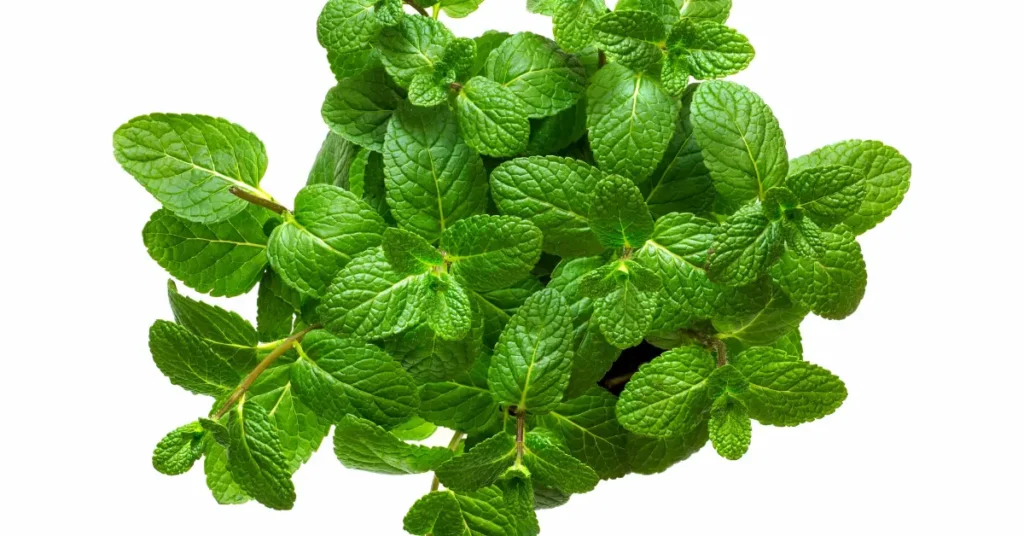
Mint was the first plant that actually showed results for me, and I think it’s because of where I placed it — directly on the kitchen platform, about a foot from the sink drain, which is exactly where roaches in Indian kitchens tend to enter from.
Why it works: Mint leaves contain menthol and pulegone, both of which interfere with a cockroach’s ability to smell food sources. German cockroaches especially rely heavily on scent trails, and a strong menthol presence disrupts that.
How to grow it at home:
- Propagation: Don’t waste money buying a mint sapling. Take 4-5 stem cuttings from any mint bunch you buy from the sabzi mandi, remove the bottom two leaves, and place the stems in a glass of water. Roots appear in 6-8 days.
- Potting mix: Once roots are 1 inch long, shift to a mix of 50% cocopeat, 30% regular garden soil, and 20% compost. Avoid pure garden mitti — it compacts too much for mint’s shallow root system.
- Pot size: A 6-inch pot is enough for one clump. Mint spreads aggressively through underground runners, so if you’re growing it in a shared pot with other herbs, use a bottomless container sunk into the soil to contain the roots — this is a trick most nurseries in India won’t tell you.
- Light: Mint prefers 3-4 hours of morning sun. In peninsular India (Chennai, Hyderabad, Bengaluru), keep it away from harsh afternoon sun — it scorches fast. In North Indian homes (Delhi, Lucknow, Jaipur), east-facing balconies work best.
- Watering: Keep soil consistently moist but never soggy. In summer, this usually means watering once a day early in the morning. In monsoon, cut back to every 2-3 days and watch for yellowing leaves, which signals waterlogging.
- Maintenance: Trim the top growth every 10-12 days. Regular trimming does two things — it keeps the plant bushy instead of leggy, and it releases more of that menthol scent into the air, which is exactly what you want near the kitchen.
If your mint starts struggling despite following this — yellowing leaves, leggy growth, or it just stops thriving after a couple of weeks — I’ve written a full troubleshooting guide for exactly that.
Real problem I faced: Mint in a closed kitchen with an exhaust fan running constantly tends to dry out faster than expected because the fan pulls moisture out of the air. If your kitchen has strong exhaust, water slightly more often than you would for a balcony-grown mint plant.
2. Gawati Chai (Lemongrass) — Best for Balconies Near Drain Pipes
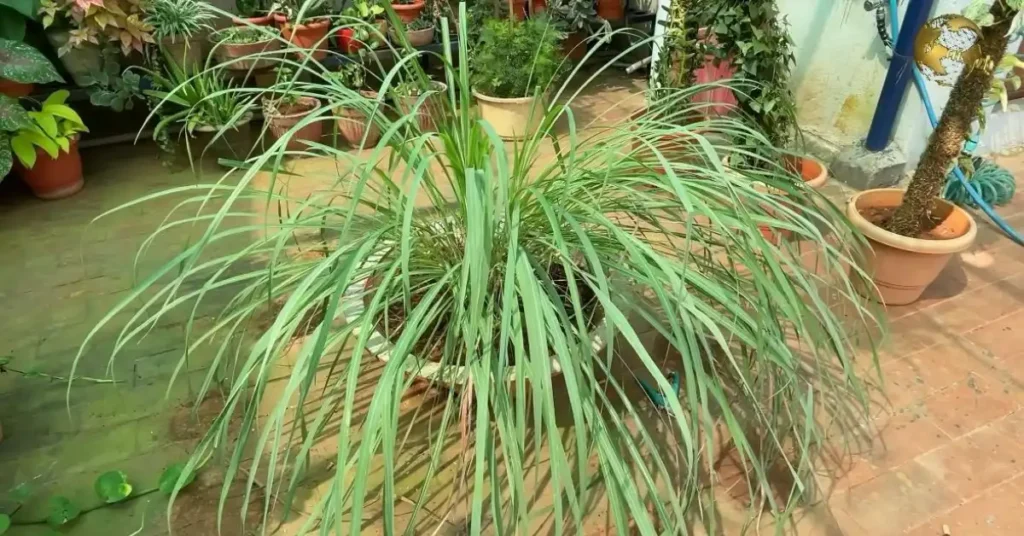
If your roach problem comes mainly from the drain pipe outside your kitchen window or the common drainage line on your balcony (extremely common in Mumbai and Pune high-rises), lemongrass is the one to prioritize.
Why it works: Lemongrass contains citronellal and geraniol — the same compounds used in citronella candles and mosquito repellent sticks sold across Indian markets. Cockroaches, like most insects, find high concentrations of these oils overwhelming to their sensory organs.
How to grow it at home:
- Getting a start: Buy fresh lemongrass stalks from any grocery store (yes, the cooking kind). Choose stalks that still have a slightly bulbous, pale base. Place 3-4 stalks in a jar of water, bulb-end down, and change the water every 2 days. Roots emerge in 10-14 days.
- Potting: Move to a wide pot — lemongrass grows in dense clumps and needs horizontal space more than depth. A 12-inch diameter pot minimum. Soil mix: 40% garden soil, 30% sand for drainage, 30% compost.
- Placement: This is a full-sun plant. If you’re growing it specifically to deter roaches near a drain pipe, place the pot as close to that drain as your balcony railing allows, ideally getting at least 5-6 hours of direct sun.
- Watering: Lemongrass is more drought-tolerant than mint. Water deeply but only when the top inch of soil feels dry. Overwatering is the number one reason lemongrass pots fail in Indian homes — the roots rot in waterlogged, non-draining pots that many nurseries sell without adequate drainage holes.
- Harvesting for stronger scent release: Cut outer stalks close to the base with a sharp knife every 4-5 weeks. This isn’t just for using in your chai — cutting stimulates new growth and releases a burst of citronellal into the air immediately after cutting, which is when I noticed the most roach avoidance in that specific corner of my balcony.
- Monsoon care: Lemongrass clumps can get fungal rot at the base during heavy monsoon months if the pot doesn’t drain fast enough. Raise the pot on bricks or a stand so water doesn’t pool underneath, and check the base weekly for any blackened, mushy stems.
3. Tulsi (Holy Basil) — The Plant Every Indian Home Already Has (But Isn’t Using Right)
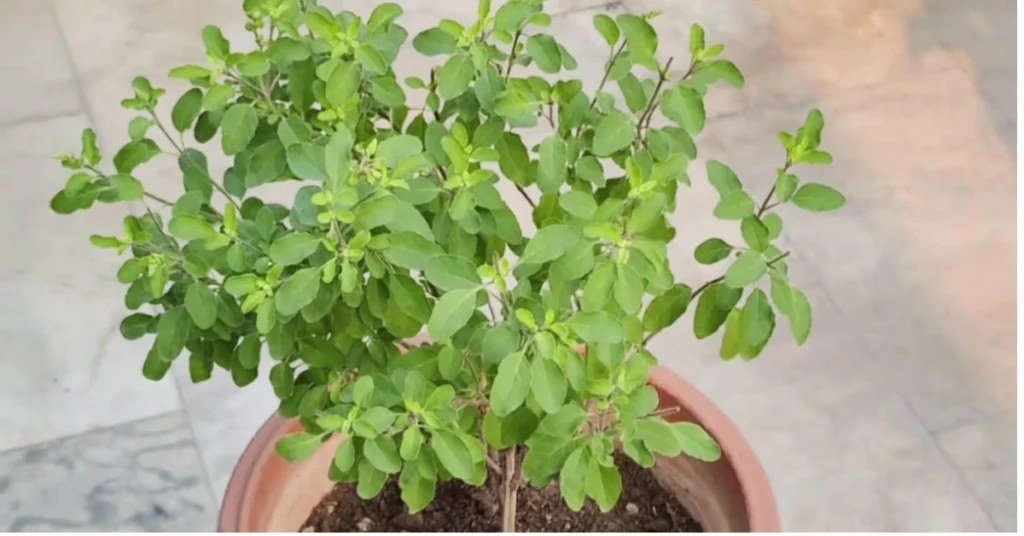
Almost every Indian household has a tulsi plant in the courtyard or balcony for religious reasons, but very few people place it strategically for pest management.
I moved mine from the corner of my balcony to right outside my kitchen door, and within three weeks, I noticed a visible drop in roaches near that entry point.
Why it works: Tulsi releases eugenol, a compound also found in clove oil, which is genuinely unpleasant for many crawling insects, cockroaches included. It’s one of the few plants with actual peer-reviewed pest-repellent studies behind it, not just folklore.
How to grow it at home:
- Starting fresh: Tulsi grows easily from seed. Soak seeds in water for 2-3 hours before sowing in a shallow tray with cocopeat. Germination takes 5-7 days in warm weather.
- Transplanting: Once seedlings have 4 true leaves, move them to individual 8-inch pots. Soil mix: equal parts garden soil, compost, and cocopeat, with a handful of neem khali (neem cake) mixed in — this doubles up as a natural pest deterrent in the soil itself.
- Light and placement: Full sun is non-negotiable for tulsi. It needs at least 5-6 hours daily, or it grows weak and leggy. For the pest-control angle specifically, place it right next to your main door or kitchen entrance rather than a random balcony corner.
- Watering: Tulsi hates wet feet. Water only when the topsoil is dry to touch, typically every 2 days in summer, every 4-5 days in winter.
- Pruning for scent: Pinch off the flowering tops (manjari) every 2-3 weeks once they appear. This isn’t just for the plant’s health — pinching triggers a rush of fresh leaf growth, and fresh tulsi leaves release far more eugenol than older, woody growth.
- Common Indian household mistake: Many people water tulsi daily out of ritual habit even in monsoon, which causes root rot. I lost two tulsi plants this way before I switched to a strict “check the soil first” rule regardless of ritual timing.
4. Marigold (Genda) — The Underrated Balcony Border Plant
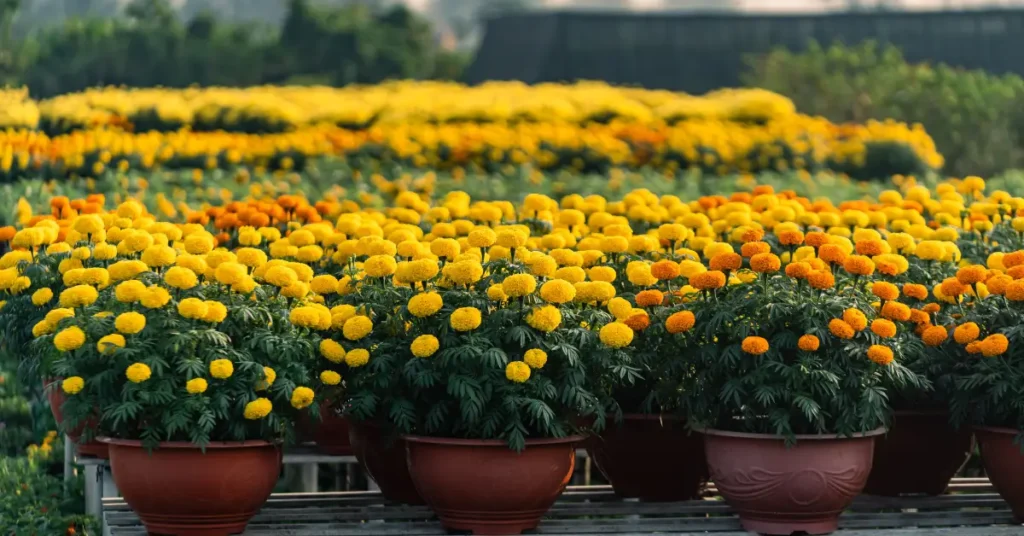
Marigold isn’t the first plant people associate with pest control, but it deserves far more credit than it gets in Indian gardening circles, where it’s mostly grown just for pooja flowers.
Why it works: Marigold roots and leaves contain pyrethrum-like compounds and limonene, both of which are commonly used in commercial insect repellents. The scent is strongest when leaves are lightly crushed or brushed against, which happens naturally when the plant grows near a walking path or doorway.
How to grow it at home:
- Starting from seed: Marigold seeds are widely available and germinate reliably. Sow directly into small pots filled with a light mix of cocopeat and compost, cover lightly with soil, and keep consistently moist. Germination takes 4-7 days.
- Transplanting: Once seedlings reach 3-4 inches, move to their final pot — a 10-inch pot works for one healthy plant, or use a long rectangular planter along your balcony railing for a border effect.
- Light: Full sun, minimum 6 hours. Marigolds grown in shade become leggy and flower poorly, which also means weaker scent production.
- Watering: Moderate. Allow topsoil to dry between waterings. Marigolds are genuinely one of the more forgiving plants for beginners in Indian climates.
- Deadheading: Remove spent flowers regularly. This isn’t just for appearance — it keeps the plant producing new growth continuously, which is when the repellent compounds are most concentrated.
- Best placement for roach control: Line them along the outer edge of your balcony or near the main entrance grill. In my experience, placing marigold pots near the exterior wall where roaches typically climb up from ground-floor drains made a visible difference within a month.
5. Bay Leaf Plant (Tej Patta) — Slow to Grow, But Worth the Patience
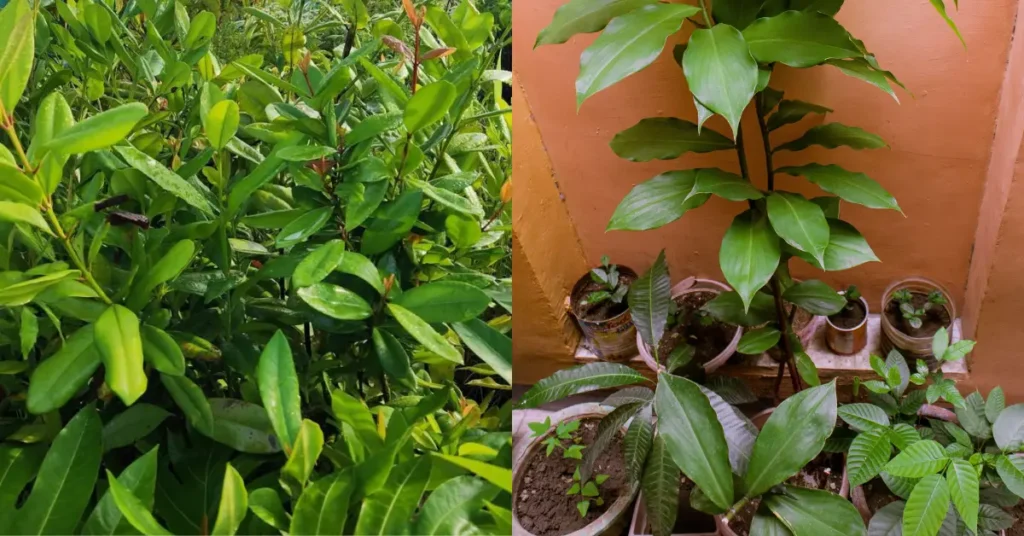
I’ll be upfront — this is the slowest-growing plant on this list, and if you want quick results, start with mint or lemongrass instead. But if you’re patient, a mature bay leaf plant is one of the most effective long-term options because of how concentrated the essential oil in its leaves becomes as the plant ages.
Why it works: Bay leaves contain eugenol and linalool at fairly high concentrations, and dried or crushed bay leaves have long been used as a pantry and shelf repellent in Indian kitchens — placing whole leaves inside grain containers is an old trick many grandmothers still use.
Growing the actual plant extends this same effect into ambient air, especially when leaves are brushed or crushed.
How to grow it at home:
- Starting point: Bay leaf (tej patta) is best started from a nursery-bought sapling rather than seed, since seed germination is unreliable and slow — often 3-6 months. A 1-year-old sapling from a local nursery gives you a head start.
- Potting: Use a deep pot, minimum 12 inches, since the bay develops a substantial root system over time. Soil mix: 40% garden soil, 30% compost, 30% coarse sand for drainage — bay does not tolerate waterlogged roots.
- Light: Partial to full sun. In hot Indian summers, especially in Rajasthan, Delhi, or Vidarbha regions, some afternoon shade prevents leaf scorch.
- Watering: Let the top 2 inches of soil dry out between waterings. Overwatering is the most common reason bay saplings die in the first year in Indian home gardens.
- Growth timeline expectation: Don’t expect much scent impact in the first year. It typically takes 18-24 months of steady growth before a bay plant has enough leaf mass to make a noticeable difference in a room’s air. Place it near a kitchen window in the meantime, and think of it as a long-term investment rather than an immediate fix.
- Bonus use: Once the plant is mature enough to spare a few leaves, dry them and place them directly inside your grain storage containers — atta, rice, dal boxes — where pantry pests and roaches both tend to congregate.
Where You Place These Plants Matters More Than Which Plant You Choose
This is the part most articles on this topic completely skip, and it’s honestly more important than the plant selection itself. In eight months of testing across three different homes, the placement made a bigger difference than the plant species.
Priority placement zones in a typical Indian home:
- Kitchen platform, near the sink drain — this is the single most common roach entry and hiding zone in Indian kitchens. Mint and tulsi work best here.
- Near the kitchen exhaust fan duct — roaches often travel through duct gaps. A small pot of mint or marigold on the platform directly below helps.
- Balcony drain pipe corners — lemongrass and marigold are suited to full outdoor sun here.
- Main door threshold — tulsi in a decorative pot doubles as both a religious fixture and a practical barrier.
- Near the RO water purifier outlet or under-sink cabinet — this damp, dark spot is a roach magnet. Since plants can’t survive without light here, place a small mint pot just outside the cabinet door instead, close enough for scent to drift in when the cabinet is opened.
A Realistic Weekly Care Checklist
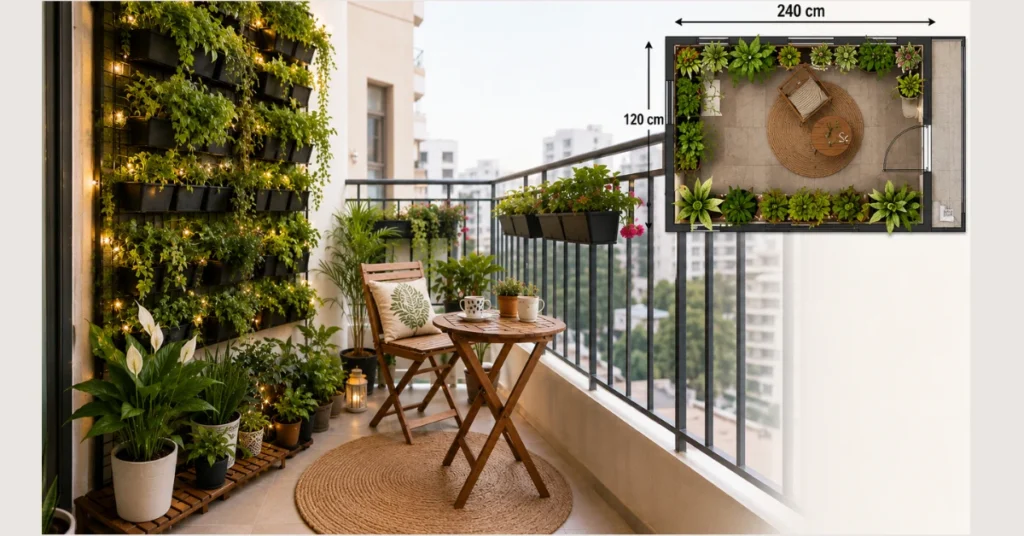
I built this checklist for myself after killing more plants than I’d like to admit in my first year of balcony gardening, and I still follow a version of it today.
- Check soil moisture in all pots every morning — finger test, top 1 inch
- Trim mint and tulsi tops once every 10-14 days to encourage fresh scent-releasing growth
- Deadhead marigold flowers every 5-7 days
- Inspect pot bases for waterlogging or fungal growth, especially during June-September monsoon months
- Rotate pots slightly every week if they’re on a balcony with uneven sun exposure
- Wipe down leaves of dust once every 2 weeks — dust buildup reduces how much scent a plant naturally releases
- Check for common Indian household pests on the plants themselves (aphids, mealybugs) monthly, since a struggling plant produces fewer protective oils
- Refresh the top layer of soil with fresh compost every 2 months for potted herbs like mint and tulsi
What These Plants Won’t Do — And What Else You Actually Need
I’d be doing you a disservice if I ended this article without addressing the sanitation side, because no plant works in isolation.
- Seal gaps around drain pipes using simple wire mesh or silicone sealant — this is the single most effective physical barrier against roaches entering from building drainage lines, a very common issue in older Indian apartment complexes.
- Don’t leave wet dishes overnight — even with mint sitting right there, standing water and food residue will still attract roaches from neighboring flats through shared walls and ducts.
- Store atta, rice, and dal in airtight containers, not the paper or cloth packaging they come in from the kirana store.
- Clean under the kitchen sink monthly — this is the one spot plants genuinely cannot help with, since it’s too dark and damp for any plant to survive in directly.
- Combine with boric acid gel bait in cracks and corners if you already have an active infestation — plants are a maintenance and prevention tool, not a treatment for an existing problem.
A Quick Comparison at a Glance
| Plant | Best For | Sunlight Needed | Growth Speed | Scent Compound |
| Mint (Pudina) | Kitchen platforms, sink areas | Partial (3-4 hrs) | Fast | Menthol, Pulegone |
| Lemongrass (Gawati Chai) | Balcony drain corners | Full sun (5-6 hrs) | Moderate | Citronellal, Geraniol |
| Tulsi | Main door, kitchen entrance | Full sun (5-6 hrs) | Moderate | Eugenol |
| Marigold (Genda) | Balcony borders, exterior walls | Full sun (6 hrs) | Fast | Limonene, Pyrethrum-like compounds |
| Bay Leaf (Tej Patta) | Long-term kitchen window placement | Partial sun | Slow (1-2 years) | Eugenol, Linalool |
Seasonal Care Calendar for Different Indian Regions
Something I learned the hard way is that a care schedule that works for a Mumbai balcony can quietly kill the same plant in Delhi or Bengaluru. Indian weather isn’t one climate — it’s at least four or five distinct patterns, and these plants respond differently to each.
North India (Delhi, Lucknow, Jaipur, Chandigarh): Summers here are punishing and dry, quite different from the humid heat down south. From April to June, move mint and tulsi pots to a spot with morning sun only, and water once every morning without fail — the dry heat pulls moisture out of pots faster than most people expect. Winters (December-January) bring frost risk in some pockets; bay leaf and lemongrass are more cold-sensitive than mint and tulsi, so shift them closer to a wall or indoors on nights when temperatures drop below 8°C.
West India (Mumbai, Pune, Ahmedabad): Monsoon here is heavy and prolonged, and this is where I lost the most plants in my early years — mostly to root rot from pots that couldn’t drain fast enough. From June to September, raise every pot on a stand or bricks, and reduce watering frequency drastically since rain alone often provides enough moisture. Check lemongrass clumps weekly during this period for blackened stems at the base.
South India (Bengaluru, Chennai, Hyderabad): More consistent temperatures year-round work in your favour here, but Chennai’s coastal humidity means fungal issues on mint and tulsi leaves are more common than elsewhere. Space plants slightly further apart than you would in drier regions to allow airflow between leaves, and avoid overhead watering that leaves moisture sitting on foliage overnight.
East India (Kolkata, Bhubaneswar, Guwahati): High humidity plus heavy monsoon rainfall makes drainage the single biggest factor. Use a coarser soil mix than I’ve recommended above — add an extra 10% sand or perlite to every potting mix in this region, particularly for lemongrass and bay leaf, which are the two most prone to root rot in waterlogged conditions.
Troubleshooting: What to Do When the Plant Struggles Instead of Thrives
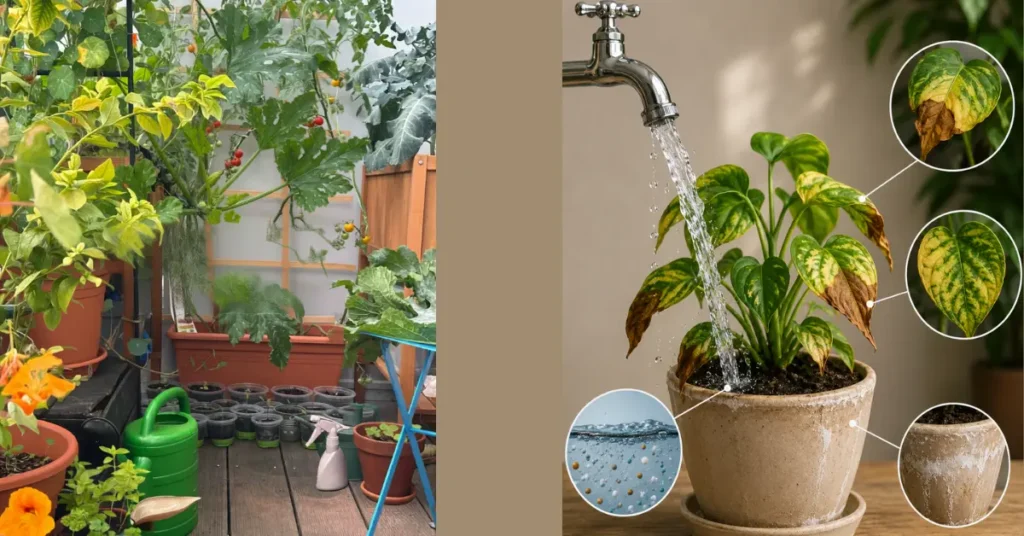
A weak, stressed plant produces far fewer of the essential oils that actually do the pest-deterrent work, so keeping these plants genuinely healthy isn’t optional if you want results.
Mint turning yellow and leggy: Usually overwatering combined with insufficient light. Cut back watering to every 2 days, move to a spot with slightly more morning sun, and trim back leggy stems hard — mint recovers quickly once conditions correct.
Lemongrass stalks going soft and brown at the base: This is early-stage rot, almost always from a pot without adequate drainage or from water pooling underneath during monsoon. Remove affected stalks immediately, repot into fresh, well-draining soil, and hold off watering for 4-5 days.
Tulsi dropping leaves rapidly: Often a sign of either underwatering during peak summer or, more commonly in my experience, whitefly infestation on the underside of leaves. Check the leaf undersides weekly; a homemade neem oil spray (5ml neem oil, few drops of liquid soap, 1 litre water) applied every 7 days clears this up within 2-3 weeks.
Marigold flowering poorly despite healthy-looking foliage: Almost always insufficient direct sun. Marigolds redirect energy to leaf growth over flowering when light-starved, and since flowering growth carries the strongest scent, this directly affects pest-deterrent performance. Relocate to the sunniest available spot.
Bay leaf sapling not growing for months: This is often just normal — bay is genuinely slow, and a lack of visible growth in the first 6-8 months doesn’t mean the plant is unhealthy. Resist the urge to overwater or over-fertilise out of impatience; this is the single most common reason people lose bay saplings in their first year.
Why I’m Writing This the Way I Am
I’ve been growing herbs and ornamentals on rented balconies across three Indian cities for the better part of six years, mostly through trial, error, and a fair number of dead pots along the way. I’m not a certified horticulturist, and I won’t pretend to be — what I’m sharing here comes from direct, repeated, hands-on experience growing these exact plants in the exact climate conditions most Indian apartment-dwellers deal with: limited balcony space, inconsistent monsoon drainage, and the specific roach species common in Indian kitchens rather than the ones referenced in Western gardening blogs. If something in this guide doesn’t match your experience, I’d genuinely like to know — every home, building, and micro-climate behaves a little differently, and that’s exactly why generic advice so often falls short.
Final Thoughts From My Own Balcony
If I had to start over with just one plant, I’d choose mint, purely because of how fast it establishes and how immediately it starts filling the kitchen with that scent every time you brush past it. Lemongrass and marigold come next if your main issue is balcony or drain-side activity rather than kitchen. Tulsi and bay leaf are the long-game plants — worth growing regardless of pest control for what they add to a home, with the roach-deterring effect as a genuine bonus rather than the sole reason to grow them.
None of this replaces basic hygiene and sealing entry points, and I’d be lying if I said my kitchen is 100% roach-free today. But it’s dramatically better than it was five years ago, and that improvement tracks closely with when I started taking plant placement seriously instead of just decorating with greenery. If you’re dealing with a genuinely serious infestation, start with sanitation and sealing first — then let these plants do their supporting role once the bigger problem is under control.
One Last Tip: Grouping Plants for a Stronger Combined Effect
If your balcony or kitchen has the space, don’t rely on a single pot of one plant sitting in isolation. In my own experience, clustering two or three of these together — say, mint and marigold near the same drain corner, or tulsi and lemongrass flanking a doorway — creates a layered scent barrier that seemed to work noticeably better than any one plant on its own.
This isn’t scientifically measured on my end, just a pattern I noticed across dozens of pot rearrangements over the years, but it costs nothing to try if you already have more than one of these plants growing.
Just be mindful of each plant’s individual light and water needs when grouping them, since mixing a full-sun lover like marigold with a partial-shade plant like mint in the same tray can leave one of them struggling while the other thrives.
If you try this setup, give it at least a full month before judging the results — plants, unlike a spray can, work on their own timeline, and that timeline is usually longer and more forgiving than we’d like it to be.