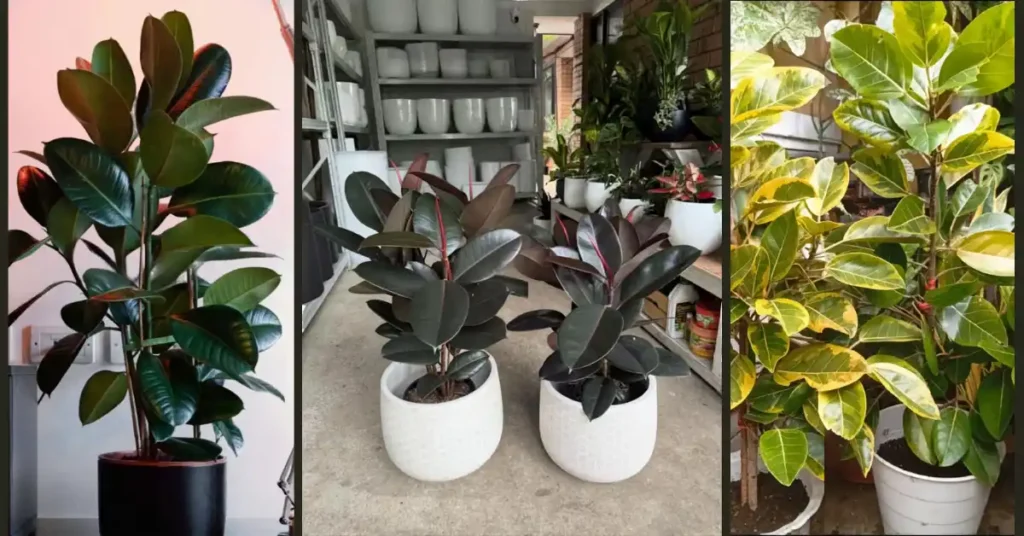
Why Your Rubber Plant Keeps Dropping Leaves? If your rubber plant keeps dropping leaves, the issue is usually linked to hidden stress rather than permanent damage. Problems like overwatering, weak indoor light, dry air, or sudden environmental changes can slowly affect the plant’s roots and overall health.
The good news is that rubber plants rarely drop leaves without a reason. In most cases, the problem is not random damage or bad luck. It’s usually a hidden environmental stress that the plant has been struggling with for weeks.
Understanding those hidden stress signals is the key to saving your plant. In this guide, we’ll look at the real scientific reasons rubber plants lose leaves and the practical fixes that actually work in modern homes and apartments.
Why Do Rubber Plants Drop Leaves?
Before we jump into the solution, it is essential to understand that rubber plants drop leaves mainly because of stress caused by changes in their environment. Scientifically, leaves fall when the plant cannot balance water, light, and nutrients properly. Overwatering is the most common cause. Too much water damages roots, reduces oxygen in the soil, and leads to root rot. As a result, the plant sheds leaves to save energy.
Low light is another major reason. Rubber plants need bright indirect sunlight for photosynthesis. Without enough light, older leaves turn yellow and drop.
Underwatering can cause dry soil and dehydration, making leaves curl and fall. Nutrient deficiency and pests like spider mites may weaken the plant as well. Healthy care, stable conditions, and proper watering help prevent leaf drop and keep rubber plants strong and green.
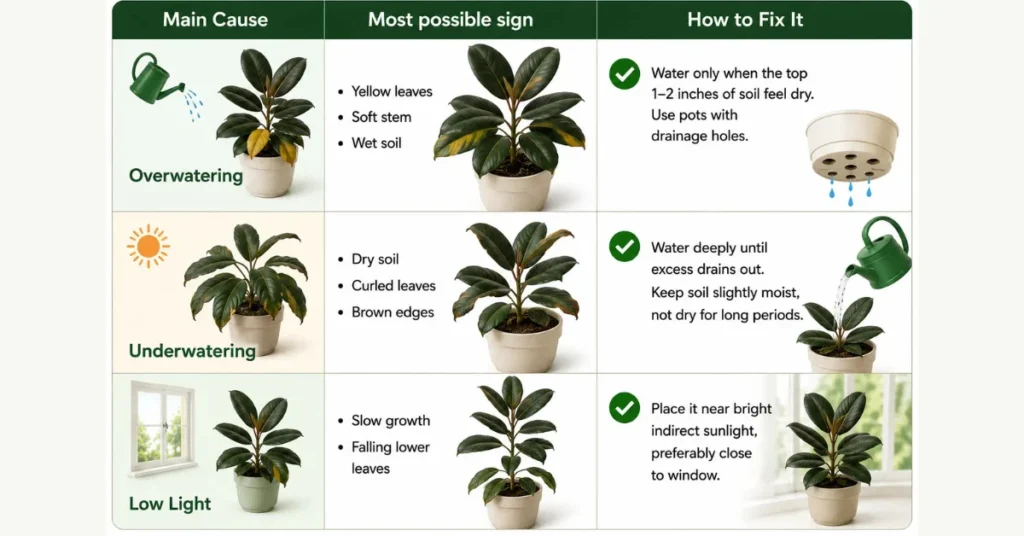
How to Fix It:
| Main Cause | Most possible sign | How to Fix It |
| Overwatering | Yellow leaves, soft stem, wet soil | Water only when the top 1–2 inches of soil feel dry. Use pots with drainage holes. |
| Underwatering | Dry soil, curled leaves, brown edges | Water deeply until excess drains out. Keep soil slightly moist, not dry for long periods. |
| Low Light | Slow growth, falling lower leaves | Place it near bright indirect sunlight, preferably close to a window. |
The Hidden Light Problem Causing Leaf Drop in Rubber Plants
One of the biggest myths about rubber plants is that they thrive in low light. In reality, they only tolerate it better than some tropical plants. For steady growth, healthy leaves, and strong stems, rubber plants still need bright indirect light. Many people place them in corners or dim rooms, assuming indoor brightness is enough, but plants depend on usable light for photosynthesis, not how bright a room appears to human eyes.
In modern apartments with tinted windows, shaded balconies, or limited sunlight, light levels often become too weak over time. When a rubber plant doesn’t get enough light, it starts conserving energy by dropping older leaves and slowing growth. This gradual decline is often mistaken for watering issues, while the real problem is insufficient light exposure.
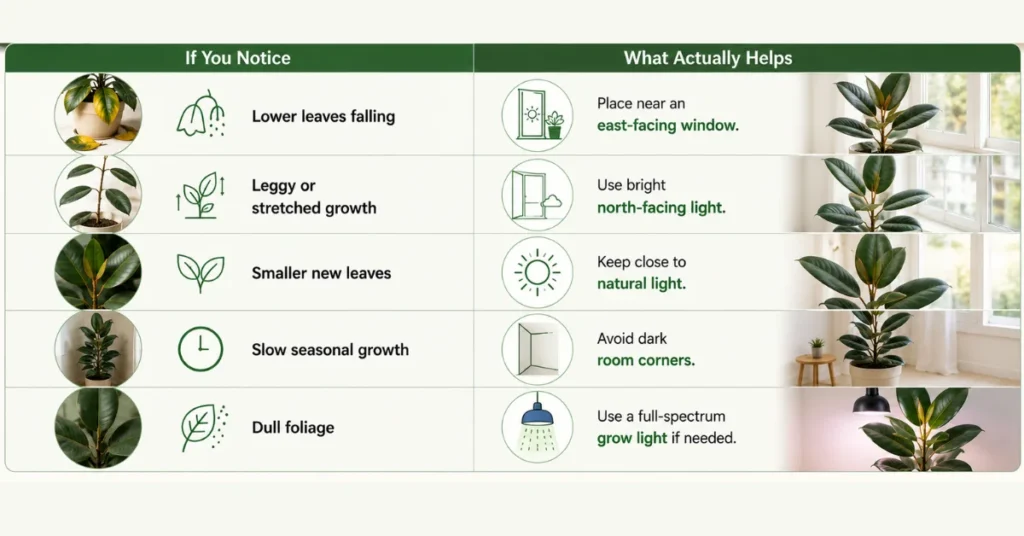
Common Signs and How to Fix Them
| If You Notice | What Actually Helps |
| Lower leaves falling | Place near an east-facing window |
| Leggy or stretched growth | Use bright north-facing light |
| Smaller new leaves | Keep close to natural light |
| Slow seasonal growth | Avoid dark room corners |
| Dull foliage | Use a full-spectrum grow light if needed |
Sudden Temperature Changes Can Trigger Stress
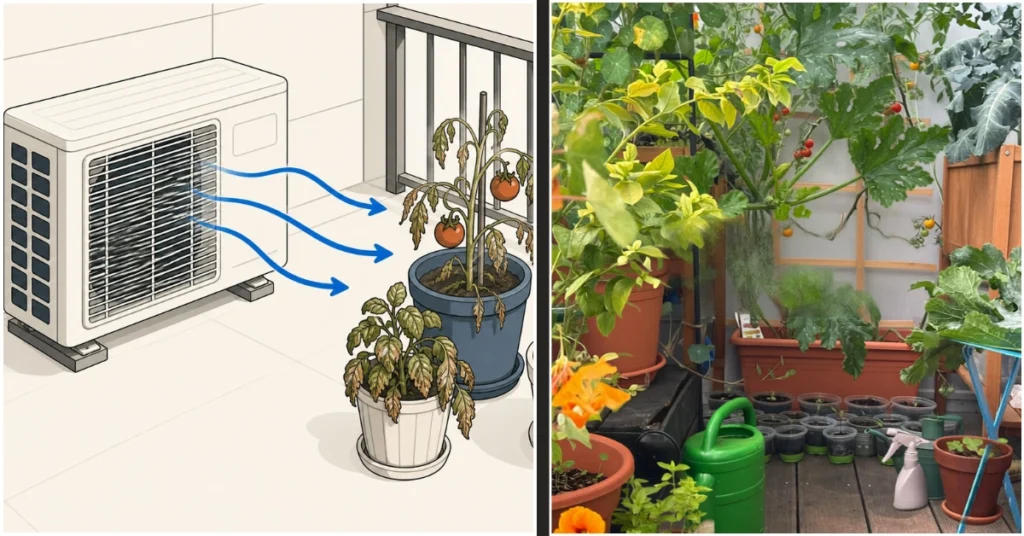
Sudden Temperature Changes Can Trigger Stress in rubber plants because they dislike environmental instability. Indoor plants are especially sensitive to AC vents, heaters, cold drafts, sudden winter temperature drops, and hot afternoon window heat. Many people place rubber plants near windows for light but overlook how the same area can become freezing at night or excessively hot during the afternoon. These sudden temperature fluctuations disrupt water movement inside the plant and often cause leaves to fall suddenly.
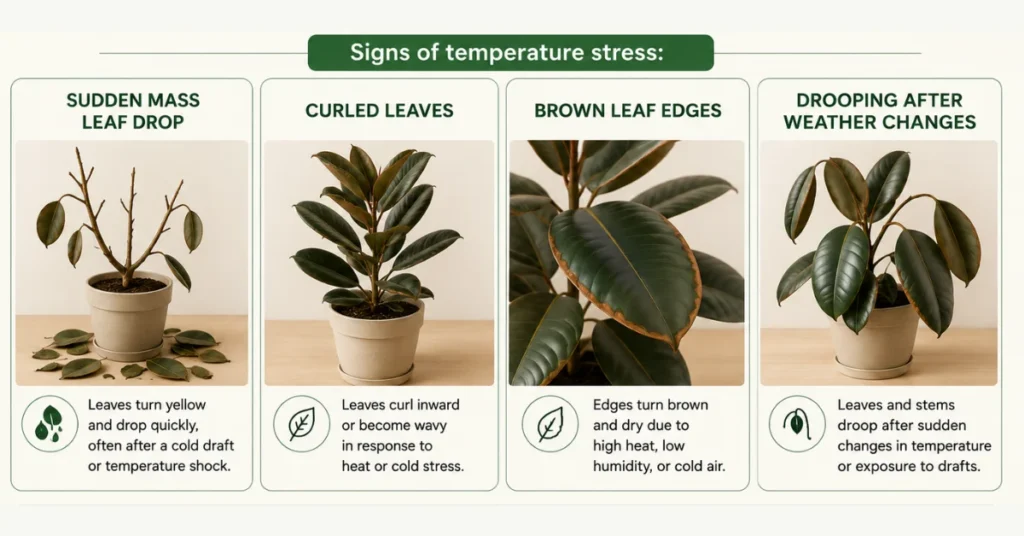
Signs of temperature stress:
- sudden mass leaf drop
- curled leaves
- brown leaf edges
- drooping after weather changes
Proven Fix:
Keep your rubber plant in a stable environment:
- Ideally between 18°C–27°C (65°F–80°F)
- away from direct AC airflow
- away from heaters and cold windows
How Poor Soil Structure Slowly Weakens the Plant Health
The Real Problem: Poor Soil Structure Slowly Weakens the Plant because many indoor rubber plants are sold in dense nursery soil designed for greenhouse conditions, which often performs poorly inside homes. Over time, compact soil loses air pockets and retains excess moisture around the roots, creating chronic root stress even when watering appears normal.
Warning Signs:
1. water sitting on top of soil
2. slow drainage
3. sour smell
4. weak growth
5. recurring leaf loss
Simple Soil Mix That Works Well
| Ingredient | Amount |
| Indoor potting soil | 50% |
| Perlite | 20% |
| Orchid bark or coco chips | 25% |
Natural Leaf Aging Is Completely Normal
Not every falling leaf is a disaster. Older lower leaves naturally age and drop over time, especially as the plant focuses energy on new upper growth. This is normal if only occasional older leaves are falling, the plant continues to produce healthy new leaves, and its overall growth remains steady.
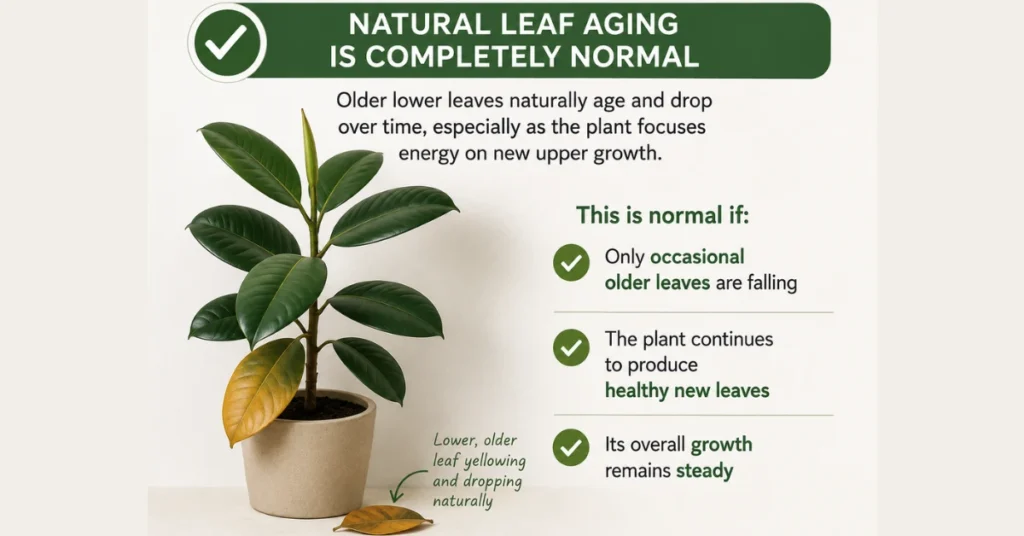
The concern begins when:
- multiple leaves drop rapidly
- new leaves become damaged
- growth stalls completely
Moving the Plant Too Often Can Cause Leaf Drop
(Relocation Stress)
Rubber Plants Adapt Slowly to Environmental Changes, so repeatedly moving them between balconies, darker rooms, outdoor areas, or different windows forces constant adjustment to changing light, humidity, and temperature levels. This repeated environmental readjustment creates stress that can weaken the plant over time.
How to Fix It:
Once you find a good location with stable light and temperature, leave the plant there consistently. Rubber plants prefer environmental stability over constant repositioning.
🌱 Beginner Plant Terms Explained
A condition where roots start decaying because the soil stays wet for too long and lacks oxygen.
Light that is bright enough for growth but does not directly hit the leaves with harsh sunlight.
Weak and stretched stems caused by insufficient light exposure.
The ability of soil and pots to remove excess water properly.
The amount of moisture present in the surrounding air.
Plant stress caused by sudden changes in watering, light, temperature, or humidity.
Conclusion:
If your rubber plant is dropping leaves, don’t panic right away. In most cases, the plant is simply reacting to stress from its environment. Small issues like too much water, low light, poor drainage, dry air, or sudden temperature changes can slowly affect the plant before visible symptoms appear. The good thing is that rubber plants are quite resilient and usually recover once the real problem is resolved.
Try to focus on creating stable growing conditions. Place your plant in bright indirect sunlight, water only when the top layer of soil feels dry, and keep it away from strong AC airflow, heaters, or cold drafts. Healthy, well-draining soil also plays a big role in keeping the roots strong and preventing future leaf drop.
It is also completely normal for older bottom leaves to fall occasionally as the plant grows. With a little patience and consistent care, your rubber plant will slowly become healthy again and start producing fresh new leaves.