Introduction
Money plants are often called the “easiest indoor plant,” but my personal experience says otherwise. I’ve seen perfectly healthy money plants suddenly turn yellow, stop growing, develop black stems, or slowly die without any obvious reason.
A few years ago, I almost gave up on growing indoor plants because every online guide kept repeating the same generic advice: “water regularly” and “keep in sunlight.” But indoor plants don’t survive on vague tips. They respond to microclimate, airflow, humidity, soil oxygen, and even the quality of water inside your home.
If your indoor money plant is struggling, this guide will help you understand the real scientific causes and natural solutions that actually work in real homes.
1. Yellow Leaves That Keep Spreading
This is probably the most common issue. At first, I assumed yellow leaves meant the plant needed more water, so I kept watering it even more, only to realize later that overwatering was actually damaging the roots further.
Scientific Cause
Money plant leaves usually turn yellow because the plant’s chlorophyll production gets disturbed by stress factors like overwatering, poor drainage, low sunlight, nutrient deficiency, or sudden temperature changes.
From a scientific standpoint, excessive watering deprives the soil near the roots of oxygen, causing oxygen stress in the roots, which leads to poor nutrient absorption and thus chlorosis. In some instances, older leaves may turn yellow due to nutrient depletion.
Let me tell you the Natural Solution:
- Let the top 2 inches of soil dry before watering.
- Use pots with drainage holes.
- Mix coco peat, compost, and coarse sand for better airflow. A money plant needs moist soil, not wet soil.
2. Root Rot With Bad Smell
If the stem becomes black near the soil and starts smelling rotten, it means root rot has already begun. This usually happens because indoor pots tend to trap excess moisture due to limited sunlight and poor airflow indoors compared to outdoor gardens. It creates damp conditions that encourage fungal growth and root decay.
What Actually Helped Me
I removed the infected roots immediately and repotted the plant in dry, airy soil. I also sprinkled cinnamon powder around the roots because cinnamon naturally slows fungal growth. Avoid chemical fungicides unless the infection is severe.
3. Money Plant Stops Growing Completely
Sometimes a plant may appear healthy but fail to grow new leaves for months. The real reason is usually low light, which reduces photosynthesis. As a result, the plant can survive using minimal energy, but it does not produce enough energy to support fresh growth or develop new leaves.
How to Practically Fix It
Move the plant to a spot with better lighting, such as near an east-facing window, an area with bright indirect sunlight, or a balcony corner that receives filtered light. Avoid placing it in direct afternoon sunlight, especially during Indian summers, as the intense heat can scorch and burn the leaves.
4. Brown Leaf Tips
This problem became common in my room during winter because indoor air tends to become dry due to fans, air conditioners, and low humidity levels. As a result, the plant experiences environmental stress, which often causes brown leaf tips.
A natural way to fix this is by lightly misting the leaves in the morning, keeping a bowl of water nearby to increase moisture in the air, and grouping indoor plants together so they can naturally improve humidity around each other.
Brown tips are usually a sign of dry environmental conditions rather than a plant disease.
5. White Fungus on Soil Surface
Many people panic when they notice this problem, but it is actually very common in indoor plants. The main cause is usually excess moisture combined with poor ventilation, which creates a damp environment where fungal growth and other plant issues can easily develop.
From my experience, I stopped watering the plant for a few days and added dry neem powder to the soil. The fungus gradually disappeared. Neem is effective because of its natural antifungal properties and eco-friendly nature.
6. How Orthotropic Treatment Supports Hormonal Shifts
One common problem with money plants is long trailing vines with tiny leaves. Many people try adding more fertilizer, but the leaf size still does not improve. This happens because money plants naturally grow in two different ways: trailing and climbing. When the plant hangs downward from a pot, it stays in a juvenile growth stage where it focuses more on extending vines than producing larger leaves.
Scientifically, this growth pattern is controlled by plant hormones like auxins and cytokinins. In the trailing stage, the plant is basically searching for a tree or vertical support to climb. Without that support, it does not receive the natural signal to enter its mature climbing phase. Once the plant starts climbing a moss pole, wooden stick, or wall support, the leaf size often increases naturally over time. Often, this simple change works better than adding extra fertilizer.
The Natural Solution
- Tactile Stimulation: Money plants naturally like to climb tree trunks in the wild. That is why a moss pole is more than just decoration. The aerial roots need a surface they can attach to and grow into. Without proper support, the plant often continues producing long vines with smaller leaves.
- The Fix: Use a coco-coir or sphagnum moss pole and keep it slightly moist. When the aerial roots touch a damp climbing surface, the plant starts behaving more like a mature climbing vine. This helps the roots grip better and move water and nutrients more efficiently to the upper leaves. Over time, this natural response can encourage larger and healthier leaves.
7. Why Magnesium and Nitrogen Imbalance Can Cause Interveinal Chlorosis
The Problem: If the leaves start turning yellow between the veins while the veins stay green, your money plant may be suffering from interveinal chlorosis. Many people assume this is a nitrogen deficiency and add more fertilizer, but occasionally the yellowing becomes even worse.
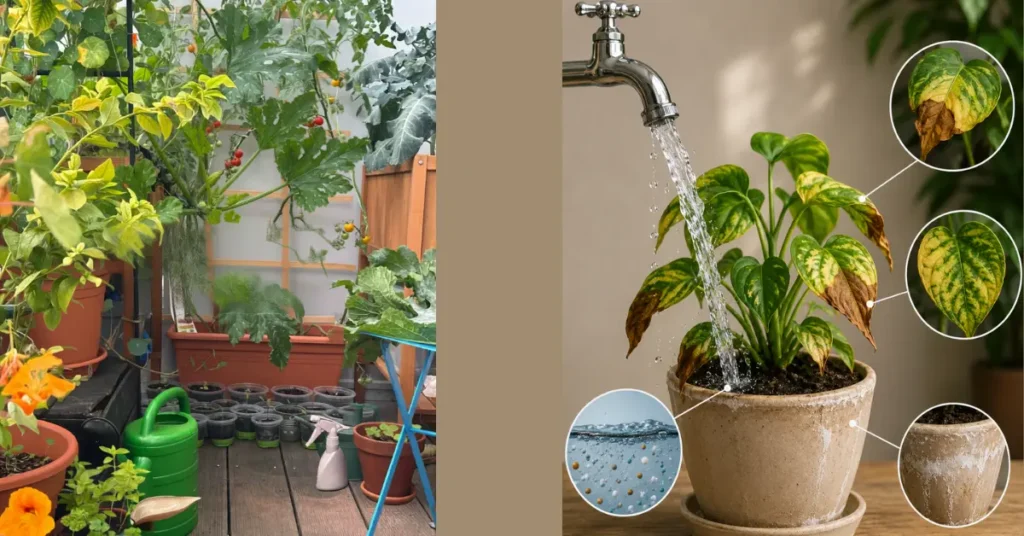
The Scientific Cause: In numerous instances, the real issue is magnesium deficiency caused by nutrient imbalance. Excess nitrogen or potassium from fertilizers can block the plant’s ability to absorb magnesium properly. Hard tap water can also contribute to this problem over time. Magnesium is an essential part of chlorophyll, the pigment that helps plants produce energy through photosynthesis. Without enough magnesium, the leaves slowly lose their healthy green color even when plenty of nitrogen is present.
Epsom Salt Reset: If you notice this type of yellowing, stop using high-nitrogen fertilizers for some time. Adding more fertilizer can increase the nutrient imbalance and make the concern worse instead of helping the plant recover.
The Fix: Mix 1 teaspoon of plain unscented Epsom salt (Magnesium Sulfate Heptahydrate – MgSO₄·7H₂O, USP/Agricultural grade) in 1 liter of water and spray it directly on the leaves once every two weeks.
This method, called foliar feeding, allows the plant to absorb magnesium through the leaves instead of the roots. It works faster and avoids the nutrient competition happening in the soil. Over time, the leaves usually regain their healthy green color as chlorophyll production improves.
8. Overfertilizing Damage
I once applied too much fertilizer to my plants, thinking it would accelerate their growth and make them healthier. However, within just a few days, the edges of the leaves started turning brown and appeared burned.
Scientifically, this happens because excessive fertilizer causes a buildup of salts in the soil. These salts draw water away from the plant roots through osmosis, damaging the root tissues and reducing the plant’s ability to absorb water and nutrients properly. As a result, the plant experiences stress, leading to symptoms such as leaf burn, wilting, and poor overall growth instead of the healthy development that was intended.
Sustainable Solution
- Use natural fertilizers like banana peel compost and small amounts of vermicompost.
- Apply rice water only occasionally, not daily.
- Indoor plants need much less fertilizer than outdoor plants.
- Overfertilizing causes salt buildup, root damage, and leaf burn.
- Fertilize lightly and check the plant’s condition before adding more.
- Leave gaps between feedings so the soil and roots stay healthy.
9. Wrong Pot Size
A giant pot can quietly damage a small money plant. Oversized pots hold excess soil, and that soil stays wet much longer after watering. Since the roots are still small, they cannot absorb moisture quickly enough, leading to soggy roots, yellow leaves, slow growth, and eventually root rot.
Many people mistake this for a fertilizer deficiency, but the real issue is excess moisture trapped around the roots.
A smarter method is to use a pot only 1–2 inches larger than the root ball and add a thin bottom layer of pebbles or terracotta pieces for airflow. This keeps moisture balanced, improves drainage naturally, and encourages the plant to grow fuller, healthier vines without stress.
10. The “Aquaporin Freeze” Problem in Indoor Money Plants
One winter, I noticed my money plant looked dehydrated even though the soil was still moist. The leaves were drooping, growth had slowed, and the stems felt weak. Naturally, I thought the plant needed more water, but that actually made things worse.
Later, I discovered something called “cold-induced physiological drought,” often described as the “aquaporin freeze.” In simple terms, money plants use tiny protein channels called “aquaporins” to move water from roots to leaves. During cold indoor conditions, especially near chilly windows or marble floors, these channels slow down significantly.
So even when water is available in the soil, the plant struggles to transport it properly. The result? The plant behaves as if it’s thirsty.
What helped me most was not extra watering but stabilizing the temperature around the roots. I moved the pot away from cold drafts, used room-temperature water, and placed the plant on a wooden stand instead of directly on the floor. Within days, the plant started recovering naturally.
What I Learned After Years of Indoor Money Plant Care
The biggest mistake people make is treating money plants as “unkillable.” Although they are resilient, they still show stress through their leaves, roots, and growth patterns.
Once I stopped blindly watering and started observing soil texture, light direction, humidity, airflow, and root condition, my plants became naturally healthier and more vibrant. I realized that proper plant care is less about fixed routines and more about understanding what the plant is communicating.
Indoor gardening is not just about decoration; it is about understanding living systems inside your home. Small environmental changes can affect growth significantly. The more attention and observation you give your plants, the easier it becomes to create conditions where they can truly thrive.
My Recommended Indoor Money Plant Care Checklist
- Is the soil draining properly?
- Does the pot have drainage holes?
- Is the plant getting indirect light?
- Are you overwatering emotionally?
- Is airflow sufficient indoors?
- Are leaves dusty?
- Is humidity too low?
- Are roots healthy and white?
Conclusion
Indoor money plants don’t need expensive fertilizers or complicated care routines. What they really need is balance, balanced moisture, balanced light, balanced airflow, and patience.
In my experience, the healthiest money plants are not the ones watered the most. They are the ones observed the most.
If you start reading your plant’s signals instead of following random internet hacks, indoor gardening becomes simpler, more sustainable, and, honestly, far more rewarding.
Pingback: How Hard Water Damages Indoor Plants — And How to Fix It - Inbriefly