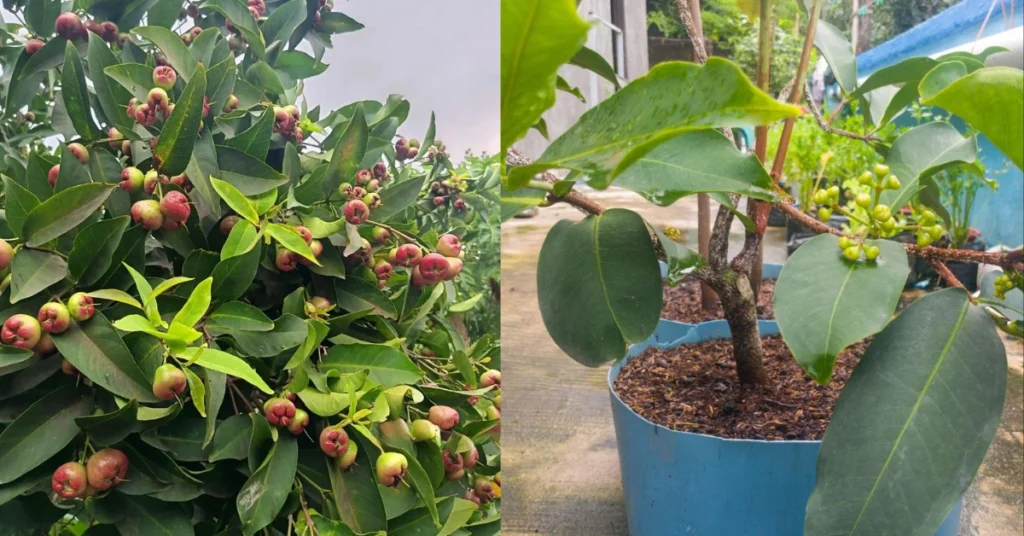
It can be a very rewarding experience to grow water apple in a container when proper care is taken with the tree during flowering and fruit development, as container-grown trees are often more likely to produce sweeter, crisp fruits than those from larger landscape plantings.
Watering and nutrition are important, but so is harvest timing: fruit picked too early can be low in flavor and sweetness, while delayed harvesting can lead to softness, fruit drop, and increased pest damage.
After several seasons of fruiting, one thing becomes abundantly clear: a healthy, productive tree can still fail to produce good fruit if you do not harvest at the ideal time for peak flavor and texture.
In this guide, you will learn how to grow water apple in containers, determine when the fruit is ripe for harvest, and make it sweeter by following simple, practical, experience-based techniques.
Why Water Apple Performs Surprisingly Well in Containers
Growth is easier to control, so many gardeners find that container-grown trees produce better fruit.
Trees put more energy into vigorous vegetative growth in the ground, and containers limit root expansion, encouraging the tree to allocate more energy to flowering and fruit production once established, leading to more reliable yields and better fruit quality.
A container-grown tree also allows better management of:
- Soil moisture levels
- Nutrition requirements
- Root conditions
- Sunlight conditions
- Pest control measures
- Protection of fruits
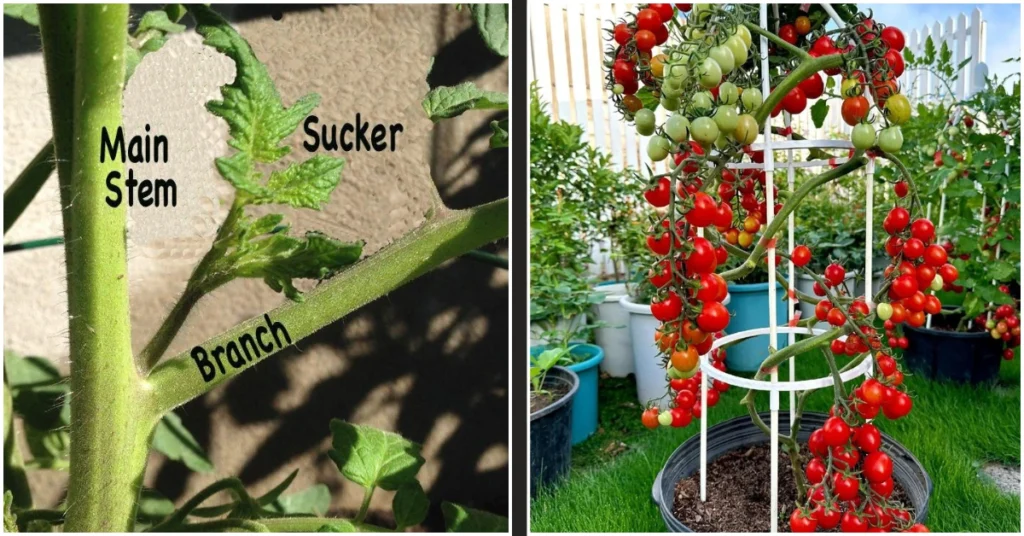
Grower’s Tip: Managing plant energy isn’t just for fruit trees! If you also grow veggies, check out my guide on Why I Stopped Removing Tomato Suckers (And Got More Tomatoes) to see how a similar “energy hack” can instantly double your backyard tomato harvest.”
How to Choose the Right Pot Size for Your Water Apple
Young Trees:
- 15–20 gallon container
- Excellent drainage
- Multiple drainage holes
Mature Fruiting Trees:
- 25–35 gallon container
- Minimum depth of 20 inches
- Strong, UV-resistant material
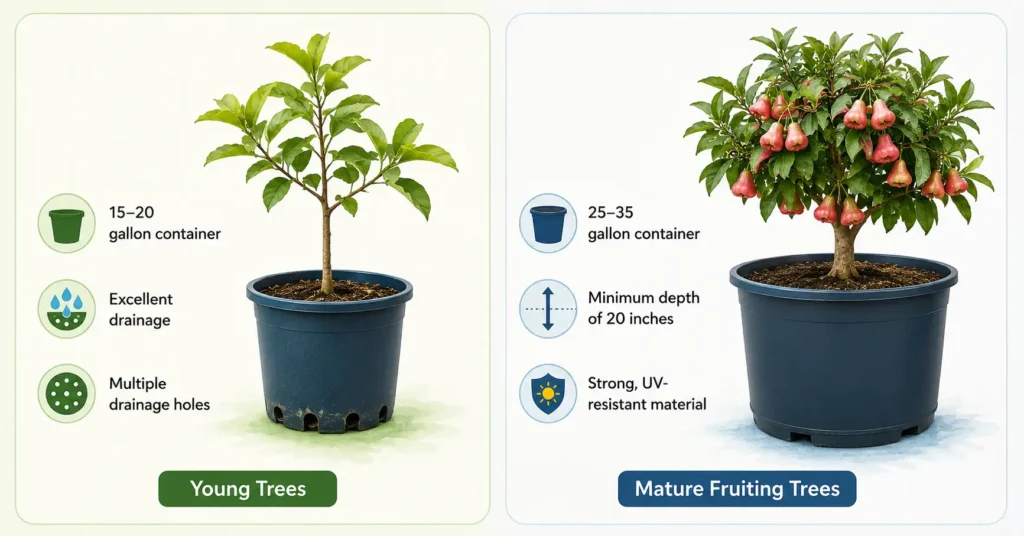
Plastic, fabric, fiberglass, and cement containers are all suitable for growing water apple trees.
With proper care and periodic root pruning, a mature tree can remain productive and continue producing quality fruit in a 30-gallon container for many years.
The Best Potting Mix for Healthier, Better-Tasting Fruits
Container-grown water apple trees depend heavily on the health of the roots to ensure fruit quality.
Because the roots need both moisture and oxygen, the growing medium must drain well but not dry out too fast; a good mix for container-grown trees includes 40 percent compost, 30 percent coco peat or aged organic matter, 20 percent coarse sand, and 10 percent perlite or pumice.
Heavy clay soil should not be used in containers as it limits aeration, slows root activity, and may decrease flowering and fruit quality.
The relationship between healthy roots and sweeter, better-quality fruits becomes more evident as the tree matures.
How Much Sun Does a Water Apple Tree Need?
Sun exposure plays a key role in fruit sweetness, and 6 hours of direct sunlight per day is recommended, but 8-10 hours daily will produce the sweetest and best quality fruit.
Trees receiving insufficient sunlight often produce:
- Larger but watery fruits
- Reduced sweetness
- Fewer flowers
- Delayed ripening
If possible, locate the container where the tree gets full morning and afternoon sun while flowering and developing fruit, as fruits get the best color, sweetness, and flavor when fully exposed to sunlight.
Watering Strategy for Sweeter Fruits
Overwatering during fruit maturation is one of the leading causes of low fruit quality, as water apple trees need water while actively growing but overwatering after fruit starts to ripen can leach sugars and make fruits less sweet.
Follow the table below
| Growth Stage | Watering Approach | Key Tip |
| Flowering | Keep soil evenly moist | Avoid severe drying |
| Fruit Formation | Water consistently | Prevent large moisture swings |
| Final Ripening | Slightly reduce watering | Don’t stress the tree or flood the container |
How it works: Maintaining stable moisture allows fruits to develop enhanced flavor and promotes a greater concentration of natural sugars, a technique many tropical fruit growers employ to sweeten fruits.
When and How to Fertilize for a Better Harvest
High-quality water apple require a balanced fertilization program, and over-application of nitrogen often stimulates excessive leafy growth at the expense of fruit production, resulting in reduced flowering, softer fruits, and reduced sweetness.
Early Growth Season- Use a balanced fertilizer such as NPK 10-10-10 or NPK 12-12-12, which supplies nutrients in equal proportions without encouraging excessive vegetative growth.
Pre-Flowering Stage- As flowering approaches, increase phosphorus and potassium levels to encourage flower formation, improve fruit set, and support healthy root activity.
Fruit Development Stage- During fruit development, potassium is also important for fruit size, color, flavor, and sugar accumulation, and organic amendments like compost, seaweed extract, and well-aged manure can contribute to long-term soil fertility and root health.
From Flowering to Harvest: The Water Apple Fruiting Cycle
Water apple grow fast, with fruits forming rapidly after pollination, enlarging quickly, and maturing in a few weeks (depending on the variety and climate), so regular observation is required and many gardeners miss the ideal harvest stage, allowing fruits to become overripe and lose quality.
Signs That Water Apple Fruits Are Approaching Harvest
| Harvest Sign | What to Look For |
| Rich Color | Even, vibrant red, crimson, pink, or rose-red coloring |
| Glossy Skin | Smooth, shiny, almost waxy appearance |
| Full Size | Fruit reaches its maximum size and growth slows |
| Pleasant Aroma | Mild, sweet fragrance, especially in warm mornings |
Tip: Don’t rely on calendar dates alone. The best harvest time is when several of these signs appear together.
When to Harvest Water Apples for the Best Flavor
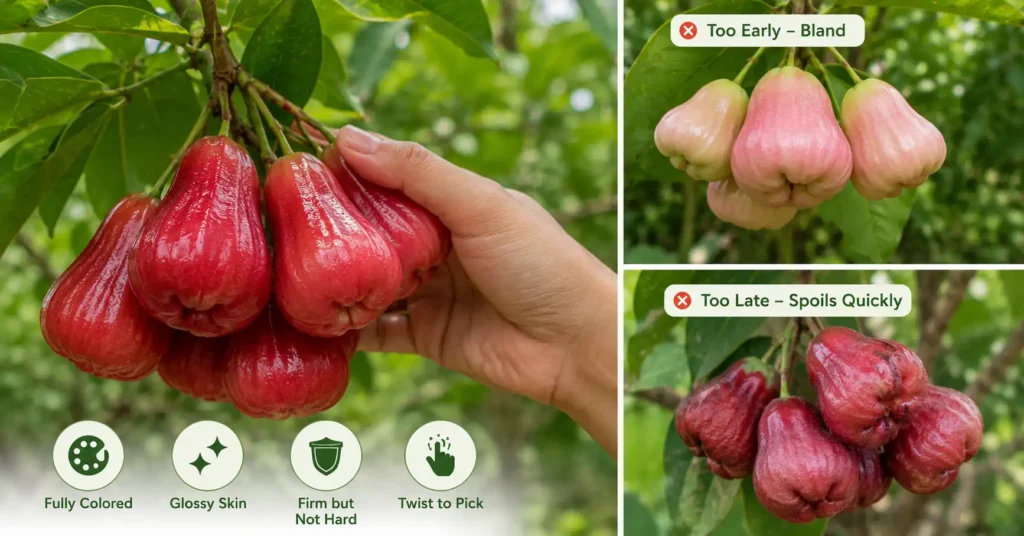
Water apples should be harvested when their color is fully developed, the skin is glossy, the fruit is firm but not hard, and the fruit comes off easily with a twist.
Fruits picked too early tend to be bland, and fruits picked too late spoil quickly, losing texture and quality; because the optimal harvest window can be only a few days long, it is important to check the tree daily during ripening season.
A Simple Sweetness Test I Recommend Before Harvest
- Pick one fully colored fruit.
- Taste it.
- Evaluate sweetness and texture.
- Wait two or three more days if necessary.
Harvest one test fruit first. Those final days on the tree often improve quality and reveal the ideal harvest timing.
How to Harvest Water Apple Correctly
Avoid pulling fruits forcefully, as it can damage fruit stems, branches, and future flowering sites, reducing subsequent production.
Method 1:
Use clean pruning scissors to cut the stem just above the fruit.
Method 2:
- Rotate lightly while holding the fruit.
- If ripe, it will come off easily.
- Handle all fruits with care.
- Water apples bruise much easier than some people think.
- Just a small bruise will cut down its storage time.
How Growing in Containers Affects Water Apple Flavor
Container-grown water apples are often preferred by experienced growers, as they may yield fruits of improved flavor and more consistent quality due to controlled root growth, efficient nutrient use, and easier water management.
This promotes more energy to be allocated to flowering and fruit development instead of excessive vegetative growth. With proper care, container cultivation can be an advantage, not a handicap, for growing fruit.
How to Protect Water Apples as They Ripen
| Protection Method | Benefit |
| Fruit Bags | Protect individual fruits from birds and pests |
| Mesh or Paper Bags | Allow airflow while reducing damage |
| Garden Netting | Shields the entire tree, ideal for container plants |
Natural Ways to Grow Sweeter Water Apples
| Practice | Benefit |
| Provide Full Sun | Helps fruits develop more sugars |
| Limit Excess Nitrogen | Prevents excessive leafy growth |
| Increase Potassium | Improves sweetness and flavor |
| Prune Dense Branches | Allows better light penetration |
| Keep Roots Healthy | Supports consistent fruit development |
Pruning After Harvest
Prune and reshape during harvest season to remove dead branches, crossing branches, weak shoots, and congested growth to improve canopy structure and maximize air circulation, sunlight penetration, and future flowering, which is particularly critical for container-grown water apples to maintain an open canopy to ensure uniform fruit development and quality.
Troubleshooting Poor Fruit Sweetness
| Possible Issue | What’s Happening |
| Low sunlight | Most common cause of poor sweetness |
| Too much water | Dilutes flavor and reduces sugar concentration |
| Too much nitrogen | Leads to leafy growth, weaker fruit quality |
| Harvested too early | Fruit hasn’t fully developed sugars |
| Weak roots | Limits overall fruit development |
Expected Yield from a Container-Grown Water Apple Tree
With the right variety, climate, container size, tree age, and overall management practices, a healthy, mature water apple tree can yield a surprisingly large harvest, and well-maintained container trees will often provide fruit for fresh eating throughout the season, with home-grown fruits picked at the peak of ripeness for maximum flavor and quality.
Conclusion
Light, water, nutrition, and harvest timing are far more critical to successful container-grown water apple production than luck. To achieve sweeter fruit, maintain 6–10 hours of direct sunlight, use a fast-draining organic-rich potting mix, and avoid excessive nitrogen once flowering starts.
Adequate moisture during the fruit set followed by slightly reduced watering during ripening helps concentrate sugars without stressing the tree, and potassium-rich feeding during fruit development improves flavor, color, and firmness.
Perhaps most important, harvest decisions should be guided by visible ripeness indicators (full color, glossy skin, aroma, easy detachment) rather than by rigid dates.
The control of roots and nutrients available to the fruit is another advantage of container cultivation, as it directly impacts fruit quality, and by following these practices and monitoring fruit closely in the final ripening window, growers can reliably produce crisp, sweet, and high-quality water apples from relatively small growing spaces with careful observation daily needed.