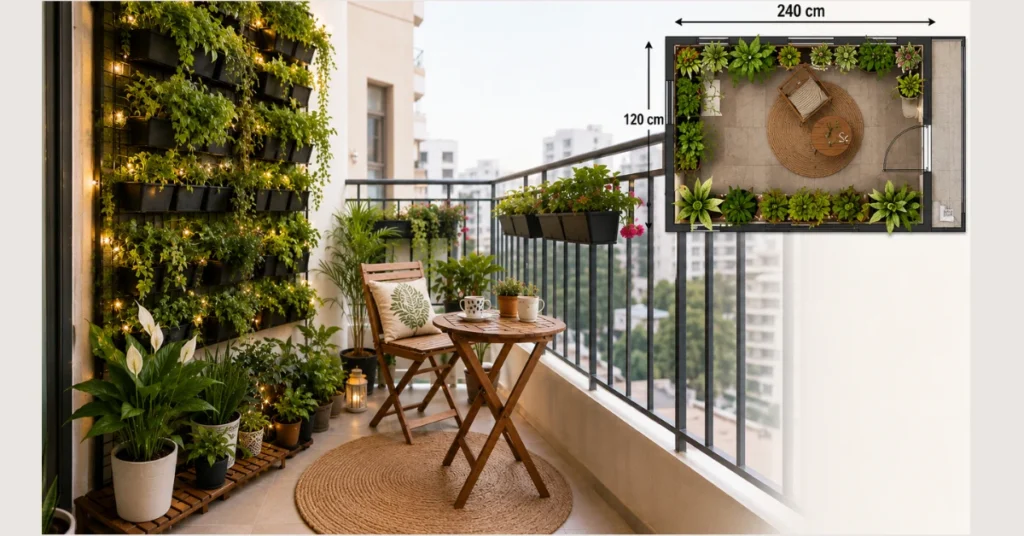
Living in a rented 1BHK apartment often comes with one common problem—lack of space. And in busy cities like Delhi, Mumbai, Bengaluru, or Gurugram, it feels even more noticeable. Dusty air, endless concrete buildings, trapped heat inside rooms, and almost no connection with nature can slowly start affecting your mood without you even realizing it.
My balcony was tiny—barely enough space for a plastic chair and a clothes-drying stand. For the longest time, I believed balcony gardens were only for people with large homes, expensive pots, fancy wooden shelves, and unlimited sunlight.
Most articles online also ignore the real problems renters actually face:
- What if the landlord doesn’t allow drilling?
- What if I have to move after 11 months?
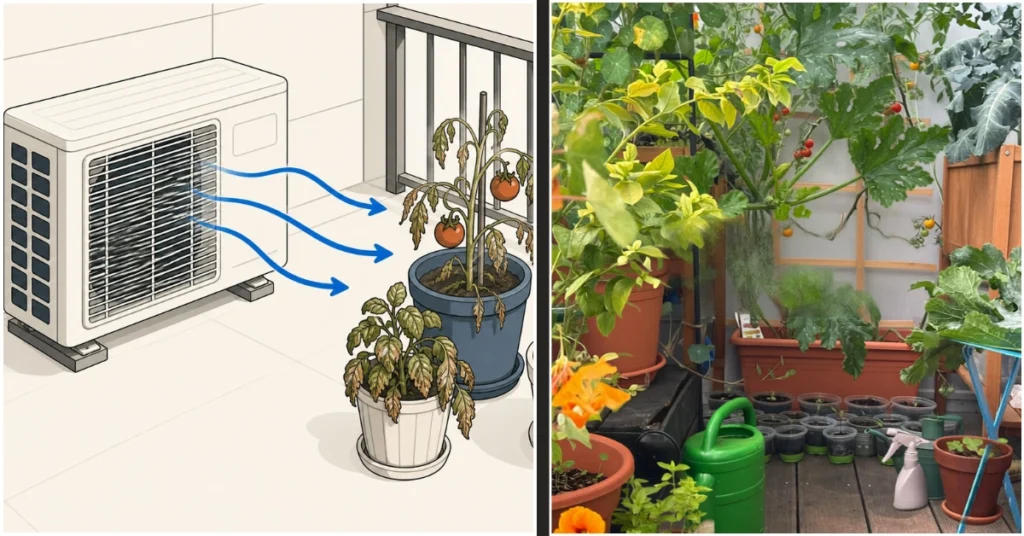
- What if the balcony gets harsh sunlight?
- What if plants attract mosquitoes?
- What if water leaks downstairs?
Nobody talks about these things seriously, but these are exactly the reasons many people never begin. So instead of trying to create a Pinterest-style balcony, I focused on one simple goal: building a low-cost, renter-friendly green space that could actually fit into daily life. And honestly, that completely changed my experience of living in the apartment.
Understand Your Balcony Before Buying Anything
Do not buy plants first. That’s the biggest mistake beginners make. Before spending even ₹100 on plants or pots, spend at least 2 days observing your balcony.
You need to understand these 4 things first:
1. Sunlight Timing—Sunlight timing decides everything, so carefully observe how much morning sunlight the area receives, how intense the afternoon sun becomes, which sections remain in full shade throughout the day, and the direction of the wind, as all of these factors directly affect plant growth, comfort, and overall space planning.
My Balcony Situation:
- Strong sunlight from 1 PM to 5 PM
- Hot summer wind
- Partial shade near the wall
This meant that delicate plants would easily burn under the harsh sun, water in the soil would dry out much faster, and only heat-resistant plants would be able to survive and thrive in those conditions.
General Rule:
- Morning sunlight (gentle): good for herbs, flowers, and leafy plants
- Afternoon sunlight (strong/hot): only heat-tolerant plants should be placed there
- Full shade areas: suitable for low-light foliage plants
Beginner Tip: Never place all your plants in direct afternoon sunlight on day one.
2. Balcony Size—Most renters tend to overfill their balconies, but my usable balcony space was only about 7 feet wide and 3.5 feet deep, giving me roughly 24 square feet of usable area. It was a minimal space, which meant that every single inch had to be planned and used carefully.
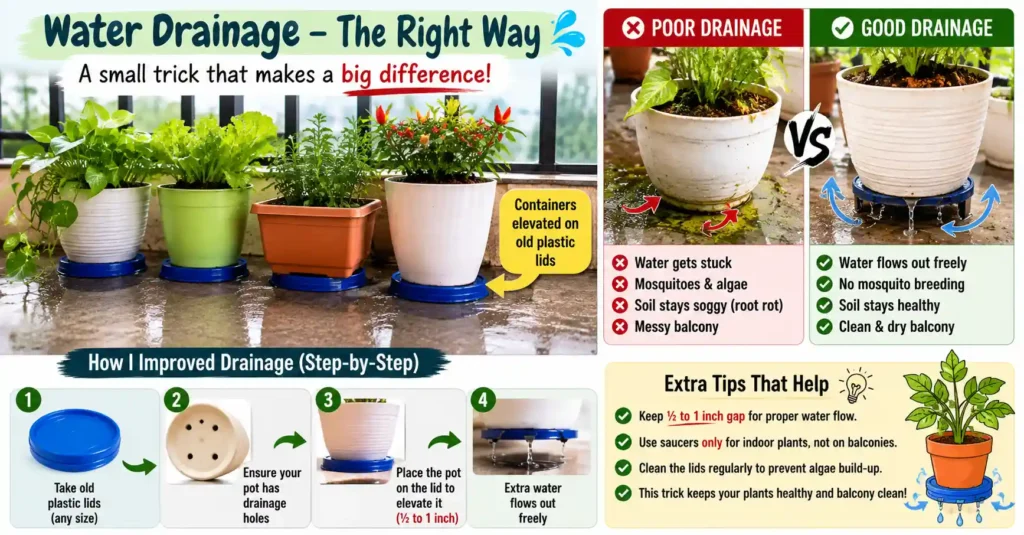
3. Water Drainage—It is important to check where the water exits because poor drainage can make balcony gardening messy rapidly. To improve water flow, I slightly elevated the containers using old plastic lids, which was a small trick that ended up making a huge difference.
4. Weight Capacity—This is important but often ignored. Avoid using heavy cement pots, large ceramic containers, and thick water-retaining soil because apartment balconies are not designed to handle excessive gardening weight. Choosing lightweight materials instead makes the setup safer, easier to manage, and more suitable for small balcony spaces.
Best Balcony Layout Ideas for Small 1BHK Apartments
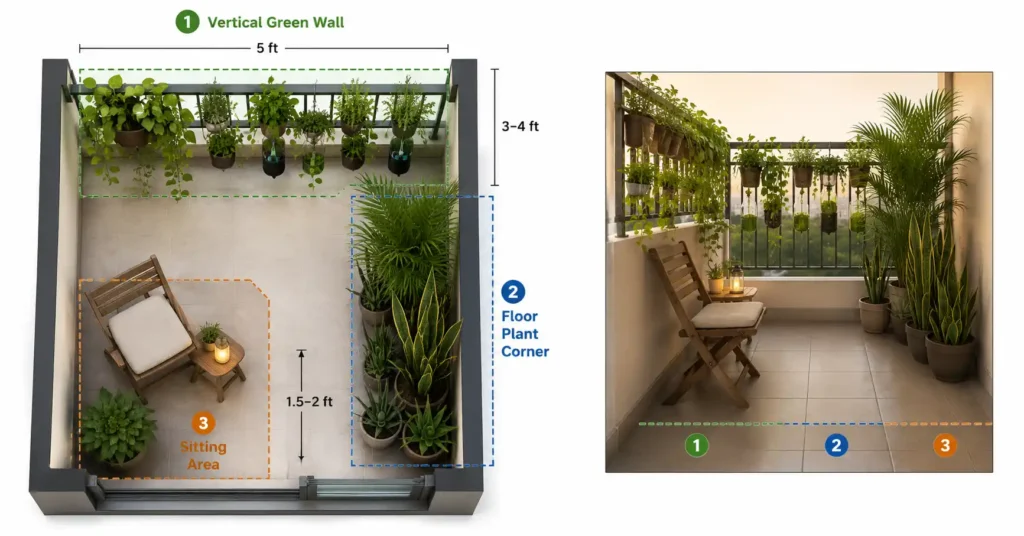
Here’s the exact layout system that worked best for me. Instead of filling the entire balcony with pots, I divided the space into separate zones, which made the balcony feel more organized and made maintenance much easier to handle.
Zone 1—Vertical Green Wall
I wanted to save floor space while making the balcony feel greener and cooler, so I mounted plants on the railings instead of filling the floor with pots.
What I used included money plants, small herb containers, and hanging bottles.
Dimension—The setup used around 3 to 4 feet of vertical height and covered approximately 5 feet in width. It instantly made the balcony feel fuller and greener without blocking movement or reducing usable space.
Zone 2—Floor Plant Corner
The purpose of this setup was to create a cooling effect, add dense greenery, and give the balcony a greater sense of privacy and comfort.
Position—The plants placed in this section included snake plants, areca palms, and aloe vera, all positioned in just one side corner of the balcony. This was important because placing pots across the entire balcony floor can make the space feel cramped, so leaving enough walking space helped keep the balcony functional and comfortable.
Ideal Floor Clearance: Minimum walking space should be 1.5 to 2 feet
Zone 3—Sitting Area
Most people forget this completely. Without a sitting area, the balcony eventually turns into a storage space instead of a place to relax and unwind. I kept it simple by using one foldable chair, a small stool, and a warm LED light, which was more than enough to create a comfortable atmosphere without adding bulky furniture.
The Exact Plants That Actually Survive Apartment Balconies
Best Heat-Resistant Plants for Renters:
1. Snake Plant—Snake plant is one of the best choices for beginners, especially for hot balconies and low-maintenance gardening setups. It works well because it needs watering only every few days, handles dust easily, looks modern, and also helps purify the air. An 8–10 inch container is usually ideal for healthy growth, and it should only be watered once the soil becomes dry. The biggest mistake most people make with snake plants is overwatering.
2. Tulsi (Holy Basil)—Tulsi is one of the best practical plants for a balcony because it provides a natural fragrance, helps reduce mosquitoes, grows quickly, and is useful in daily life. It grows best with around 4–6 hours of sunlight, but an important tip is to never let water collect near the roots, as tulsi does not tolerate waterlogging well.
3. Money Plant—Money plant is perfect for vertical gardening, especially for renters, because it grows quickly, covers unattractive railings, requires very little maintenance, and is easy to propagate. A smart trick is to use transparent water bottles as hanging planters, which can look surprisingly attractive when arranged neatly and consistently.
4. Aloe Vera—Aloe vera is one of the most forgiving plants and can easily survive heat, neglect, and inconsistent watering, making it ideal for busy or beginner gardeners. In addition to being low maintenance, it is also useful for treating minor burns and supporting basic skin care.
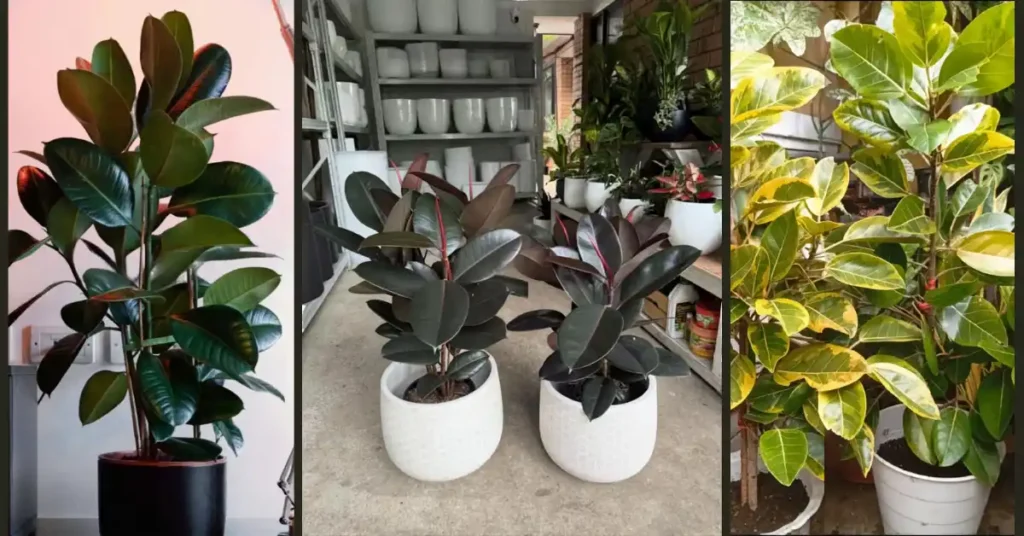
Struggling with yellow or falling leaves? Read my detailed guide on rubber plant leaf drop causes and practical fixes to identify plant stress problems early.
The Soil System That Reduced Mess Completely
Normal garden soil caused
- Mud stains
- Heavy pots
- Bad drainage
- Insects
My Practical Soil Formula
- 50% cocopeat
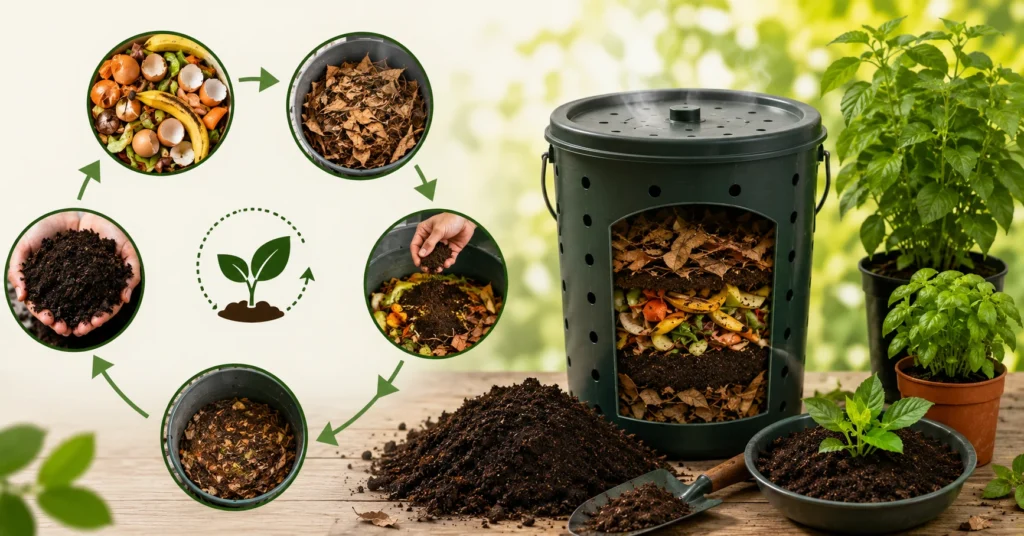
- 30% compost
- 20% garden soil
One of the biggest advantages is how much cleaner and more beginner-friendly the balcony feels. Better drainage prevents water buildup, movement becomes easier with less clutter, and the overall setup stays lighter and easier to maintain. These small improvements matter a lot in rented apartments, where simple, low-maintenance solutions are usually the most practical choice.
The Watering System That Prevented Leakage Complaints
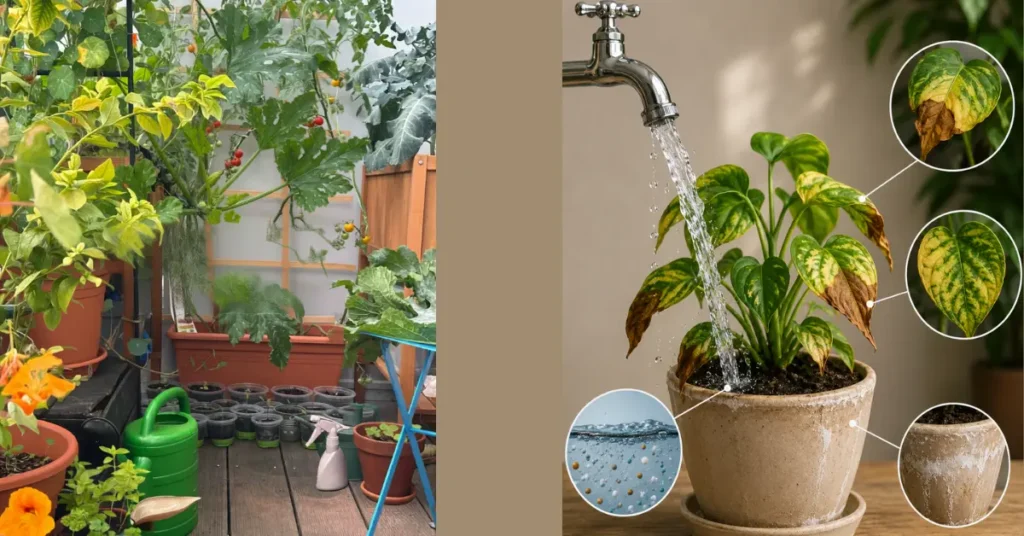
This is one of the biggest issues renters face—if water starts dripping downstairs, problems begin immediately. That’s why I followed a strict drainage system to ensure proper water flow, prevent leakage, and avoid any inconvenience for neighbors or property owners.
Use Trays Under Every Pot
I used cheap alternatives like plastic food trays, old lids, and fruit packaging trays to create a simple drainage setup. This helped prevent water stains, reduced balcony mess, and avoided leakage complaints from downstairs neighbors.
The Best Watering Routine
Gurgaon & Hyderabad—During summer, early morning watering only.
Bengaluru—Water less frequently because humidity stays longer.
Pune—Alternate-day watering usually works.
Very Important Rule I Followed
Never water plants blindly on a fixed schedule—always touch the soil first. If the soil still feels moist, skip watering. This single habit helps prevent fungus, root rot, mosquitoes, and unpleasant smells, while also keeping plants healthier eventually.
Quick Plant Watering Test
Step 1: Insert Your Finger—Push your finger about 1–2 inches into the soil.
Step 2: Feel the Soil
| Soil Condition | What It Means | What To Do |
| Wet or Cool & Moist | Soil still has enough water | Skip watering |
| Slightly Damp | Plant is still comfortable | Check again tomorrow |
| Dry and Crumbly | Plant needs water | Water slowly and evenly |
The Realistic Maintenance Routine for Busy Renters
Daily—5 Minutes
- Check soil
- Remove dry leaves
- Quick visual inspection
Weekly — 20 Minutes
- Clean trays
- Wipe dusty leaves
- Rotate pots slightly
- Check pests
Monthly
- Add compost
- Trim overgrown plants
- Wash balcony corners
Approximate Budget for Complete Setup
| Item | Approx Cost |
| Plants | ₹1500–₹2500 |
| Lightweight pots | ₹700 |
| Soil mix | ₹600 |
| Metal rack | ₹900 |
| Bamboo shade | ₹500 |
| Lights + accessories | ₹400 |
Around ₹4500–₹6000 is enough for a beginner-friendly and beautiful apartment-safe balcony garden.
About This Guide
I created this balcony garden while living in a rented 1BHK apartment in Delhi, using budget-friendly materials and real trial-and-error experience.
🌿 Small Balcony Gardening Terms Explained
A lightweight growing material made from coconut husk that improves drainage and keeps soil airy.
A condition where excess water stays trapped in the soil, preventing roots from getting enough oxygen.
Plants that can tolerate strong sunlight, high temperatures, and dry balcony conditions.
A gardening method where plants are grown upward on walls, railings, or hanging structures to save floor space.
An area that receives limited sunlight during the day while remaining shaded for several hours.
A condition where plant roots become overcrowded inside a small pot and stop growing properly.
A shallow tray placed under pots to collect excess water and prevent balcony leakage.
Plants that require minimal watering, care, pruning, and attention to survive well.
Organic material made from decomposed kitchen or garden waste used to improve soil nutrition.
The natural movement of air around plants that helps reduce fungal growth and keeps plants healthy.
Conclusion: Start Small, Grow Slow
Building a balcony garden in a rented 1BHK isn’t about achieving perfection or having a “green thumb” from day one. It’s about creating a small pocket of peace in a crowded city. When I started, I was worried about the landlord, the 11-month lease, and the scorching summer heat, but I realized that most of these problems have simple, low-cost solutions.
My advice? Don’t try to buy ten plants at once. Start with one hardy snake plant or a tulsi, watch how it reacts to your balcony’s light, and grow from there. Your balcony might be small, but the impact it has on your morning coffee and your mental health will be massive.
If you have any questions about specific plants or drainage issues in your city, drop a comment below—I’d love to help you get your green space started.