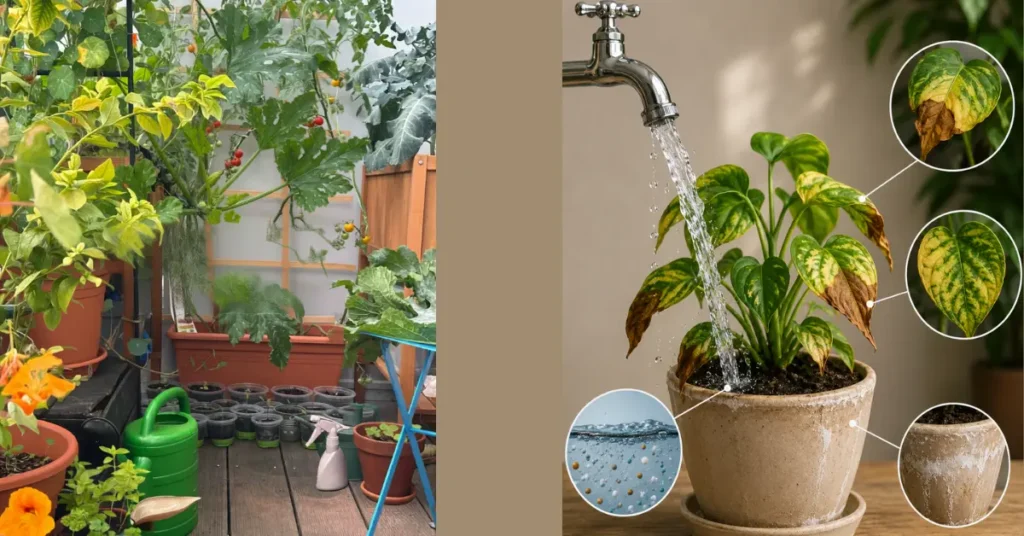
Indoor plants bring freshness and life into Indian homes, but many plant owners notice their plants slowly becoming weak despite regular care. Leaves turn brown, growth slows down, and white marks appear on the soil or pots. Most plant owners think the problem is sunlight or fertilizer, but in numerous instances, the real reason is hard water.
In many Indian cities, tap water contains high levels of dissolved minerals that gradually affect indoor plant soil and root health. Since the damage happens over time, it is often difficult to notice the real cause early.
The good news is that hard water problems can be managed easily with the right methods. In this guide, you will learn how hard water affects indoor plants, the common signs to watch for, and simple ways to protect your plants without spending too much money.
What Is Hard Water?
Hard water contains high levels of dissolved minerals such as calcium and magnesium, along with mineral salts and carbonates. In India, this is very common because many cities depend on groundwater and borewell water. As water passes through underground rocks, it naturally collects these minerals.
This increases the TDS (Total Dissolved Solids) level in the water. In many Indian cities, tap water TDS levels commonly range between 300–800 ppm, while some borewell water sources may exceed 1000 ppm.
While this water may work fine for daily household use, indoor plants respond differently. Since plants grow in small pots with limited soil, these minerals gradually build up over time and start affecting root health, soil quality, and nutrient absorption.
Signs of Hard Water Damage in Indoor Plants
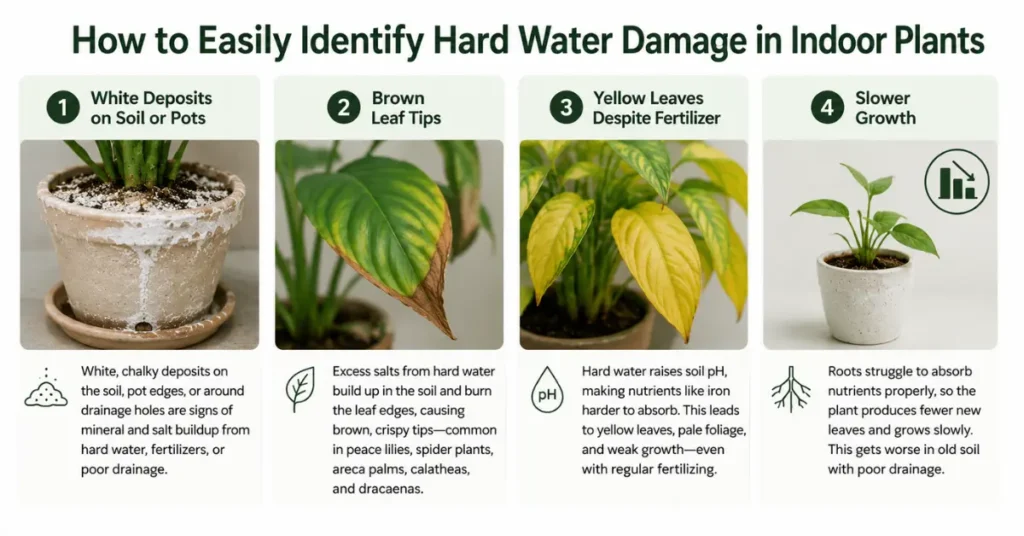
- White Deposits on Soil or Pots—If you notice a white, chalky layer on the soil, pot edges, or around the drainage holes, it’s usually a sign that minerals and salts have started building up from hard water.
- Brown Leaf Tips—One of the most common signs of hard water is brown, crispy leaf tips. Over time, excess salts build up around the roots and begin to burn the edges of the leaves—something especially common in peace lilies, spider plants, areca palms, calatheas, and dracaenas.
- Yellow Leaves Despite Fertilizer—Hard water gradually raises the soil’s pH, making important nutrients like iron harder for the roots to absorb. As a result, plants may develop yellowing leaves, pale foliage, and weak growth—even when they’re fertilized regularly.
- Slower Growth—Plants stop producing healthy leaves because roots struggle to absorb nutrients properly. The problem becomes worse in old soil with poor drainage.
The Good News: Hard Water Damage Can Be Fixed
There’s no need for expensive fertilizers or complicated gardening systems to keep indoor plants healthy. Simple changes in watering and soil care can make a big difference.
A few practical habits can improve plant growth, protect roots, and reduce hard water damage over time.
Solution 1: Stop Using Fresh Tap Water Immediately
- Fill buckets or containers with water
- Let the water sit for 12–24 hours
- Use that stored water the next day
Letting water sit for a few hours before using it can make a noticeable difference for houseplants. This process allows some of the chlorine present in water to escape. Moreover, it enables the temperature of water to become less harsh for roots and causes heavy minerals in it to sink. Although this does not remove hardness minerals completely, it will certainly help lessen the stress on plants.
Solution 2: Mix RO Water with Tap Water
Mixing 50% RO water with 50% tap water is one of the easiest ways to reduce hard water damage in indoor plants. This lowers the TDS level significantly while still keeping some minerals in the water, which plants need for healthy growth.
I initially tried using only RO water, but over time I noticed that some plants responded better when a small amount of tap water was mixed back in. After experimenting, a mix of RO and tap water gave much better results.
Sensitive plants like calatheas, orchids, anthuriums, and ferns started showing healthier leaves, reduced brown edges, and better overall growth. In homes with very hard water, increasing the RO water ratio slightly worked even better for preventing mineral buildup and root stress.
I noticed this mix worked wonders specifically for my Pothos. If you’re struggling with yours, you might want to check out my deep dive on Indoor Money Plant Care: 10 Real Problems & Natural Solutions, where I break down why their leaves lose that waxy shine.
Solution 3: I Started Flushing My Soil Once a Month—Here’s What Changed
Flush the soil once a month, as it’s one of the most overlooked yet highly effective practices. Over time, salts and minerals build up in the potting mix, and flushing helps clear them out.
How to Flush Indoor Plant Soil
- Once every 4–6 weeks, take the plant to a sink, bathroom, or balcony
- Slowly pour large amounts of water through the soil
- Let excess water drain fully from the bottom
- Repeat 2–3 times
Solution 4: Improve Potting Mix Quality
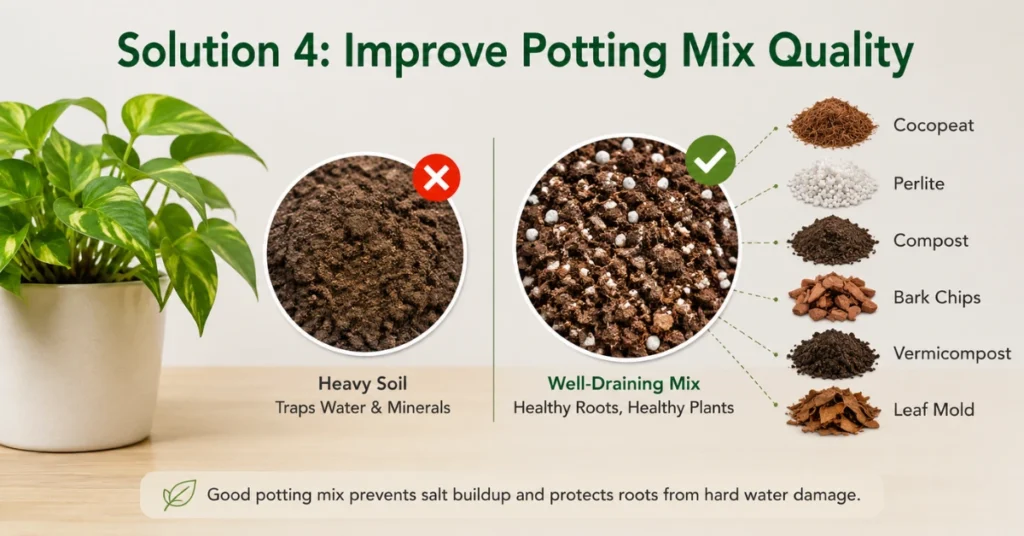
Improve potting mix quality because many indoor plant problems in India begin with poor soil, and using heavy garden soil indoors is one of the most common mistakes; such dense soil traps salts, excess moisture, and compacted minerals, which further worsens hard water damage.
Better Potting Mix Ingredients:
From experience, I’ve found that switching to an airy, fast-draining mix makes a huge difference; I usually go with a blend of cocopeat, perlite, compost, bark chips, vermicompost, and leaf mold, and it keeps the soil light and breathable. Good soil structure like this also stops minerals from concentrating around the roots, which is where most hidden problems start.
Solution 5: Reduce Fertilizer Frequency
Reduce fertilizer frequency—this one surprises a lot of plant owners. When hard water is already adding minerals and salts into the soil, piling on extra fertilizer only makes things worse. In my experience, overfeeding along with hard water almost always leads to burnt roots, brown leaves, salt toxicity, and an overall soil imbalance that’s hard to recover from.
A Better Fertilizer Approach That Worked for Me:
- Use diluted fertilizers
- Fertilize less frequently
- Feed only during active growth seasons
Solution 6: Use Rainwater Whenever Possible
Over time, I noticed using rainwater for my indoor plants during the monsoon almost by chance, and honestly, the difference surprised me. Instead of letting the rain go to waste, I began collecting it in a few clean buckets and storing it in covered containers. Nothing fancy—just making sure it stayed clean and wasn’t left open for too long.
Within a couple of weeks, I started noticing small but clear changes. The leaves of my peace lily and money plant looked fresher and more vibrant, almost like they had been revived. Even the soil seemed to respond better compared to tap water. I now try to use rainwater whenever I can during the rainy season, especially for my more sensitive plants.
It feels like one of those simple gardening habits that costs nothing but gives back so much.
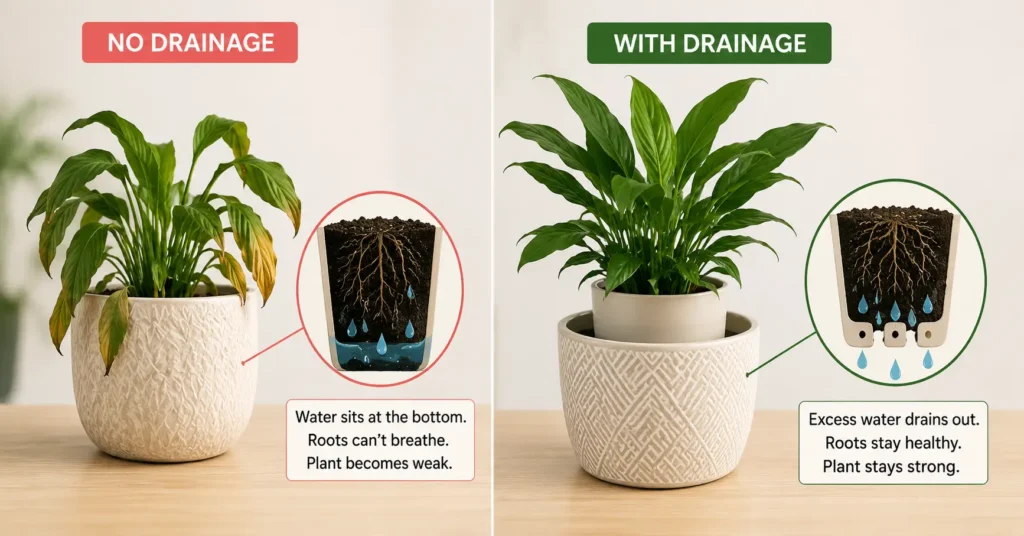
Solution 7: Avoid Decorative Pots Without Drainage
I learned this lesson the hard way with a couple of my indoor plants. I had placed them in beautiful decorative pots without drainage, thinking they would look more aesthetic. But over time, the plants started struggling, and I couldn’t figure out why at first.
The real issue was simple—water had nowhere to go. With hard water, salts kept building up in the soil, and everything over time became compacted. The roots couldn’t breathe properly, and the plants began looking dull and weak no matter how carefully I watered them.
Now I never compromise on drainage. Every plant goes into a pot with proper holes, and I only use decorative cachepots on the outside with a nursery pot inside. That small change alone made a huge difference in how healthy and stable my plants stay over time.
Pingback: 5 Forgotten Medicinal Trees You Can Grow in Pots at Home - Inbriefly