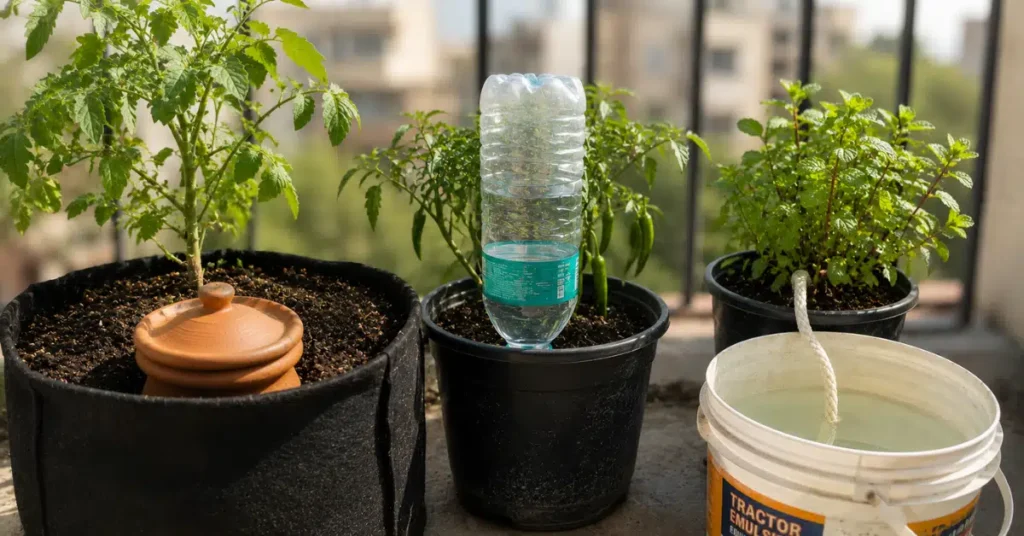
AC outdoor units blast hot, dry air at 90–110°F – and that’s exactly what’s killing your balcony vegetables. Here’s what’s actually happening and what to do about it.
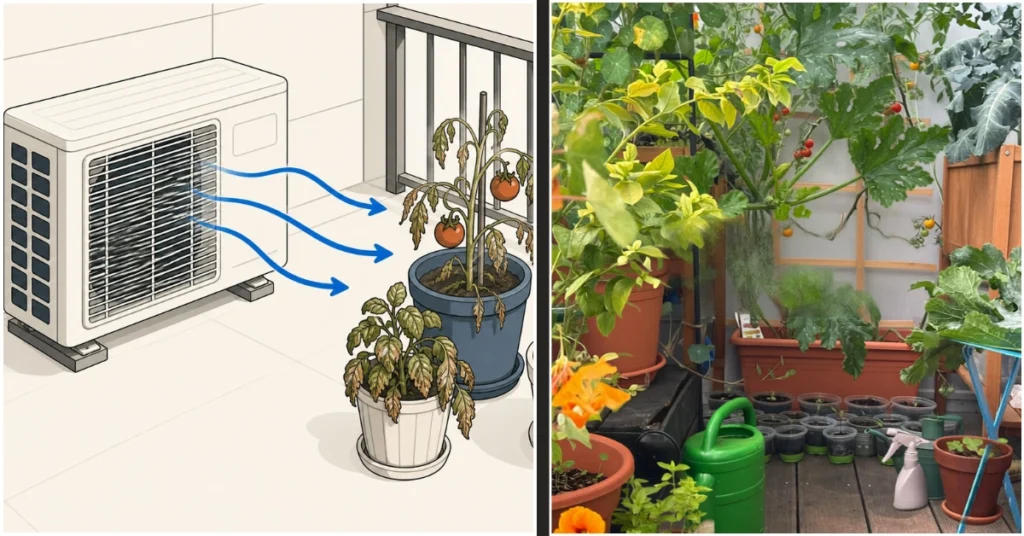
You planted tomatoes on the balcony back in spring. Water them religiously. They grew tall, they flowered, they looked genuinely healthy. And then – nothing. Flowers kept dropping. Weeks passed. Still no fruit.
This is one of the most common frustrations in balcony container gardening, and the culprit is usually sitting right there, a few feet away, humming steadily: the AC outdoor unit.
Most balcony gardeners know vaguely that their AC unit produces warm air. What they don’t fully appreciate is how hot, how dry, and how forceful that exhaust actually is – and that those three factors combine in a way that’s specifically brutal for vegetable production, even when the plants themselves look completely fine.
What your AC outdoor unit actually does to the air around it
An air conditioner doesn’t create cold air out of nothing. It moves heat – pulling it from inside your home and expelling it outside through the condenser unit. That boxy machine on your balcony or just outside your window is essentially a heat pump working to keep your apartment cool, and the price it charges your plants is paid in hot, dry, turbulent exhaust air.
The exhaust from that unit can be 10-20°F hotter than the ambient temperature. On a warm summer day when ambient temperatures are already 85-90°F, the air flowing out of your condenser can easily hit 100-110°F. On a sun-baked balcony, the conditions in the immediate vicinity of the unit get genuinely extreme.
Heat is only part of the problem. The AC system removes moisture from the air as part of the cooling process – that’s where some of the condensation comes from. Most vegetables prefer humidity in the 40-60% range. Near an AC outdoor unit, humidity can drop to 30-40%, consistently below the lower limit of what most vegetable crops prefer. In hot, dry climates this effect is compounded further by the already-low ambient humidity.
Then there’s the wind. The condenser fan doesn’t exhaust warm air gently – it creates a directed stream of fast-moving air that causes leaf damage, accelerates water evaporation from foliage and soil, and stresses plant vascular systems that depend on controlled transpiration rates.
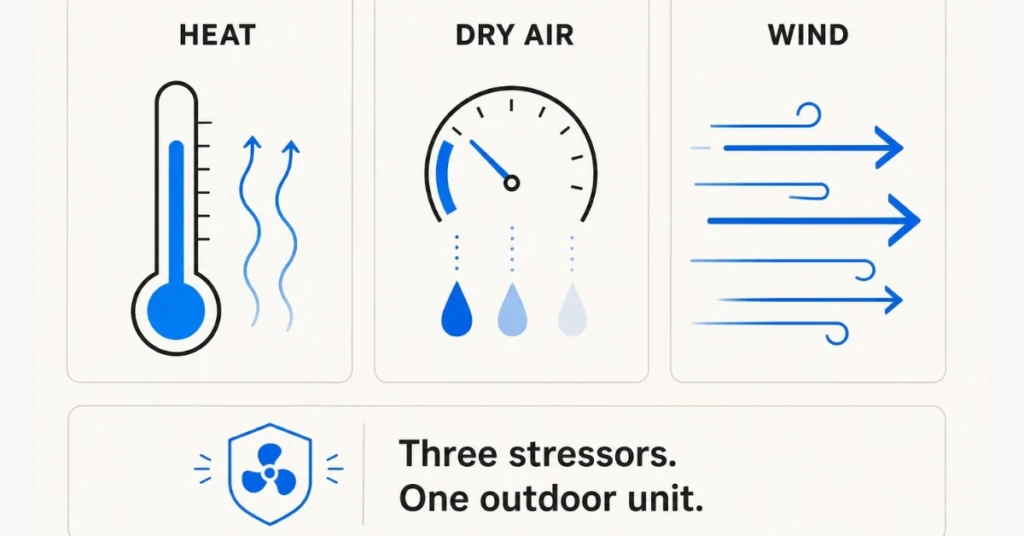
What makes AC exhaust particularly difficult – compared to an ordinary hot day – is that all three stressors hit simultaneously. Any one of them alone, heat-tolerant vegetables could handle. All three at once, concentrated in the zone directly around the unit, creates a microclimate that most vegetables simply cannot survive productively.
The container plant problem: why balcony gardens get hit harder
If you’re growing vegetables in containers on a balcony – as most balcony gardeners do – you’re starting from a more vulnerable position than someone gardening in the ground, and AC exposure amplifies every existing weakness.
Container soil heats up significantly faster than in-ground soil. When AC exhaust is added to direct sun, container soil temperatures can run 15-20°F above the surrounding air. That means roots – which tend to be even more sensitive to temperature than foliage – are cooking even when the leaves look perfectly healthy.
Container plants also have a finite water supply. When heat and low humidity combine, water evaporates from the soil surface and through the plant’s leaves far faster than in normal conditions. The limited soil volume means you run out of moisture quickly, and the plant hits water stress before your next watering. A tomato growing in-ground can draw from a large, deep soil mass; your tomato in a 10-gallon pot cannot.
Black containers make everything worse. A black grow bag or dark plastic pot absorbs heat aggressively under direct sun. Add AC exhaust, and root zone temperatures can reach levels that cause direct root tissue damage. If you’re using dark-colored containers anywhere near your AC unit, switching to light-colored pots is one of the simplest and most effective changes you can make.
The symptom that throws everyone off: flower and fruit drop
The reason AC exposure confuses so many balcony gardeners is that the most critical symptom often isn’t wilting – it’s reproductive failure.
Vegetable plants prioritize survival. When heat stress hits, they don’t immediately die. What they do first is stop reproducing. Tomatoes abort flowers and fail to set fruit when daily temperatures regularly exceed 85-90°F. At those temperatures, pollen becomes non-viable. Flowers open, but fertilization doesn’t happen and the flower drops. The plant looks completely fine. It just produces nothing.
“Keep the area directly behind the unit clear (it will blow hot air straight on plants and unless you choose wisely most plants don’t love this)
This is exactly why you see balcony tomatoes that look lush and healthy but never produce fruit. The foliage can survive at temperatures that the reproductive system cannot. The plant is conserving energy for survival by aborting its flowers. It isn’t diseased, nutrient-deficient, or under-watered – it’s too hot to reproduce.
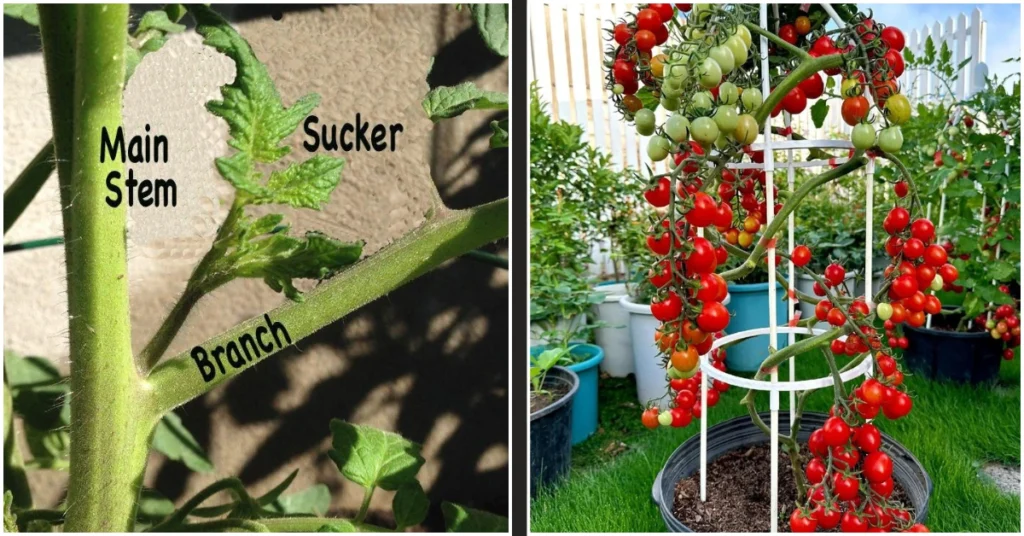
If your tomato plants are healthy but underperforming, pruning may not be the issue either. Read our guide on Why I Stopped Removing Tomato Suckers (And Got More Tomatoes) to understand when sucker removal can actually reduce yields.
Penn State Extension’s research on heat stress and tomatoes notes that even night temperatures above 70°F cause heat stress. When your AC unit runs through the night (common in hot climates), it may be creating a warm zone right where your plants are trying to recover from the day’s heat – preventing the overnight cooling that fruiting vegetables depend on to set properly.
The same mechanism hits peppers, beans, cucumbers, and most fruiting vegetables. The threshold temperatures vary, but the pattern is consistent: the plant looks fine, the leaves stay green, but production just stops.
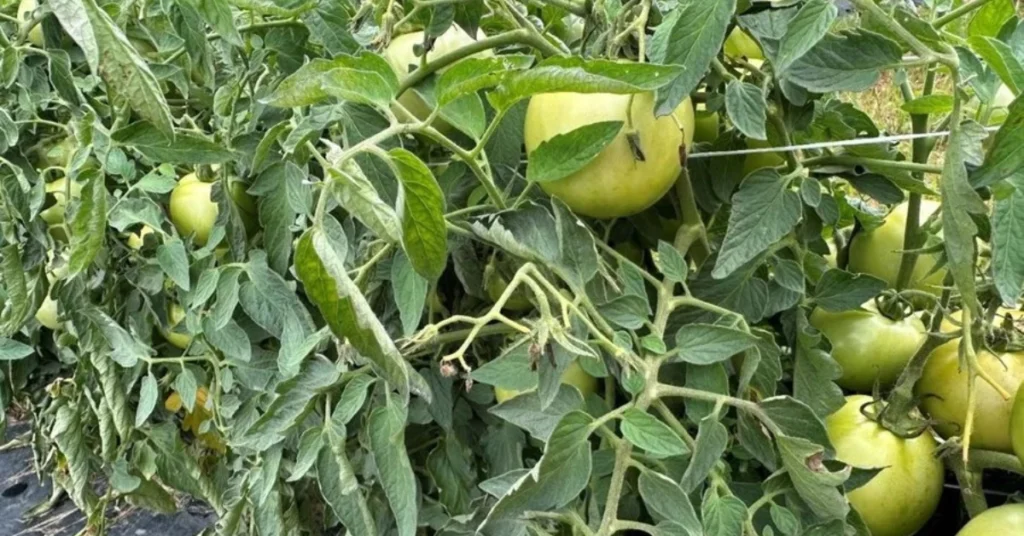
Visible wilting despite adequate watering, brown crispy leaf edges, yellowing foliage, and blossom-end rot in tomatoes are all more advanced heat stress symptoms. These tend to appear after the production problem is already well established – so if you’re seeing them, you’ve usually been losing fruit set for weeks already.
Which vegetables struggle the most near AC units
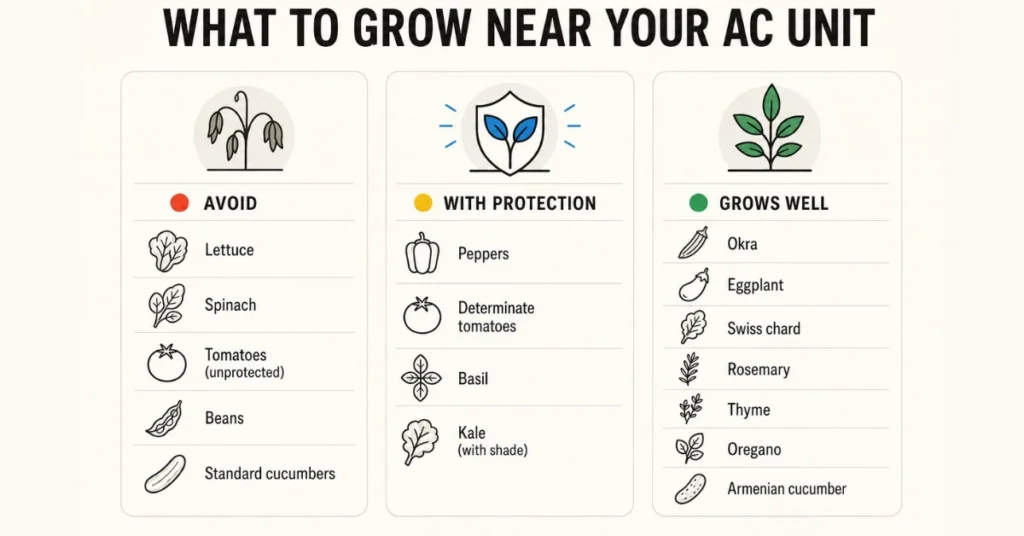
Not all vegetables respond the same way to AC exhaust. Here’s a practical breakdown based on heat tolerance, humidity needs, and real-world container performance:
| Vegetable | Heat tolerance | Near-AC viability |
|---|---|---|
| Lettuce / spinach | Very low | Very poor – bolt immediately |
| Tomatoes | Low-medium | Poor (needs 5ft+ and shade cloth) |
| Beans | Medium | Poor |
| Standard cucumbers | Medium | Poor (flower drop) |
| Peppers | Medium-high | Marginal – needs strong protection |
| Basil | High | Moderate – heat-tolerant but needs humidity help |
| Swiss chard | High | Good |
| Eggplant | High | Good |
| Okra | Very high | Excellent |
| Rosemary / thyme / oregano | Very high | Excellent |
Leafy greens like lettuce and spinach bolt – flower prematurely, become bitter and inedible – at the first sign of heat stress. Near an AC unit, this happens within days. They’re a lost cause in that spot.
Tomatoes are where most balcony gardeners get burned. They’re the most popular balcony vegetable and one of the least suited to AC exposure. When plants are exposed to temperatures above 95°F, they are really stressed, and AC exhaust routinely exceeds that threshold right next to the unit. The optimal daily temperature range for tomatoes is just 70-75°F, which is a far cry from what your condenser creates in its immediate vicinity.
Mediterranean herbs – rosemary, thyme, oregano – are genuinely well-matched to these conditions. Their native habitat is hot, dry, and breezy, which is essentially what your condenser unit is recreating. Rather than fighting the conditions, these plants treat them as home. If you’re going to grow anything right next to your AC unit, this is the category to start with.
A zone-based approach to your balcony
The most useful way to plan a balcony garden with an AC unit is to think in zones based on distance from the unit and exposure to its exhaust:
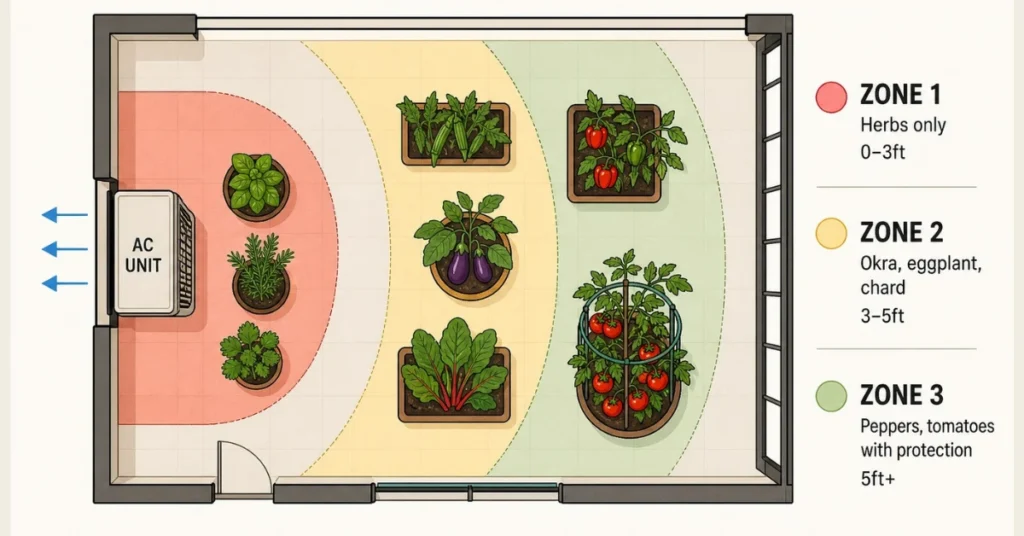
Zone 1 (0-3 feet, direct exhaust path) is inhospitable to vegetable production. The most you can reliably grow here are hardy Mediterranean herbs – rosemary, thyme, oregano, possibly basil – which are natively adapted to hot, dry, breezy environments. Don’t plant tomatoes or peppers here and expect meaningful results.
Zone 2 (3-5 feet, moderate exposure) can support heat-tolerant vegetables with protection: okra, eggplant, Swiss chard, Armenian cucumber. These plants can produce here with consistent watering and shade cloth, especially if you position them to the side rather than directly in front of the exhaust discharge.
Zone 3 (5+ feet, partial protection) is where most vegetables become viable with some help. Peppers and determinate tomatoes can produce in Zone 3, particularly if you have shade cloth and water carefully. Morning sun with afternoon shade – if your balcony orientation allows it – is ideal here.
HVAC technicians recommend keeping anything at least 2-3 feet from the unit for the unit’s operational efficiency. For vegetable production, treat that as the bare minimum floor, not a target. The direction of exhaust discharge also matters enormously: a plant 4 feet to the side of the unit is in fundamentally better conditions than one 4 feet directly in front of the exhaust.
How to actually protect your plants
If you’re committed to growing near an AC unit, these are the strategies that actually shift the needle:
Shade cloth (30-50% density) is the single most effective intervention available. It reduces both direct sunlight and the radiant heat load from AC exhaust, creating meaningfully cooler conditions beneath it. White shade cloth reflects more heat and performs better for heat-sensitive plants; darker cloth works fine for heat-lovers. Mount it so air still circulates underneath – a sealed enclosure creates a stagnant hot pocket that’s worse than no shade at all. Community experience confirms that a density of 30-35% strikes the best balance between blocking wind and maintaining air circulation.
Water more aggressively, and earlier in the day. Near an AC unit, containers may need watering once or twice daily in peak summer heat. Check soil moisture daily – containers in this environment dry out faster than you’d expect even after a thorough soaking. Water early in the morning before the heat builds, and water deeply enough that moisture reaches the bottom of the container. Self-watering pots with built-in reservoirs significantly reduce this maintenance burden.
Switch to larger, light-colored containers. More soil volume means more moisture buffering and more stable root temperatures – both directly beneficial near AC units. Light colors reflect heat instead of absorbing it. If you’re currently growing in black grow bags or dark plastic pots, this single swap can make a noticeable difference in how your plants cope.
Apply surface mulch. A 4-6 inch layer of straw, wood chips, or pine needles over container soil dramatically reduces evaporation and keeps the root zone several degrees cooler. It’s one of the lowest-effort, highest-return moves you can make for AC-exposed containers.
Group plants together. Plants transpire moisture through their leaves and create a small pocket of elevated humidity when clustered. This won’t overcome the full AC drying effect, but it takes the edge off. Pebble trays beneath pots – filled with water to just below the pot bottom – have a similar localized humidity effect.
Use a physical windbreak. A shade cloth panel positioned between the AC unit and your plants can meaningfully reduce the mechanical wind damage from the condenser fan. It won’t stop heat transfer, but removing the wind component eliminates one of the three simultaneous stressors and gives plants a noticeably better chance.
Plants that can handle AC-adjacent conditions
If you’re working with Zone 2 exposure and want reliable production without heroic intervention, these are the plants worth building around:
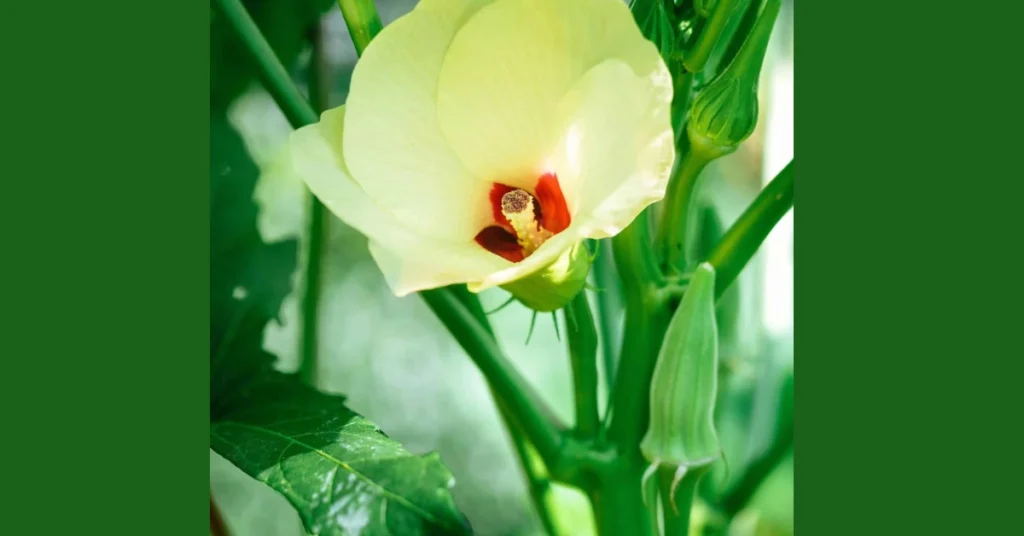
Okra is the champion. It’s genuinely one of the easiest vegetables to grow in hot weather and actually performs better in extreme heat than in moderate temperatures. It handles the kind of direct-sun-plus-AC-exhaust environment that kills most other vegetables outright. Needs at least a 5-gallon container, but it’s consistently reliable in Zone 2 with regular watering.
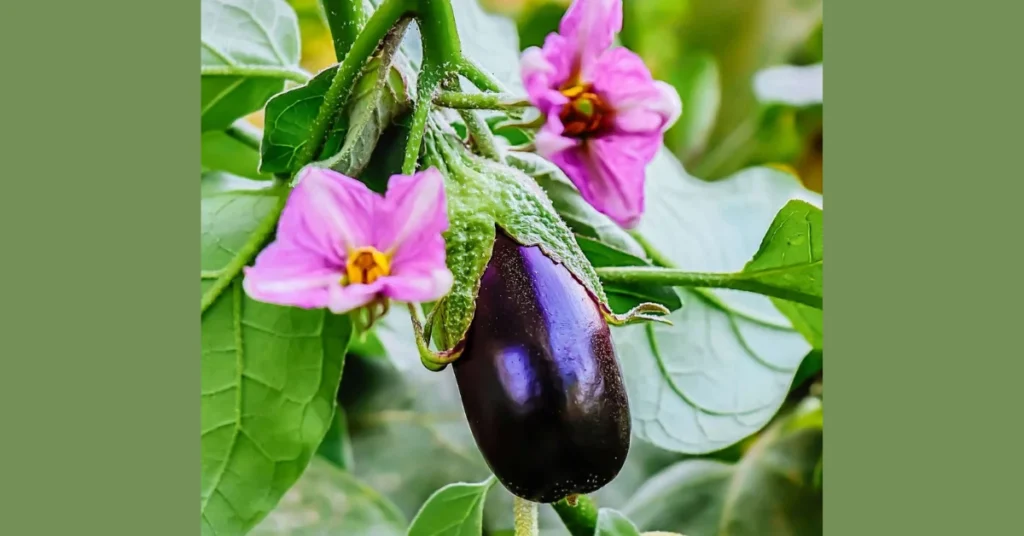
Eggplant is another reliable performer near AC units. Its thick, waxy leaves are more resistant to drying than most vegetables, and it produces steadily even when temperatures climb above 90°F. The flowers hold up better at high temperatures than tomato flowers do, meaning you’re substantially more likely to actually get fruit. A 5-7 gallon container works well.
Swiss chard is the leafy green exception. While lettuce and spinach bolt at the first hint of heat, chard handles warmth well and keeps producing fresh growth throughout hot periods. It’s one of the only leafy greens worth attempting anywhere near an AC unit, and it looks good in containers too.
Rosemary, thyme, and oregano are genuinely at home near AC units. These Mediterranean herbs are adapted to hot, dry, sunny growing conditions – essentially what your condenser unit is manufacturing around the clock in summer. Rather than treating the AC exposure as a problem, consider it a feature for this category of herb. Regular harvesting keeps them producing and prevents them from going woody.
Basil occupies useful middle ground. It loves heat, thrives in small containers, and grows fast enough that you can harvest continuously through the season. The caveat is that while it handles high temperatures, it still wants some humidity – pair it with a pebble tray or group it close to other plants to offset the drying effect.
When relocation is the right call
Here’s the honest assessment: experienced balcony gardeners on Reddit and gardening forums consistently say the same thing. Tried protection strategies for a season. I tried them again more carefully the next year. Eventually concluded that moving the containers to a different corner of the balcony was just easier, more productive, and less stressful.
That’s a completely legitimate conclusion. The strategies outlined above work, but they require sustained attention – daily or twice-daily watering, careful shade cloth placement, deliberate plant selection. In a hot summer with a unit that runs constantly, this starts to feel like a second job.
If your AC unit runs from May through September on a south- or west-facing balcony with limited natural shade, it may genuinely be more productive – in every sense of the word – to put the Zone 1 and Zone 2 spots to work with Mediterranean herbs and reserve your tomato and pepper growing ambitions for a different location. A window box on the opposite side of the apartment, a community garden plot, or a different balcony corner can change your results entirely.
Working with your conditions rather than against them is what experienced gardeners do. There’s no shame in the pragmatic move.
A Mistake Many Urban Gardeners Make
It is very common to see many gardeners adding extra fertilizer to their plants whenever these plants appear to be under stress. Plants that are under heat stress normally have symptoms which mimic those of nutrient deficiencies, hence the tendency by most people to use fertilizers to revive such plants.
This is counterproductive because too much fertilizer with heat stress may end up damaging the roots and increasing the need for water in plants. It is always advisable to check the environment before adding fertilizer to plants.
Knowing all this changes how you approach a balcony garden from the start. The AC unit isn’t an afterthought – it’s one of the most significant microclimate factors on your balcony, and placing your most productive vegetables directly in its path sets you up for a frustrating season. Map your zones, pick heat-tolerant plants for the difficult areas, and save your tomatoes and peppers for spots where they’ll actually reward the effort you put in.