Kagzi lemon is the easiest fruiting tree you can grow on an Indian balcony — but only if you get the pot size, soil, and feeding cycle right. This guide covers exactly that, with zero generic advice.
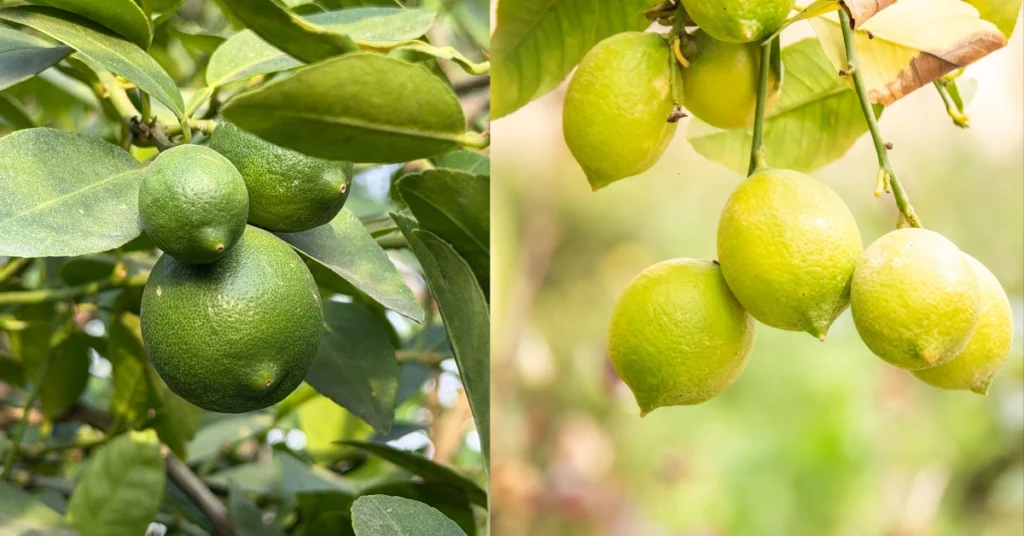
Kagzi lemon is one of the easiest citrus trees to grow on balconies. It produces thin-skinned, highly juicy lemons, flowers, and fruits multiple times a year, and performs exceptionally well in containers when given the right care.
The difference between a tree that delivers several harvests each year and one that barely grows usually comes down to a few early decisions. Choosing the right grafted plant, using an appropriately sized container, and feeding it according to its flowering and fruiting cycle have a far greater impact than most gardeners realize.
This guide focuses exclusively on growing Kagzi lemon in pots under Indian balcony conditions. It covers the practical techniques that matter in urban spaces and addresses the challenges that general citrus-growing guides often overlook.
Why Kagzi Lemon Over Every Other Lemon Variety for Containers
Before the how-to, the why-this-variety matters.
Kagzi lemon (Citrus aurantifolia, the thin-skinned acid lime sold at every sabzi mandi) is genetically different from the large, thick-skinned Eureka or Lisbon lemons you see in Western gardening content.
Those varieties need cool winters to trigger proper flowering. Kagzi doesn’t. It flowers and fruits in response to mild drought stress followed by watering — a cycle you can actually control in a container.
This means a container-grown Kagzi can fruit up to three times a year: March–April (the main flush), July–August (after monsoon), and November–December. A large lemon in a pot cannot achieve this. Kagzi can.
It also stays compact enough for a 16–18 inch pot — which is the smallest viable container for sustained fruiting, more on this below.
If you’re buying from a nursery, specify grafted Kagzi lemon on Rangpur lime or Rough lemon rootstock. These rootstocks tolerate waterlogging and compacted urban soil conditions far better than seedling-grown plants, and they come into fruiting 2–3 years faster. A seedling Kagzi can take 6–7 years to fruit. A grafted one can fruit in year 2.
Ask the nursery: is this grafted or seedling? Look for a graft union — a slight thickening or angle change low on the main stem, 10–15 cm from the soil. No union visible = seedling. Walk away and find a grafted one.
The Right Container: Size, Material, and Drainage
Most people undersize the pot. This is the single most common reason balcony Kagzi lemons refuse to fruit — the root system is cramped, stressed, and putting all its energy into survival rather than reproduction.
Minimum pot size for a fruiting Kagzi lemon: 18 inches (45 cm) diameter, at least 16 inches deep.
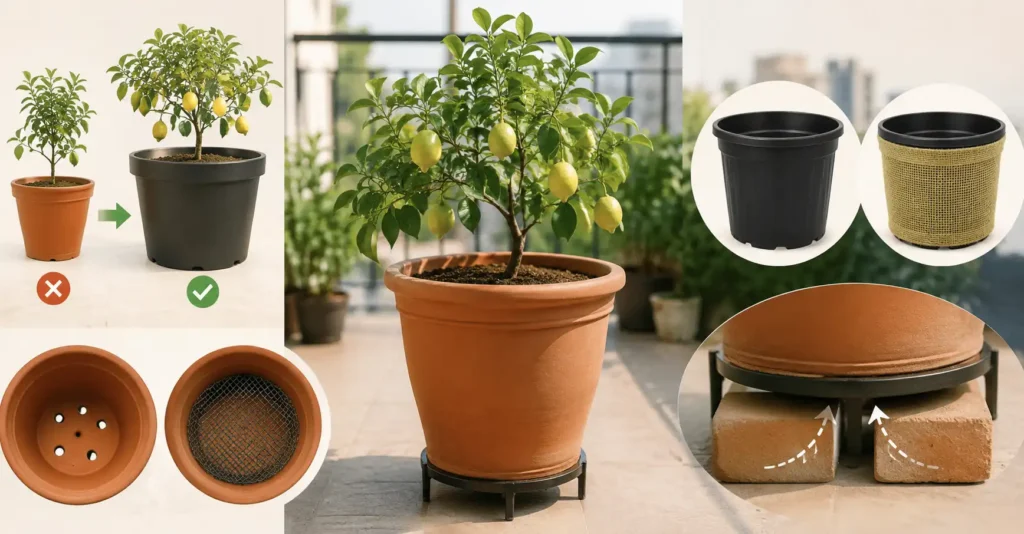
A 14-inch pot will keep the plant alive. It will not fruit consistently. The root mass of a productive citrus tree, even a dwarf container variety, needs genuine volume to support the metabolic demands of flowering and fruiting simultaneously.
On material: terracotta breathes better than plastic and reduces root rot risk on humid balconies, but it dries out faster and is significantly heavier once planted.
For balconies with weight restrictions, a thick-walled black plastic pot is fine — just paint it white or wrap it with jute to prevent the root zone from overheating (black pots on concrete in summer sun can push root temperatures above 40°C, which destroys fine feeder roots).
Drainage is non-negotiable. Your pot needs at least 3–4 drainage holes at the base. Cover them with a piece of window mesh (not gravel — gravel creates a perched water table that paradoxically reduces drainage in containers) before adding soil. Elevate the pot on a stand or bricks so drainage holes aren’t flush against the floor.
Soil Mix for Container Kagzi Lemon
Citrus in containers dies most often from two opposite problems — root rot from heavy soil, and nutrient starvation from soil that drains too fast. The right mix holds moisture long enough for root uptake but never stays waterlogged.
Proven container mix for Kagzi lemon:
- 40% coarse river sand or perlite
- 30% coconut coir
- 20% mature compost (not fresh manure — it burns citrus roots)
- 10% garden soil (just enough for microbial diversity)
This mix drains freely, stays aerated, and gives roots both the oxygen and the moisture retention they need. Don’t use nursery potting mix straight from the bag — most commercial mixes are too peat-heavy and become hydrophobic after 6 months of Indian heat.
When filling the pot, don’t compact the soil. Fill loosely to about 5 cm below the rim — this space matters for watering. The graft union must sit above soil level. Burying the graft union invites fungal infection at the junction and will eventually kill the plant.
Step-by-Step: Planting a New Kagzi Lemon in a Container
Step 1 — Choose the right time. February–March is ideal for establishing a new container Kagzi. The mild temperatures before summer heat give the root system time to settle in before it faces its first hot season. Avoid planting in peak summer (May–June) or peak monsoon (July–August) if you can.
Step 2 — Prepare the pot. Fill with your soil mix. Water it thoroughly one day before planting to settle the soil and pre-moisten it. Cold, dry soil against newly disturbed roots is a stress you want to avoid.
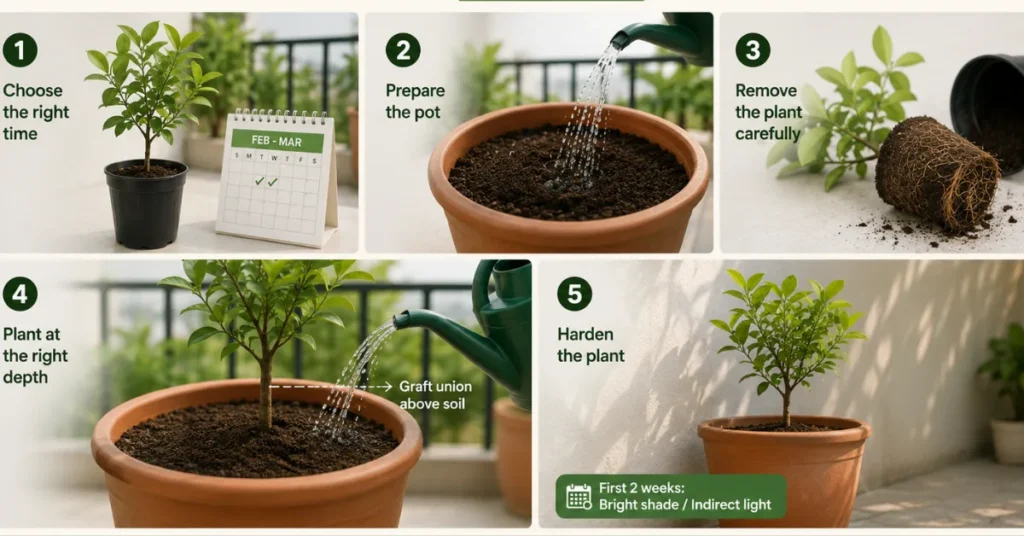
Step 3 — Remove the plant carefully. Tip the nursery pot sideways and slide the plant out. Don’t pull it from the stem. If it’s root-bound (roots circling the base tightly), gently loosen the outer roots with your fingers — don’t cut them unless they’re severely coiled. Loosening encourages outward root growth into the new container.
Step 4 — Plant at the right depth. The root ball should sit at the same level it was in the nursery pot. The graft union stays above soil. Firm the soil around the root ball gently and water deeply.
Step 5 — Harden the plant. For the first two weeks, keep the newly potted plant in bright shade or indirect light. Avoid full balcony sun immediately after transplanting. New roots take 2–3 weeks to establish in fresh soil, and the plant is vulnerable to heat and sun stress during this period.
How Much Sun Does a Kagzi Lemon Plant Need on a Balcony?
Kagzi lemon is a full-sun plant. It needs a minimum of 6 hours of direct sunlight daily for consistent flowering and fruiting. Less than that and it will grow leaves but rarely fruit.
South or east-facing balconies are ideal. West-facing balconies work if afternoon heat is managed (see the root overheating issue above). North-facing balconies with no direct sun cannot support fruiting citrus — this is a hard limitation, not one you can fertilize your way around.
If your balcony gets strong afternoon western sun from May to September, afternoon shade cloth (50% density) in peak summer isn’t weakening the plant — it’s protecting the fine feeder roots that drive nutrients and water uptake. A Kagzi can handle less-than-perfect sun in summer better than it handles a cooked root system.
One thing that trips people up: after a long monsoon (where light levels drop significantly), the plant will drop some leaves and look stressed even though it’s getting plenty of water. This is a light response, not a disease. Post-monsoon, move the pot to your sunniest spot and it will recover and reflush.
How to Water a Kagzi Lemon for Better Fruiting
This is the most powerful tool you have for managing Kagzi lemon fruit, and almost nobody uses it deliberately.
Kagzi lemon is native to dry tropical conditions. It flowers most reliably after a period of mild water stress followed by return to normal watering. This is not a coincidence — it’s how the plant reads environmental signals to time reproduction. In the ground, this happens naturally with the dry season followed by monsoon. In a pot on your balcony, you can replicate this deliberately.
Normal watering: Water when the top 3–4 cm of soil is dry. In summer, this might be daily. In winter, every 3–4 days. Water deeply until it flows from drainage holes, then stop. Never let the plant sit in a saucer of water.
Inducing flowering deliberately (mild drought stress technique):
- 6–8 weeks before your target flowering period, reduce watering to the point where the plant just begins to show mild stress — very slight leaf curl in the afternoons, but normal-looking in the mornings.
- Maintain this mild stress for 3–4 weeks. Do not fertilize during this period.
- Then return to normal deep watering and resume feeding.
Within 2–4 weeks of restoring normal watering, you should see flower buds forming — small, tight white clusters at new growth tips. This technique is what commercial Kagzi growers use to synchronize fruiting flushes. It works in containers with even more precision than in the ground because you control every drop of water the plant receives.
Do not take this to the point of severe wilting, drooping branches, or leaf drop. Moderate stress triggers flowering. Severe stress triggers survival mode and sets the plant back by months.
The Best Feeding Schedule for a Potted Kagzi Lemon
Kagzi lemon is a heavy feeder in a container — it has limited soil volume, roots can’t explore beyond the pot, and nutrients leach with every watering. Underfed container citrus produces lots of dark green leaves and no fruit.
The three-phase feeding cycle:
Phase 1 — Pre-flowering (February and June): Focus on phosphorus and potassium to encourage flower bud formation and fruit set. Use a bloom booster fertilizer (NPK ratio around 5-10-10) or a mix of bone meal + wood ash + compost. Do not use high-nitrogen fertilizers at this stage — they push vegetative growth at the expense of flowers.
Phase 2 — Fruit development (after fruit set, when fruits are pea-sized): Switch to a balanced fertilizer (NPK 10-10-10) plus micronutrients. Kagzi lemon is particularly prone to magnesium and iron deficiency in containers — symptoms are yellowing between leaf veins (while veins stay green). A monthly foliar spray of diluted magnesium sulphate (Epsom salt — 5g per liter of water) prevents this and visibly darkens leaf color within two weeks.
Phase 3 — Rest period (November–January): Reduce feeding significantly. The plant needs a mild winter rest. One compost top-dressing in December is sufficient.
What never to do: Feed a stressed, drought-weakened, or recently transplanted plant. Fertilizer on stressed roots burns them. Always ensure the soil is moist before applying any fertilizer.
How to Deal With Citrus Leaf Miner on Kagzi Lemon
If you grow Kagzi lemon on a balcony in India, you will get citrus leaf miner (Phyllocnistis citrella). This is not optional. The tiny moth larvae tunnel through new leaves, creating silvery serpentine trails, and cause new leaves to curl and distort badly.
Leaf miner damages new growth — and new growth is where next season’s flowering happens. Chronic leaf miner pressure reduces flowering significantly over time.
Management that actually works:
- Spray new flushes (when leaves are still soft and light green) with neem oil (5ml per liter + a drop of dish soap) every 5–7 days until the flush hardens. Neem doesn’t kill the miners already inside the leaf — it prevents new eggs from hatching and deters adult moths from laying.
- Yellow sticky traps hung near the canopy catch adult moths and give you early warning of population spikes.
- Once leaves are hardened (darker green, firm texture), leaf miner cannot penetrate them. Your spray window is only during the soft new flush stage.
The other pest worth knowing: citrus psyllid (Diaphorina citri) — tiny insects clustering on new growth, causing curled and cupped new leaves. Neem oil spray on new flushes handles this too. If you see sooty mold (black dusty coating on leaves), that’s a sign of psyllid or whitefly — wipe affected leaves with a damp cloth and spray with neem.
Why Your Kagzi Isn’t Fruiting: The Real Checklist
If your plant is healthy, leafy, growing well, but not producing fruit, work through this list:
Is it a seedling, not a grafted plant? Seedling Kagzi can take 5–7 years to first flower. Nothing you do will speed this up. Confirm with the nursery or check for a graft union.
Is the pot too small? A root-bound plant diverts all energy to root maintenance. Repot into a larger container and fruiting usually follows within one to two seasons.
Is it getting 6+ hours of direct sun? Less than 6 hours = no fruiting. This is non-negotiable for citrus.
Are you using too much nitrogen? High-nitrogen fertilizers (urea, DAP, or compost applied too frequently) push dark green vegetative growth and suppress flowering. Switch to a phosphorus-forward feed 6–8 weeks before expected flowering.
Has it been in the same soil for more than 2 years? Old, compacted, depleted container soil has poor drainage, zero nutrition, and collapsed structure. Repot with fresh mix.
Is it too young? A grafted Kagzi typically needs 18–24 months in the ground or in a proper-sized container before it produces its first significant flush of flowers. If yours is under 18 months in a good pot, give it time.
Repotting: When and How
Container Kagzi lemon roots fill a pot faster than you’d expect. Signs the plant is root-bound: roots growing out of drainage holes, soil drying within hours of watering, visible stunting of new growth, or the pot feeling light and dry constantly.
Repot every 2–3 years, or whenever you see these signs, into a pot 3–4 inches larger in diameter. Don’t jump too large — oversized pots hold excess moisture around roots that aren’t yet dense enough to use it, increasing rot risk.
Best time to report: February–March, before the main flowering flush. Repotting after the fruit set stresses the plant and causes fruit drop.
Realistic Yield Expectations from a Balcony Container
A well-managed, grafted Kagzi lemon in an 18-inch pot, with correct feeding and deliberate watering cycles, can realistically produce 30–60 lemons per fruiting flush in years 3–5. Three flushes annually means 90–150 lemons per year from a single healthy plant.
That’s not a guarantee — it’s what’s achievable with consistent management. A neglected plant in the same pot will produce 5–10. The difference is entirely in the details covered above.
The plant will earn its balcony space. A productive Kagzi lemon on a balcony is one of the most satisfying things in urban home gardening — visually beautiful when in flower, fragrant, and practically useful every week of the year.