Which herbs actually survive Delhi’s brutal summer? Most gardening guides assume you can grow anything with enough water. (Hint: You can’t.) Here’s what survived Delhi summers on my balcony and what died no matter how I tried to save it.
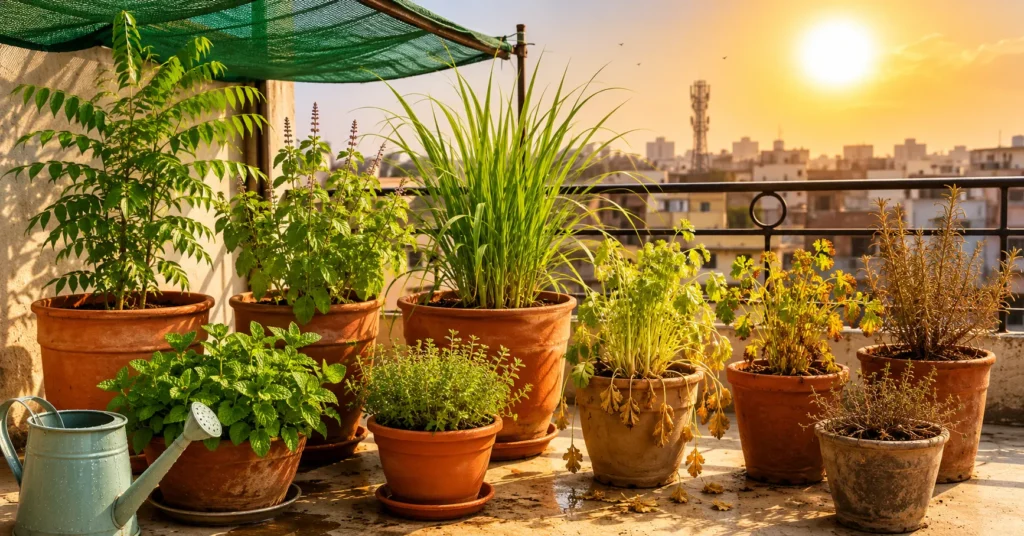
Which herbs survive Delhi summer heatwaves? While many culinary guides assume you can grow anything with enough water, reality on a 45°C burning balcony is entirely different. Here is an honest breakdown of what actually survived my balcony test, and what died no matter how hard I tried to save it.
Herbs such as coriander, parsley, and sweet basil decline rapidly as soon as pre-monsoon temperatures become extreme unless given considerable protection.
Forget the herbs that can technically survive summer, most of those barely limp along on a Delhi balcony anyway. What matters is which ones actually keep producing usable leaves through May and June, in a pot, under direct sun, with whatever water pressure you’ve got that day.
Why Delhi Heat Is a Different Problem Entirely
Most gardening advice assumes “full sun” means strong but tolerable sunlight. Delhi’s April-to-June window isn’t that. Between late April and the first proper monsoon showers (usually late June), daytime temperatures regularly sit between 42°C and 47°C, with heatwave days crossing 48°C. Humidity stays low until the monsoon arrives, which means the air itself pulls moisture out of leaves faster than roots can replace it.
This matters because most herb-growing guides are written for European or North American climates where 30°C is considered a hot day. None of that advice transfers cleanly to Delhi. I learned this the expensive way — by following standard advice and watching plants die anyway.
The Herbs I Actually Tested
Over three summers, I grew the following in identical 10-inch terracotta and plastic pots, same potting mix (60% garden soil, 30% cocopeat, 10% vermicompost), same balcony, same watering person (me, often inconsistently)
- Curry leaf (Kadi Patta)
- Holy basil (Tulsi)
- Mint (Pudina)
- Ajwain (Carom)
- Lemongrass
- Sweet basil (Italian basil)
- Coriander (Dhania)
- Parsley
- Thyme
- Rosemary
The results were not what I expected going in. I assumed Mediterranean herbs like rosemary and thyme would handle heat well since they’re “drought-tolerant.” That assumption was wrong, and it cost me two rosemary plants before I figured out why.
The Herbs That Actually Survived
Curry Leaf — The Most Heat-Tolerant Herb I Grew
My curry leaf plant has survived three Delhi summers without a single sign of stress, and it’s now over four feet tall in a 14-inch pot. It dropped a few older leaves in the worst heatwave week of June 2024, but new growth appeared within ten days.
What worked: I water it deeply every alternate day during peak summer rather than lightly every day. Shallow daily watering encourages roots to stay near the surface, where soil temperature is highest. Deep, infrequent watering pushes roots downward into cooler soil.
Tulsi (Holy Basil) — Thrives Specifically Because of the Heat
This surprised me. Tulsi didn’t just survive 45°C, it grew faster during the hottest weeks than during March’s mild weather. The plant did wilt visibly by 3 PM most days, but recovered fully by evening watering — a pattern I initially mistook for stress before realizing it was normal heat-response behavior, not decline.
The one real risk with tulsi in Delhi summer isn’t heat — it’s overwatering out of panic. I lost one tulsi plant in 2023 to root rot because I was watering it twice a day, worried about the wilting, when once a day was already too much.
Mint — Survives, But Only With Constant Moisture and Partial Shade
Mint technically survived all three summers, but “survived” is generous. It needed daily watering without exception, and direct afternoon sun (12 PM–4 PM) browned the leaf edges consistently. I eventually moved my mint pot to a spot that gets morning sun only and afternoon shade from an adjacent wall, and that single change made the difference between a half-dead plant and a healthy one.
Ajwain — Underrated and Resilient
Ajwain handled the heat almost as well as curry leaf, with one important caveat: it needs well-draining soil. In a pot with poor drainage, the combination of heat and any water retention at the roots led to fungal stem rot within a week. Once I added extra perlite to the mix, this stopped being an issue entirely.
Beyond watering and shade, feeding plants the right way during stress months matters too. I started using homemade watermelon peel fertilizer instead of store-bought feed for my curry leaf and tulsi, and saw noticeably better recovery after heatwave weeks.
Lemongrass — Genuinely Loves the Heat
Lemongrass is a tropical grass by nature, so this made sense in hindsight, but I didn’t expect it to outperform basil. It needed regular water but tolerated full, harsh sun without any leaf scorch across all three summers. If you want one “set and forget” heat-tolerant herb for a Delhi balcony, this is it.
Quick Care Guide: Heat-Tolerant Herbs
| Herb | Sun Exposure | Watering | Soil/Pot Notes | Key Risk |
|---|---|---|---|---|
| Curry Leaf | Full sun | Deep watering, alternate days | Upgrade to 14″+ pot as it grows | Minimal — sheds old leaves in heat, recovers fast |
| Tulsi | Full sun | Once daily | Standard potting mix works | Overwatering — midday wilt is normal, not distress |
| Mint | Morning sun, afternoon shade | Daily, no skipping | Keep out of 12–4 PM sun | Leaf-edge browning in direct afternoon sun |
| Ajwain | Full sun | Moderate, consistent | Needs well-draining mix + perlite | Stem rot from poor drainage |
| Lemongrass | Full, harsh sun | Regular, no special timing | Fine in any standard pot | Almost none — most heat-tolerant herb here |
What Failed and Why
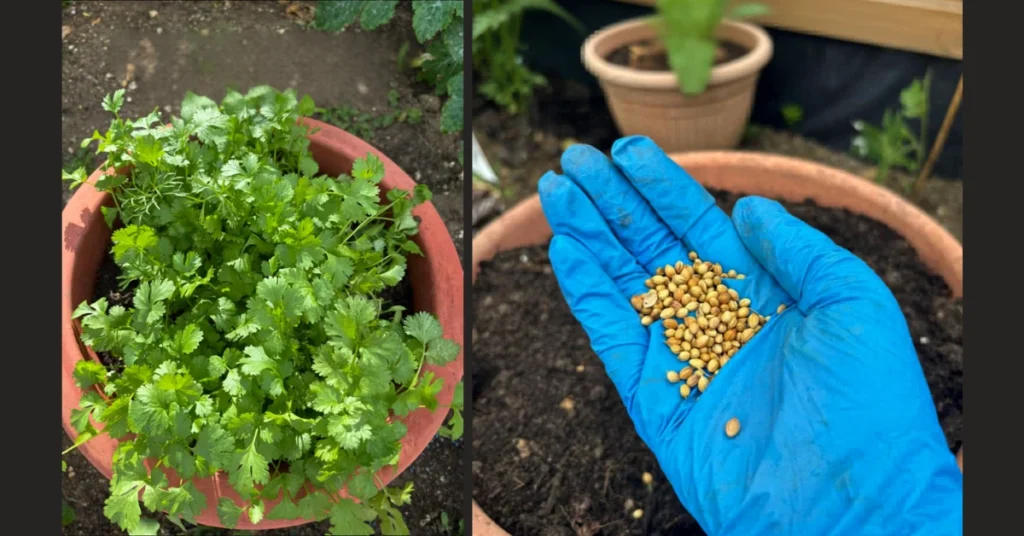
Coriander — Bolted and Died Within Two Weeks, Every Single Year
Coriander is a cool-season herb, and no amount of shade or watering changed its trajectory once daytime temperatures crossed 35°C consistently. It bolted (went to seed prematurely) and the leaves turned bitter before dying back entirely. I tried staggered sowing, extra shade netting, and even moving pots indoors near a window — none of it extended its life past early May.
The honest lesson: coriander simply isn’t a summer herb in Delhi’s climate. Growing it April through June is fighting biology, not gardening technique.
Sweet Basil (Italian Basil) — Looked Fine, Then Collapsed Suddenly
This was the most frustrating failure because the plant showed no warning signs. It looked healthy on a Tuesday and was completely wilted, with blackened stems at the soil line, by Thursday. I later learned this was likely a combination of heat stress weakening the plant and a soil-borne fungal issue (likely Fusarium wilt) that thrives in warm, slightly overwatered soil — a combination that’s almost inevitable during Delhi summer unless watering is very precisely managed.
Sweet basil, unlike tulsi, doesn’t have the same heat tolerance despite being in the same plant family. This is a distinction most generic herb guides don’t make clearly.
Parsley — Never Stood a Chance
Parsley showed heat stress (yellowing, then browning from leaf edges inward) within the first heatwave week each year, regardless of shade or watering frequency. By early May, it was consistently dead. Like coriander, this is a cool-season herb that simply isn’t suited to Delhi’s pre-monsoon months.
Rosemary and Thyme — The Surprising Disappointments
I expected these Mediterranean herbs to handle heat well, based on general gardening advice that frames them as “drought-tolerant.” What that advice misses is the difference between Mediterranean heat (dry, but rarely above 35–38°C with cooler nights) and Delhi heat (consistently above 42°C with very warm nights too, often not dropping below 30°C even after midnight).
Both rosemary and thyme survived the daytime heat reasonably well in their first month, but the lack of any real night-time cooling eventually stressed them past recovery. I lost both within six weeks each summer. The few gardening forums that mention this specific issue point to the same explanation: these herbs need a day-night temperature differential to thrive, and Delhi’s summer nights don’t provide one.
What Made the Biggest Difference to My Herb Garden
Three changes mattered more than anything else I tried:
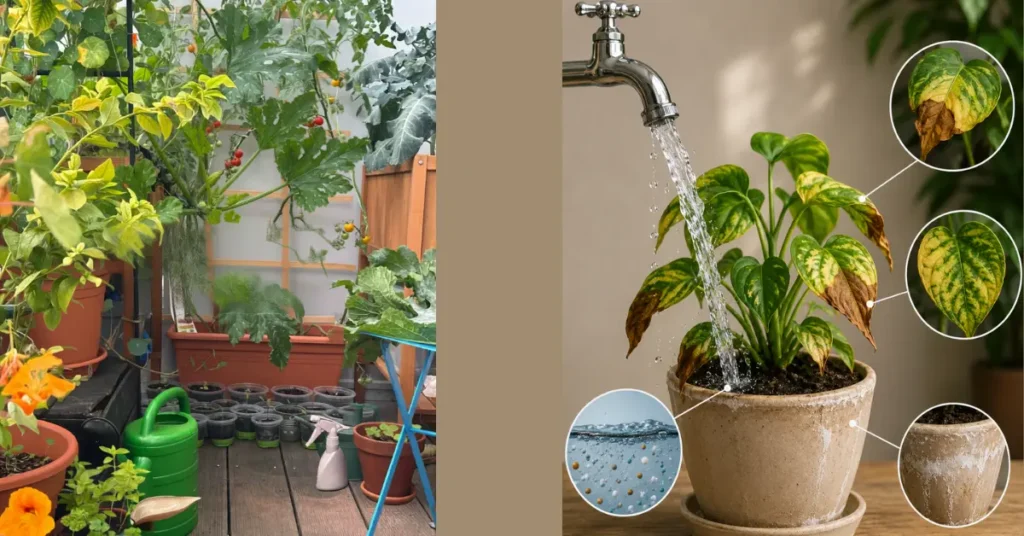
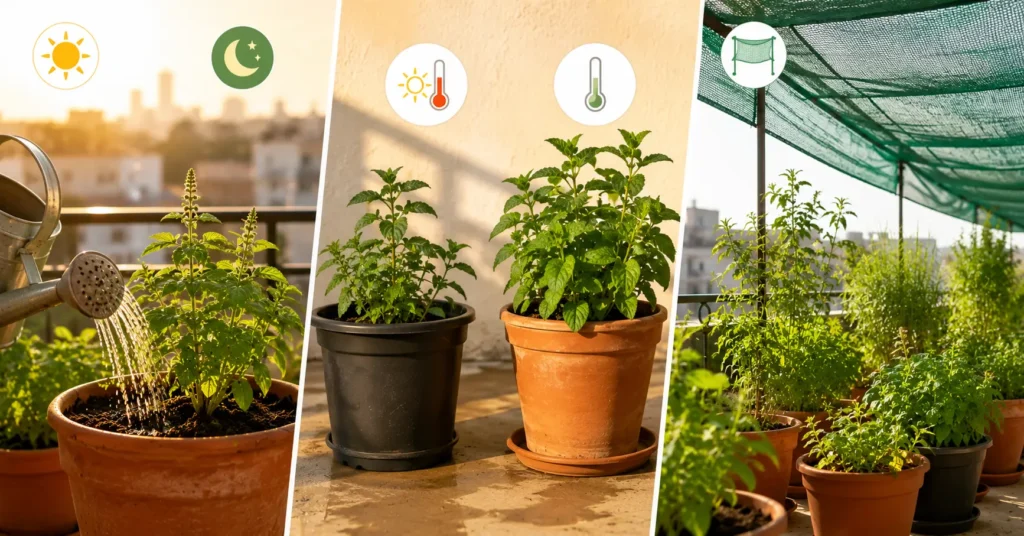
1. Watering time, not just watering frequency. Watering between 6–7 AM, before the sun is intense, lets plants take up water before the heat of the day begins. Evening watering (after 6 PM) works as a second option. Watering at midday — which I did out of convenience in my first summer — actively damages roots, since water heats up rapidly in dark pots and effectively cooks the root zone.
2. Pot material and color matter more than expected. Dark plastic pots absorbed heat and raised soil temperature noticeably compared to terracotta. I switched my most heat-sensitive plants (mint, ajwain) into unglazed terracotta, which stays cooler through evaporative loss, and saw a visible difference in leaf health within two weeks.
3. A 50% shade net changed survival odds dramatically. I installed a simple green shade net (the kind used for nurseries, roughly 50% shade density) over the most exposed section of my balcony starting the second summer. Plants under this net — including the basil I eventually lost — survived noticeably longer than identical plants left in full exposure, even though both eventually needed shifting indoors during the worst heatwave weeks.
A Practical Herb Growing Calendar for Delhi Summers
- Keep growing through summer: Curry leaf, tulsi, ajwain, lemongrass
- Grow with extra care (shade + daily watering): Mint
- Don’t bother planting in summer — wait for autumn sowing instead: Coriander, parsley
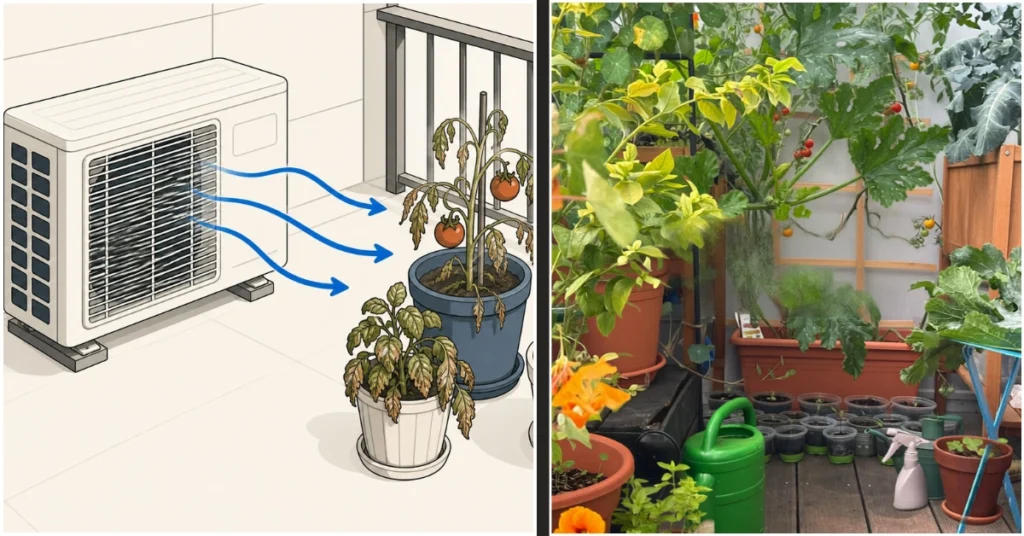
- Avoid in Delhi summer unless you can control night temperature (e.g., AC-adjacent balcony): Rosemary, thyme
- Watch closely for sudden fungal collapse, water carefully: Sweet basil
Final Thoughts
Delhi’s heat doesn’t punish bad gardening technique, it punishes plant choice. Herbs that handle tropical heat and warm nights survive; herbs bred for temperate climates don’t, no matter how carefully you water or shade them.
Build your summer herb garden around curry leaf, tulsi, ajwain, and lemongrass. Sow coriander and parsley in autumn instead, since they bolt and decline once temperatures cross 35°C regardless of care. If you want rosemary or thyme, place them somewhere with at least partial climate control, an AC-adjacent balcony works, since it’s the lack of cool nights, not daytime heat, that kills them.
FAQs
Which herb is most heat-tolerant in Delhi summers?
Curry leaf and lemongrass were the most consistently heat-tolerant herbs across three summers of testing, handling temperatures above 45°C without significant stress.
Why does coriander die so quickly in Delhi heat?
Coriander is a cool-season herb that bolts (flowers and seeds prematurely) once temperatures consistently exceed 30–35°C, after which the plant naturally declines regardless of care.
Can rosemary survive Delhi summers?
Rosemary tolerates Delhi’s daytime heat reasonably well for several weeks but struggles with the lack of cooler nights, which is the more common reason it eventually declines.
What time of day should I water herbs in Delhi summer?
Early morning, between 6–7 AM, is most effective, since it allows plants to absorb water before peak heat. Evening watering after 6 PM is a reasonable second option.
Does pot material affect how herbs handle heat?
Yes — unglazed terracotta pots stay cooler than dark plastic pots due to evaporative cooling, which noticeably benefits heat-sensitive herbs like mint and ajwain.