That white fuzz on your monsoon soil isn’t mould, and it isn’t killing your plant. It’s a harmless surface fungus feeding on organic matter — and one that’s easy to fix with things already in your kitchen. Here’s exactly why it happens every June, and the remedies I’ve actually tested across Indian balconies.
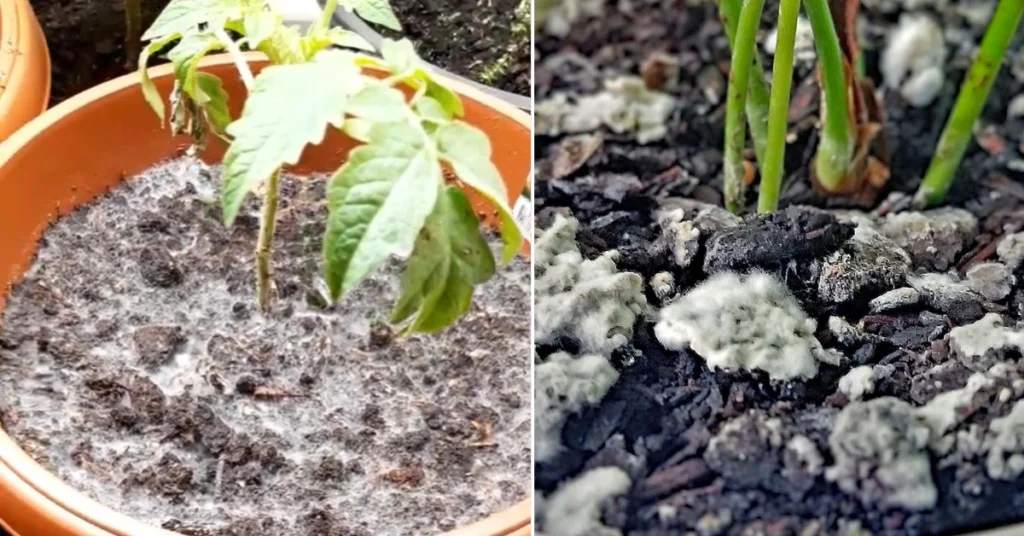
Every year, around the third week of June, my WhatsApp fills up with the same panic. A Pune reader sends a photo of tulsi soil covered in what looks like a spider’s web of talcum powder. A Mumbai reader asks why their money plant’s soil turned white overnight.
Someone in Bangalore wants to throw out an entire bag of potting mix, convinced it’s gone mouldy.
Twelve monsoons of growing plants on balconies and terraces have taught me this is the most common monsoon query I get. The good news: in most cases, it’s harmless, easy to fix, and a sign your soil is biologically alive, not dead.
Here’s exactly what’s happening in your pot, why Indian monsoon conditions trigger it, and the remedies I’ve personally tested across cities and soil types — not copy-pasted advice.
What Is That White Fuzz, Really?
That white, powdery or cobweb-like growth on top of your soil is a saprophytic fungus — a fungus that survives by feeding on decaying organic matter in the soil, not on your living plant. Think of coco peat, dried leaves, vermicompost, or half-broken-down cow dung manure sitting in your pot.
The moment moisture and warmth combine, these fungi wake up and start spreading their mycelium (the thread-like fungal network) across the surface.
In most homes, this shows up as one of two things:
- A fine white powder dusted across the topsoil — often mistaken for mould or salt deposits.
- A cobweb-like mesh that appears almost overnight, especially after a heavy spell of rain or after you water a pot that was already damp.
Neither of these is attacking your plant’s roots directly. They are simply doing their job — breaking down organic material. The problem is aesthetic and, occasionally, a signal that your watering routine needs adjusting.
Why This Happens So Much More in Indian Monsoon Specifically
I get asked this every year — why doesn’t this happen in winter or peak summer? The answer lies in three monsoon-specific conditions unique to how most Indian homes are set up:
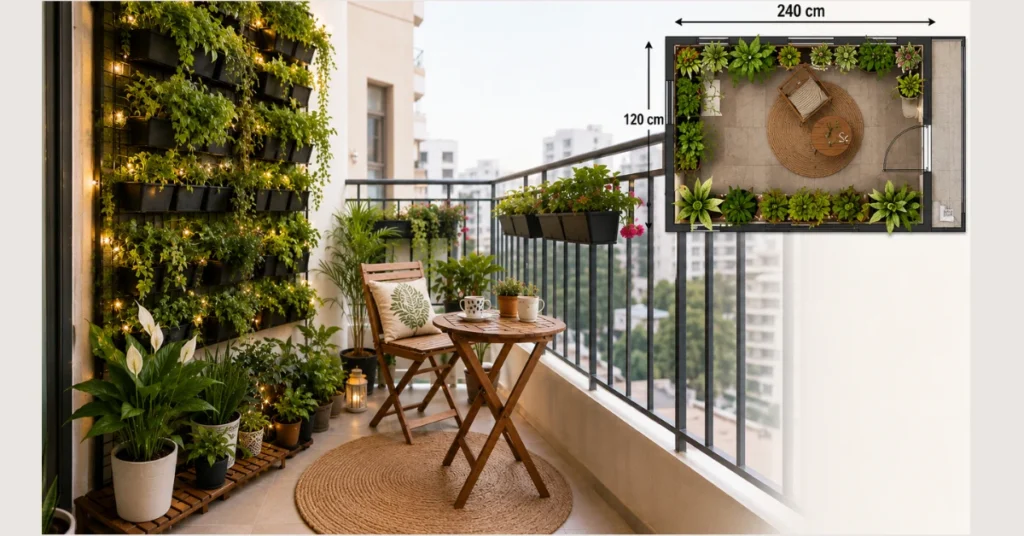
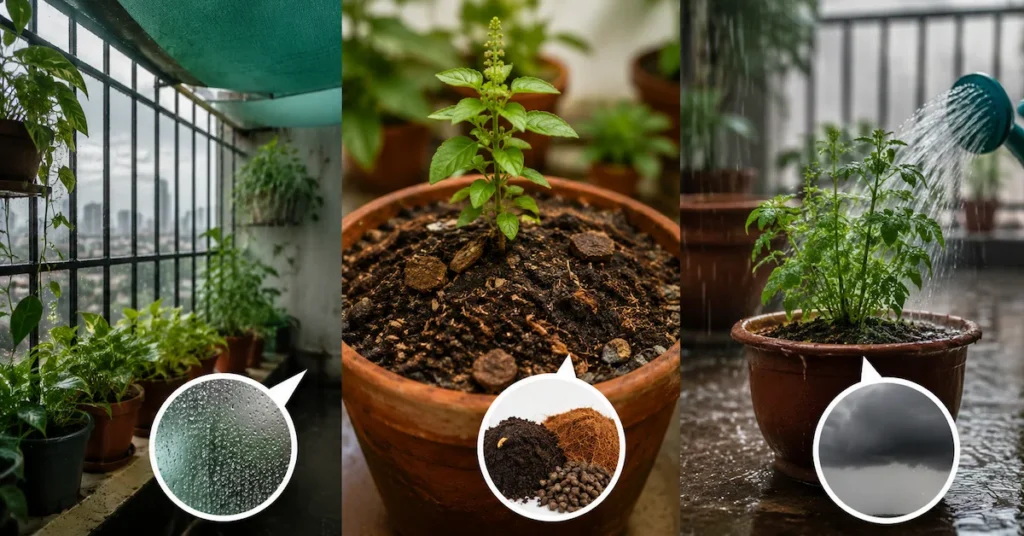
1. Humidity above 75% combined with stagnant airflow. Most of us grow plants on enclosed or semi-enclosed balconies with a grill and a sunshade. During monsoon, that airflow drops further because we keep windows shut to stop rain from splashing in. Fungus loves exactly this — warm, moist, still air.
2. Organic-matter-heavy potting mixes. Indian gardeners, myself included, love loading pots with cow dung manure, vermicompost, neem cake and coco peat. This is genuinely excellent for plant health, but it is also fungal food. The richer your mix, the more likely you’ll see surface fungus in high humidity.
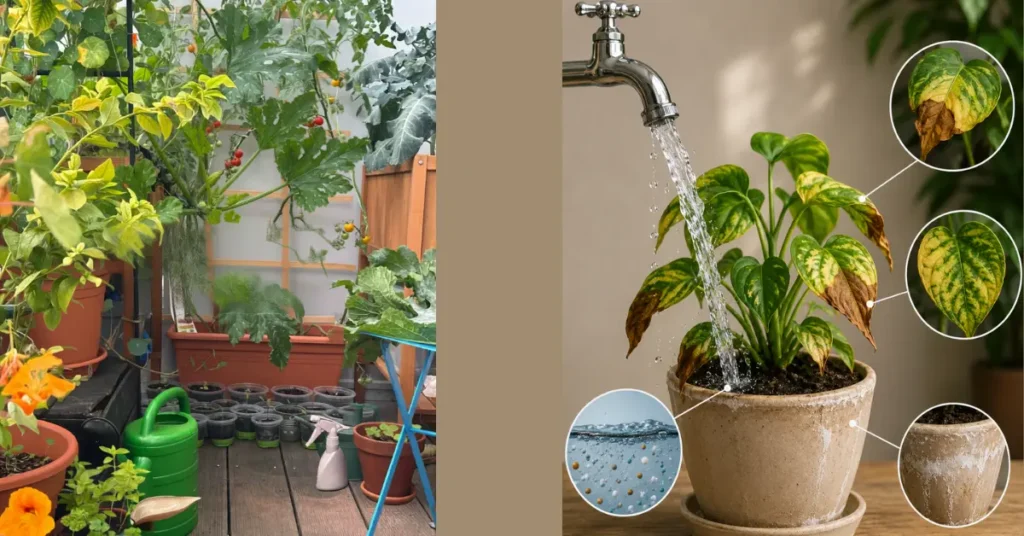
3. Overlapping rain and manual watering. This is the one nobody talks about. You water your tulsi or money plant in the morning assuming it will dry out, then it rains unexpectedly in the afternoon, and now your pot is sitting in double moisture for 24+ hours. This is the single biggest trigger I have observed across balcony gardens in Mumbai, Pune, Kochi and Kolkata.
Is It Actually Harmful to Your Plant?
Here’s where I want to be very direct, because most articles online scare people unnecessarily.
In 9 out of 10 cases, surface white fungus is harmless to a healthy, established plant. It does not eat roots, it does not “infect” the plant, and it will not spread to your other pots unless conditions are identical.
However, there are three situations where you should pay closer attention:
- Seedlings and freshly transplanted saplings — these have tender, undeveloped root systems, and a heavy fungal bloom right at the base of the stem can occasionally tip into damping-off disease, which does kill young seedlings.
- A sour or rotten-egg smell coming from the pot — this usually means anaerobic bacterial activity from waterlogging, not the fungus itself, and needs urgent drainage correction.
- Yellowing leaves plus fungus plus soil that never seems to dry — this combination usually points to root rot, where the fungus is a symptom of overwatering rather than the actual cause.
If you’re seeing yellowing leaves alongside soil that never fully dries, it’s worth ruling out root rot early — here’s how to identify and treat it before it spreads.
If none of these three apply to you, relax. Your plant is fine. Now let’s fix the surface issue properly.
Home Remedies That Actually Work (Tested, Not Copy-Pasted)
1. The Cinnamon Powder Method
Cinnamon has natural antifungal properties and is sitting in every Indian kitchen masala box. Dust a thin, even layer of cinnamon powder directly over the affected topsoil. Do this once, let it sit for 3–4 days without watering that spot directly, and you’ll notice the fungal growth retreating. This has been my most reliable go-to for tulsi, money plant and herb pots specifically because cinnamon doesn’t harm beneficial soil microbes the way harsher chemicals do.
2. Sun-Drying the Topsoil
Sounds too simple, but it’s genuinely the most effective long-term fix. On the next clear morning, move the pot to direct sunlight for 3–4 hours and gently loosen the top 1 inch of soil with a fork or your fingers to break up the fungal mat and let it dry out completely. Fungus cannot survive UV exposure and dry conditions. I do this as routine maintenance for every pot on my terrace at least once a week through monsoon, rain permitting.
3. Neem Oil Drench (Diluted)
Mix 5 ml of cold-pressed neem oil with 1 litre of water and a few drops of any mild liquid soap (to help it emulsify). Pour a small amount directly onto the affected soil surface, not on the leaves. Neem has mild fungicidal action and also keeps fungus gnats away, which tend to breed in the same damp conditions. Repeat once every 7–10 days during heavy rain spells.
4. Baking Soda Spray for the Surface
Dissolve half a teaspoon of baking soda in 1 litre of water and lightly spray the topsoil (again, avoid drenching leaves repeatedly as it can leave a residue). Baking soda alters the surface pH just enough to make it inhospitable for fungal spores without disturbing root-zone biology deeper in the pot.
5. Activated Charcoal Top-Dressing
If you have activated charcoal (aquarium charcoal or the kind sold for potting mixes works fine), sprinkle a thin layer over the top of the soil. Charcoal absorbs excess surface moisture and has natural anti-microbial properties. This is particularly useful for indoor jungle setups — pothos, ZZ plant, snake plant — where airflow is naturally lower.
6. Turmeric Powder Dusting
An old remedy my grandmother used on her tulsi pot every monsoon without fail. A light dusting of turmeric powder over affected soil works similarly to cinnamon — it’s mildly antifungal and completely safe for edible herb pots like coriander, mint and curry leaf.
7. Improve Drainage Permanently
This is the fix that actually prevents recurrence rather than just treating the symptom. Check that your pot has at least 3–4 visible drainage holes, and that they aren’t blocked by compacted soil or a saucer sitting flush against the base. Elevate every pot slightly using pot feet, bricks, or bottle caps so water can escape freely instead of pooling under the pot and wicking moisture back up.
Quick-Fix Reference Table
| Remedy | Best For | How Often | Where to Apply |
| Cinnamon powder | Tulsi, money plant, herb pots | Once, repeat after 4–5 days if needed | Dust on topsoil only |
| Sun-drying topsoil | All potted plants | Weekly, on clear days | Move pot to direct sun for 3–4 hrs |
| Neem oil drench | Pots with fungus gnats too | Every 7–10 days during heavy rain | Pour on soil, avoid leaves |
| Baking soda spray | Recurring surface fungus | Once a week | Light spray on topsoil |
| Activated charcoal | Indoor plants, low-airflow spots | One-time top dressing | Thin layer over soil |
| Turmeric powder | Edible herbs (mint, coriander, curry leaf) | Once, repeat if fungus returns | Dust on topsoil |
| Drainage fix | Any pot with recurring fungus | One-time setup | Elevate pot, clear holes |
Your Monsoon White Fungus Checklist
Use this every week during the monsoon months:
- Check topsoil moisture before watering — insert a finger 1 inch deep; only water if it feels dry
- Ensure pots are elevated off the ground or balcony floor
- Loosen and sun-dry topsoil once a week during dry spells
- Apply cinnamon, turmeric or neem drench if fungus appears
- Avoid manual watering on days when rain is forecast
- Increase airflow — space pots apart, avoid overcrowding
- Remove any decaying leaves or organic debris sitting on the soil surface
- Inspect seedlings and new transplants more closely than mature plants
- Check for foul smell or yellowing leaves as red-flag signs
- Repot with fresh, well-draining mix if fungus recurs every single week
Long-Term Prevention: Fixing Your Potting Mix
If white fungus is a recurring monthly problem in the same pot, the actual fix lies in your soil composition, not just surface treatment. A good monsoon-friendly potting mix for Indian conditions should roughly be:
- 40% garden soil or cocopeat
- 30% well-rotted compost or vermicompost (not fresh, undecomposed manure)
- 20% coarse sand, perlite, or brick khoya for drainage
- 10% neem cake powder, which doubles as a natural pest and fungal deterrent
Fresh, undercomposted cow dung manure is one of the biggest hidden causes of recurring white fungus because it continues decomposing inside your pot for weeks, feeding fungal growth continuously. Always use manure that has fully composted and turned dark and crumbly, not the wet, smelly kind.
Common Mistakes I See Indian Balcony Gardeners Make
- Watering on a fixed daily schedule instead of checking actual soil moisture
- Using decorative saucers that trap water directly under the pot
- Packing pots too close together, cutting off airflow between them
- Adding fresh manure right before monsoon instead of well before it
- Panicking and repotting the entire plant unnecessarily, which stresses roots further
Final Thoughts
If there’s one thing twelve monsoons of urban gardening in India has taught me, it’s this: white fungus on soil is far more a moisture-and-airflow issue than a disease. Treat it as feedback from your growing setup, not a crisis.
Fix the drainage, sun-dry the topsoil once a week, and reach for what’s already in your kitchen — cinnamon, turmeric, neem. Within a week, every single monsoon, you’ll have it sorted without losing a plant to it.
I still get the same panicked photos every June, and I still give the same answer: check the drainage first, then the watering schedule, and only then start looking for a “cure.” Nine times out of ten, that’s all it takes.
Your indoor jungle and balcony garden are tougher than this fungus. Give the soil a chance to breathe, and it’ll bounce back faster than you expect. If you’ve tried any of these remedies this monsoon, I’d genuinely like to know which one worked for your setup — every balcony, city and pot mix behaves a little differently, and that’s half the fun of growing things here.